

























































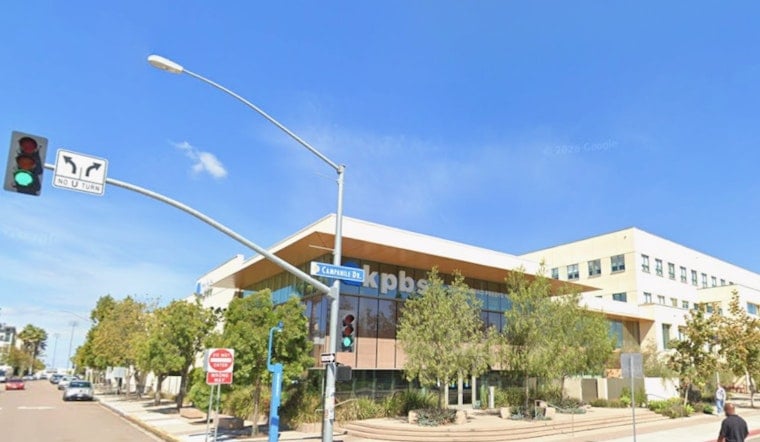
A four-letter word on a protest sign has now landed KPBS in court. Former news director Terence Shepherd has sued the public media station, claiming he was wrongfully pushed out after he raised red flags about a live TV segment that he believed could run afoul of federal broadcast rules.
Shepherd says he was removed from his news director role in February and that the move was retaliation for reporting what he saw as a potential Federal Communications Commission violation. His lawsuit names KPBS and the San Diego State University Research Foundation as defendants and asks for damages and a jury trial.
What the Lawsuit Says
The complaint, filed May 19 in San Diego County Superior Court, centers on a Sept. 17, 2025 live shot for KPBS’ “Evening Edition” that featured a protester holding a sign reading “FUCK ICE,” according to Current. Shepherd says he flagged the segment the next day with the show’s senior producer and KPBS content leadership and urged that reporter Alexander Nguyen be fired.
The on-demand version of the video ultimately appeared with the sign blurred, and Shepherd’s concerns were brushed aside, according to The Daily Aztec. Shepherd argues in the lawsuit that what followed was not just a professional disagreement over editorial judgment but retaliation for trying to protect the station from possible regulatory trouble.
KPBS Response and Newsroom Changes
KPBS has acknowledged that it is facing the lawsuit but is not talking about internal personnel issues while the case is active, a station spokesperson told KPBS. In an internal message to staff, General Manager Deanna Mackey emphasized that providing trusted local news remains a top priority for the station.
In the meantime, the newsroom has a different leader at the helm. Vinnee Tong has been serving as acting news director since Shepherd’s departure in February while also holding the managing editor role, according to the complaint and local reporting.
Legal and Regulatory Stakes
Shepherd’s case leans on California whistleblower protections that bar employers from retaliating against workers who report suspected legal violations, under California Labor Code Section 1102.5. His argument is that by calling out what he believed was a risky broadcast, he was doing exactly what that law encourages employees to do.
On the federal side, broadcasters are prohibited from airing obscene, indecent or profane content on over-the-air radio and television, a line that can be costly to cross. Violations can trigger warnings, fines or other enforcement actions by the FCC. A court hearing in the KPBS case is scheduled for Oct. 23, according to Current.
Why It Matters for Local Newsrooms
Beyond the legal back-and-forth, the lawsuit puts a spotlight on how local public media outlets police live shots, vet reporter work for regulatory risk and protect staffers who say they are speaking up about compliance. It is a reminder that one unscripted sign or soundbite can ripple far beyond a nightly news segment.
KPBS notes that its broadcast licenses are held by the California State University Board of Trustees and that the newsroom maintains strict editorial independence, according to the station’s own reporting. Media observers say whatever happens in this case could influence how other stations handle live field coverage, internal checks and whistleblower protections in the years ahead.




