

























































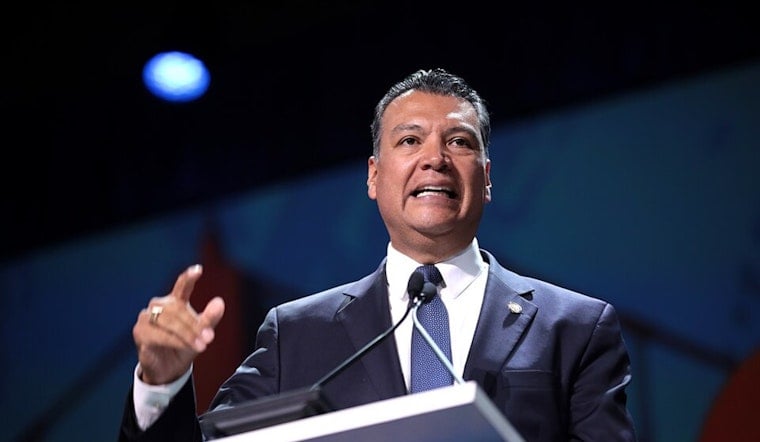
Sen. Alex Padilla is moving to clamp down on what he says is a growing campaign to meddle with American elections, rolling out a federal proposal he says is designed to keep ballots in voters’ hands and law enforcement in check.
The Stop Harassment and Intimidations in Elections through Legal Defenses, or SHIELD, Our Elections Act would establish new legal tools for states and voters to challenge interference, give prosecutors more time to bring election cases, and tighten the rules on when officials can seize ballots and voting equipment. Padilla is pitching the bill as a direct response to recent high-profile grabs of voting materials and to what he describes as a broader push by the White House and its allies to insert federal power into state-run election systems.
What the SHIELD Act Would Do
Unveiling the bill in Washington, D.C., Padilla said the measure would let state attorneys general and affected voters sue when federal officials unlawfully interfere at polling places, and would sharply limit preemptive seizures of ballots and voting machines. That rollout and Padilla’s remarks are detailed by his office. According to Padilla's office, the proposal would also authorize voluntary grants to help states build out absentee- and mail-ballot-tracking systems, a move backers say could shore up public confidence in voting by mail.
The bill language would stretch the statute of limitations for key federal election offenses from five years to nine, require court sign-off and joint-custody rules when voting materials have to be seized, and allow courts to award attorneys’ fees to private plaintiffs who win their cases. Those details are laid out in the text posted by Padilla's office.
Backlash And Ballot Seizures
Padilla and other Democrats are pointing to recent incidents in California and Georgia as the immediate spark for SHIELD. In Riverside County, officials said the sheriff seized hundreds of thousands of ballots this spring, a move that sent shockwaves through local election offices. Earlier this year, federal agents removed large volumes of 2020 election materials from Fulton County, Georgia.
The twin episodes have rattled election administrators and civil-rights groups and have been closely chronicled in national coverage. Reporting in the Los Angeles Times details the Riverside County seizure, while The Guardian has outlined what happened in Fulton County.
How It Fits Into The National Fight
Padilla’s proposal is dropping into an already heated national fight over who controls the rules of the ballot box. Republicans are pushing the Trump-backed SAVE America Act, a separate bill that would require documentary proof of citizenship to register and a photo ID to cast a ballot, provisions Democrats argue would effectively federalize some of the country’s most restrictive voter ID policies. National coverage of the SAVE legislation and its core requirements is summarized by CBS News.
Padilla has been publicly blasting the SAVE America Act as a vehicle for voter suppression, warning in local appearances that it would make it harder for eligible Americans to vote. He laid out those criticisms in an interview with ABC7.
Legal Implications
If Congress signs off, SHIELD would create a new civil enforcement track that sits atop the existing criminal framework and would expand the window for federal prosecution of election offenses. Federal law already makes voter intimidation and similar interference crimes prosecutable, including under 18 U.S.C. § 594, and Padilla’s bill would both expand the private remedies available in court and extend the time period during which prosecutors can bring cases, consistent with existing code and the bill’s text. For the current statutory language on voter intimidation, see the Legal Information Institute at Cornell LII.
What’s Next
The SHIELD Our Elections Act already has Democratic cosponsors in the Senate and was filed in the run-up to the 2026 midterms. Supporters describe it as a preventive step aimed at deterring future interference before the next wave of federal elections.
Getting it to the president’s desk will be a heavy lift in a narrowly divided Congress, where Republicans are focused on moving the SAVE America Act and other changes to election rules. The fate of SHIELD is likely to hinge on whether Padilla and his allies can expand its coalition of backers or tuck some of its protections into broader, must-pass legislation. For full text and sponsor details, supporters are pointing back to the bill’s filing and one-pager from Padilla’s office.





.jpg)