

























































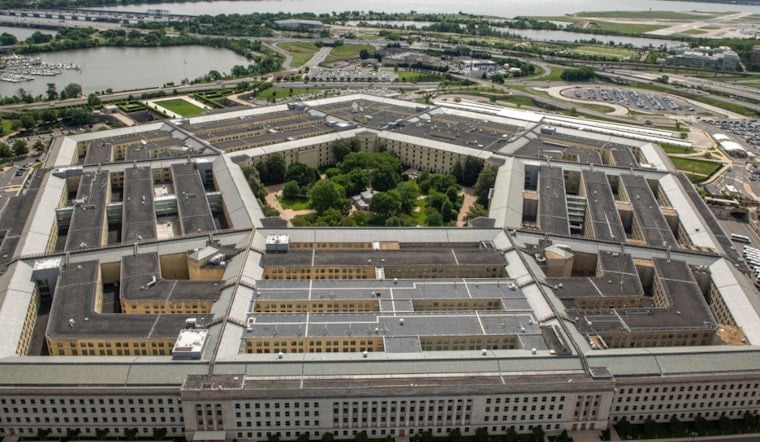
The Pentagon is weighing a sweeping rewrite of how America’s military academies teach, hire and prepare future officers. An unapproved draft memo would eliminate tenure for civilian faculty and subject every course at the academies and senior war colleges to a line-by-line test for combat relevance.
According to CBS News, the proposal would apply to West Point, the U.S. Naval Academy in Annapolis, the U.S. Air Force Academy, the Naval War College and the Army War College. More than 10,000 people are enrolled across those institutions, and the Pentagon has not said when — or whether — the draft will become official.
The memo argues that tenure can produce stagnation and allow academic research priorities to pull schools away from warfighter education. It would also target courses considered non-essential or ideologically driven, although the proposal does not spell out who would make that call or what standards would be used.
A Warfighter Review Already Underway
The draft would add a new layer to a military-education overhaul that began last year. A Defense Department memorandum issued in September 2025 ordered a 60-day review of curricula and training standards across service academies, military educational institutions and military schools.
That earlier review called for closer attention to large-scale combat operations, physical and cognitive skills, and the standards used to prepare troops for war. The new proposal appears to push the same mission-first argument further, from reviewing programs to restructuring the civilian faculty system itself.
West Point Defends A Hybrid Academic Model
West Point has long described itself as both a military institution and an accredited college, with academic instruction working alongside military training, physical education and character development. In testimony to the Senate Armed Services Committee, Superintendent Lt. Gen. Steven Gilland said cadets complete more than 50 courses, including core academics, military science, physical education and major requirements.
The testimony also framed broad scholarship as part of battlefield preparation, saying cadets need the intellectual agility to make decisions in uncertain and complex environments. West Point reported that an average of 67% of its graduates over the previous three years had majored in science, technology, engineering or mathematics — a reminder that the academy’s curriculum is hardly limited to parade-ground basics.
Tenure Fight Collides With A 1992 Congressional Direction
The proposed policy would also run against a decades-old effort to expand civilian expertise inside the academies. A 1992 federal law directed the Defense Department to pursue legislation increasing civilian faculty at West Point and the Air Force Academy while reducing the number of permanent military faculty in certain roles, according to the text of Public Law 102-484.
Academy leaders have defended tenure as a recruiting and retention tool for scholars who might otherwise choose civilian universities. The Pentagon’s draft now presents that same job protection as a source of institutional drift, setting up a direct clash between academic independence and the administration’s demand for tighter ideological and operational control.
Academic Freedom Is Already In Federal Court
The tenure proposal arrives as West Point is fighting a separate legal battle over speech restrictions on civilian professors. In a case brought by law professor Tim Bakken, a federal judge issued a preliminary injunction blocking the academy from enforcing a policy that required advance approval for many forms of public speech and from restricting Bakken’s personal viewpoints in discussions with students, according to the court order.
That case does not decide whether military academies may change their tenure systems, but it highlights the legal questions likely to follow any attempt to reshape faculty employment and classroom instruction. Universities generally treat tenure as a safeguard for academic freedom; military academies operate under a more complicated structure, where faculty are expected to support both educational standards and institutional missions.
Curriculum Changes Follow Library And DEI Reviews
The proposed overhaul also follows a series of Pentagon-directed reviews of military education materials. In a May 2025 release, the Defense Department ordered military educational institutions to review library collections for material it said could conflict with the department’s mission, including content related to diversity and gender ideology.
Earlier this year, the Pentagon also ended or planned to end some military education and fellowship programs at Harvard, Princeton, Columbia and Yale. CBS News reported that Defense Secretary Pete Hegseth accused elite universities of promoting ideas he viewed as hostile to the military.
The latest memo is still only a draft, and CBS News reported that it requires approval from Under Secretary of Defense for Personnel and Readiness Anthony Tata and Defense Secretary Pete Hegseth. If approved, Tata would have 60 days to issue implementation guidance, but the Pentagon has not publicly identified the criteria it would use to decide which courses are essential, ideological or insufficiently tied to warfighting readiness.





