

























































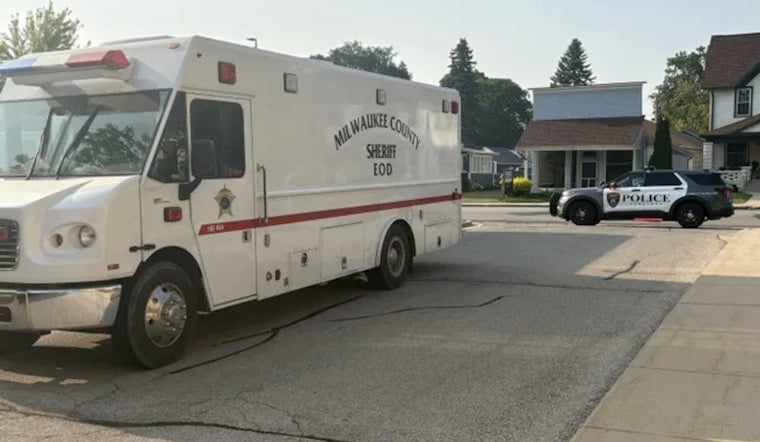
What started as a routine cleanup of a late father's Milwaukee home turned into a bomb squad job in Pewaukee on Thursday, after a resident turned over a stash of decades-old blasting caps to police.
Authorities say the resident handed over 26 blasting caps believed to be about 50 years old. Milwaukee County bomb technicians were called in, recovered the caps and destroyed them in a controlled operation. No one was hurt, and the scene was cleared once the disposal was finished.
As reported by the Milwaukee Journal Sentinel, photos provided by the Village of Pewaukee Police Department show members of the Milwaukee County Sheriff's Office preparing to recover the caps. According to the Journal Sentinel's gallery, the items were turned over to Pewaukee police after the resident found them while sorting through his late father's belongings.
Milwaukee County EOD handled the recovery
The Milwaukee County Explosive Ordnance Disposal team responded to the call and oversaw the safe removal and disposal of the caps. The Milwaukee County Sheriff's Office says its EOD unit "maintains an arsenal of tools to detect, identify and render safe hazardous devices, including x‑ray equipment, bomb suits, containment/transportation trailers and remote robotic systems." The Milwaukee County Sheriff's Office also notes that technicians receive ongoing training for these kinds of calls.
How technicians dispose of old caps and public safety advice
Bomb technicians often separate sensitive components and move them to a secure range for planned disposal instead of trying to dismantle everything on scene, a strategy meant to cut risk to nearby neighborhoods. Officials routinely urge residents not to touch or move suspected explosive items and to call 911 so trained teams can step in.
A Hoodline piece that detailed a Ross Township call shows the same approach and the use of controlled detonations at secure ranges, hidden explosives turn up in family home.
Why decades‑old caps still matter
Federal rules classify detonators, including blasting caps, as explosive devices and set strict storage and handling standards. That means even blasting caps that have been sitting for decades can still be hazardous if jostled or exposed to heat.
The ATF explosives guidance and federal regulations define detonators and lay out storage and magazine distance requirements intended to keep the public safe.



