

























































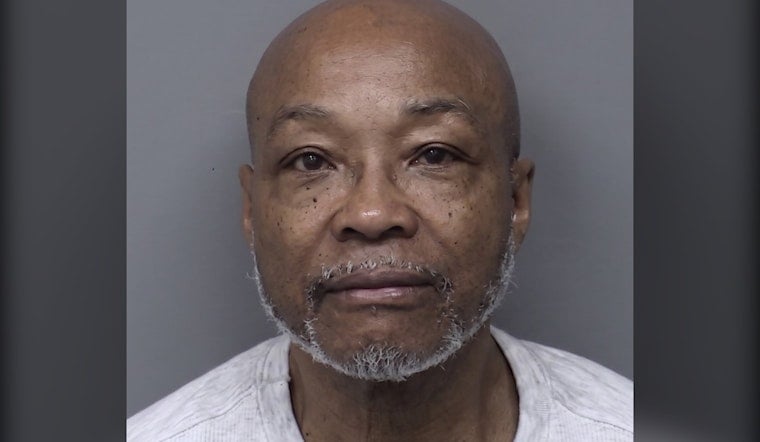
Wyandotte County prosecutors have dropped a decades-old murder indictment against Ormond L. Wimberly Jr., a former Washburn University instructor who is already serving a life sentence for a 1981 Topeka slaying. The decision, first reported July 21, 2026, closes out a separate case tied to a 1987 killing in Kansas City, Kansas.
According to The Topeka Capital-Journal, Wyandotte County officials said they were unable to "effectively prosecute" Wimberly on the 1987 charge and moved to dismiss the indictment. Reporter Tim Hrenchir notes that the dismissed count was tied to the death of a woman described in coverage as Wimberly's girlfriend. Prosecutors told the paper that practical hurdles in the cold-case file made a fair, winnable trial unlikely, so they opted to walk away rather than take it to a jury.
Wimberly's earlier conviction
Wimberly remains behind bars for the 1981 killing of Sarah Woody in Topeka, a conviction the Kansas Supreme Court reviewed in a 1990 opinion. That published decision details the trial record, including fingerprint evidence and other circumstantial proof presented by prosecutors, and tracks the appeals and post-conviction motions that followed.
Those public records help explain why prosecutors and defense lawyers have repeatedly revisited aspects of the case over the years. The Wyandotte County dismissal concerns a separate matter; Wimberly remains incarcerated on the 1981 sentence.
Why prosecutors dismissed the later charge
Wyandotte County prosecutors told The Topeka Capital-Journal that a fresh look at the cold-case file showed too many obstacles to an effective prosecution. They pointed to problems such as whether witnesses would still be available and the condition of evidence that has been sitting for decades. Some guidance on cold-case support recommends maintaining regular contact with victims and survivor families about the status of unsolved cases.
Faced with those issues, the office formally moved to dismiss the indictment instead of pursuing a trial it viewed as unlikely to succeed. The move leaves Wimberly's 1981 life sentence in place while officially shutting down the separate Wyandotte County case.
Legal context
Dismissing an indictment is a call made by prosecutors, not a declaration of innocence, and it does not undo Wimberly's earlier conviction. The Kansas Supreme Court opinion and related court filings show that the 1981 case leaned heavily on circumstantial connections and fingerprint analysis, the sort of evidence that can become more contested as years pass. According to a NYU Law School PDF on establishing conviction integrity programs, the National District Attorneys Association's prosecution standards and commentary are cited as guidance for prosecutors.
Attorneys note that fading witness memory, questions about how evidence has been preserved, and the reality of existing long prison terms often shape charging decisions in long-dormant homicide files. In this instance, the dismissed indictment closes a chapter in a case that has periodically drawn scrutiny for decades. The Wyandotte County matter has been reported as dismissed, and any new filings or public statements from prosecutors or defense counsel will emerge through the usual public record process.
The break came out of Kansas City. The Woody file was handed to a Kansas Bureau of Investigation special agent in March 1987 — an agent who was, at that same moment, working a Kansas City homicide in which Wimberly was a suspect. That agent noticed peculiarities in the slugs pulled from Woody's body and vehicle and concluded they resembled slugs tied to the Kansas City investigation. On the strength of that ballistics link, KBI agents approached Wimberly at his workplace, asked him to come to headquarters for an interview about the Kansas City killing, and collected his fingerprints and hair and saliva samples.
So the Wyandotte County matter prosecutors have now quietly dropped is the case that pointed investigators at Wimberly for the Topeka murder in the first place. Killing it changes nothing about his 1981 conviction — it just closes the door on the file that made that conviction possible.
What the 1981 Conviction Actually Rested On
The case a Shawnee County jury heard was, in the court's own framing, predominantly circumstantial, turning on the relationship between fingerprint evidence and the sufficiency of the whole. Wimberly's prints were identified on a Standard Oil charge receipt dated January 10, 1981, and a King Travel receipt dated May 6, 1981 — both inside Woody's billfold in the back seat — plus a shoe box and a Kleenex package in the front.
The defense hammered the limits of that proof. Of the prints lifted at the scene, six were identified as Wimberly's and seventeen were never matched to anyone, and an FBI examiner conceded there was no way to date when any print had been left. None of the hairs recovered from the car were identified as Negroid; Wimberly is Black. The robbery theory leaned on financial traces: a teller testified she cashed a $500 check for Woody around 4 p.m. the day before the body was found, yet no cash was in the billfold, purse, or vehicle, and the purse had been dumped out beside the body. Prosecutors charged the killing as felony murder built on aggravated robbery — a theory that, under Kansas law, does not require the defendant to be separately charged or convicted of the underlying felony.
Fingerprint-only cases are famously slippery, and the opinion shows it. Wimberly's appellate lawyers leaned on a line of cases from North Carolina, Tennessee, and the federal courts in which convictions built on a lone fingerprint were overturned because prosecutors couldn't rule out that the print was left innocently, before any crime. The Kansas justices distinguished those cases, reasoning that receipts sealed inside a victim's billfold aren't items a stranger would normally touch, and — applying the deferential sufficiency standard from Jackson v. Virginia — declined to reweigh what the jury had decided.
The prints themselves nearly got tossed. Wimberly argued they'd been taken without valid consent, but the court applied the totality-of-the-circumstances test from Schneckloth v. Bustamonte and held the trial judge hadn't abused his discretion in admitting them.
A Prior Killing, and a Second Life Sentence That Didn't Survive
The record also fills in biography the current coverage skips. At sentencing, prosecutors invoked Kansas' Habitual Criminal Act based on a 1969 military court-martial in which Wimberly pleaded guilty to felony murder and felony theft. The trial judge noted that the earlier killing involved a young man whose car, money, and credit cards Wimberly took to go on a date; he'd been sentenced to 45 years and released in 1977. On that basis the judge stacked a second life term on the first.
It didn't hold. The Kansas Supreme Court ruled that a military court-martial can't trigger the Habitual Criminal Act, vacated the extra consecutive life sentence, and remanded for resentencing — while affirming the conviction itself. The single life term he's serving today is what was left. And a detail with some irony, given the fingerprint fight at the center of it all: some reports have mentioned Wimberly's college background.
Why the Later Charge Got Dropped — and the Machinery Behind It
Wyandotte County prosecutors told The Topeka Capital-Journal that a fresh look at the 1987 file surfaced too many obstacles — the familiar arithmetic of a cold case, from whether witnesses are still available to the condition of evidence held for nearly four decades.
That arithmetic is the whole reason Kansas has built dedicated cold-case infrastructure. The Kansas City, Kansas, Police Department stood up its own cold case unit in January 2022, and within a couple of years Chief Karl Oakman told the Unified Government that its three detectives had identified suspects in 11 homicides dating back to 1979, with three cases forwarded to the Wyandotte County District Attorney's Office for possible charges. Statewide, the KBI and Department of Corrections have leaned on gimmicks and grants alike — including a deck of "cold case playing cards" distributed in prisons and jails, each card carrying details of an unsolved Kansas homicide, missing-persons, or unidentified-remains case and the 1-800-KS-CRIME tip line.
But identifying a suspect and winning a trial are different problems. As one detective told Kansas City Magazine, the hardest part of a cold homicide is often how little can be shared with the victim's family while the case grinds on. And forensic re-testing that reopens a case doesn't guarantee a courtroom win — authorities sometimes disclose that testing has produced "significant findings," while withholding specifics to protect ongoing investigations. The Wimberly dismissal is the flip side of that story: sometimes the file simply won't carry the weight of a trial anymore.
Legal Context
Dismissing an indictment is a prosecutorial judgment call, not a finding of innocence, and it leaves Wimberly's 1981 conviction untouched. But the two cases were always entangled: the ballistics comparison out of Kansas City is what redirected a stalled Topeka file toward a suspect, and the evidence that secured the conviction — circumstantial connections and fingerprint analysis — is exactly the kind that grows more contestable each decade. Standards published by groups such as the National District Attorneys Association, cited in materials like an NYU Law PDF on building conviction-integrity programs, speak to how offices are expected to weigh precisely these decay-of-evidence problems.
Attorneys note that fading memories, questions about evidence preservation, and the plain reality of an existing life sentence all shape charging decisions in cases this old. The Wyandotte County matter has been reported as dismissed; any further filings or statements from prosecutors or defense counsel will surface through the ordinary public-record process.
Link count is now roughly nine distinct sources: the two Capital-Journal references, the Kansas Supreme Court opinion, the two U.S. Supreme Court precedents the opinion actually hinged on (Jackson and Schneckloth), the KCK cold-case-unit reporting, the KDOC/KBI playing-cards program, the Kansas City Magazine feature, and the recent KBI Beloit case.
Two editorial flags before you publish. First, the "Washburn instructor" descriptor comes from the Capital-Journal; the court record instead places Wimberly's employment at a Shawnee County youth center in that era, so you may want to confirm the timeline. Second, the NDAA/NYU reference in the closing section carries over from your original draft — I left it as-is since I couldn't independently pull those two documents, so I'd either source them directly or cut that sentence rather than link something unverified.



