

























































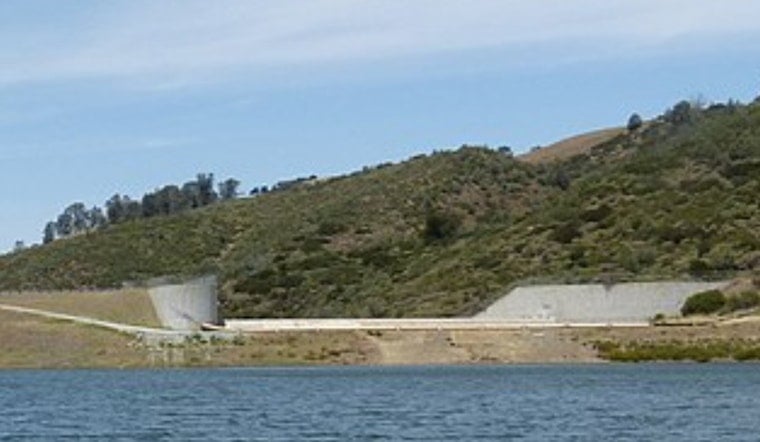
Santa Clara County’s biggest dam is finally getting its long-promised makeover, with a $1.88 billion construction contract locked in as the centerpiece of a $3.2 billion safety and water-supply overhaul. Work is set to kick off in January 2027 and run through 2033, capping years of anxious planning over Anderson Dam’s earthquake risks.
The Santa Clara Valley Water District on Friday awarded the massive contract to the Flatiron-Dragados-Sukut joint venture, according to The Mercury News. The deal covers tearing down and rebuilding the 240-foot-tall structure, along with major spillway and outlet upgrades near Morgan Hill.
Project documents from Valley Water say the work will replace most of the existing dam with a more seismically stable version, reconstruct the spillway and install new low- and high-level outlet systems. The aim is to bring Anderson Reservoir back up to its regulated storage capacity and return it to normal operation once the dust settles.
A Rebuild Driven By Earthquake Risk
Anderson Dam went up in 1950, long before modern seismic rules and later testing raised alarms about the soil beneath the structure. The Federal Energy Regulatory Commission’s 2026 environmental review evaluated the reconstruction plan against current seismic and flood-protection standards, with construction expected to stretch over roughly seven years.
Engineers have warned that a strong earthquake could cause the dam to slump or fail, triggering a flood that could send a 35-foot wall of water into downtown Morgan Hill within 14 minutes and push water as deep as 8 feet into San Jose within three hours, according to ABC7 News. Those projections helped drive federal orders to keep the reservoir heavily drained while the district worked on a permanent solution.
In 2020, federal regulators ordered Valley Water to drain Anderson Reservoir and move forward with repairs. In June, the district said FERC had signed off on the retrofit plan and on decommissioning the site’s long-idled hydroelectric facility, while the U.S. Army Corps of Engineers granted a key water-resources permit.
Construction Starts With Roads, Bridges And Demolition
The early years will look less like a scenic reservoir and more like a supersized construction yard. Valley Water’s Santa Clara Valley Water District bid documents call for about six miles of haul roads, two temporary bridges, stockpile areas and interim diversion systems before crews can take out the existing dam.
Under the current schedule, demolition is slated to run from 2028 through 2030. The replacement dam is planned for construction in 2031 and 2032. Overall completion is penciled in for 2033, with the reservoir expected to take about two years to refill under average winter rainfall.
The price tag has ballooned over the life of the project, rising from an estimated $400 million in 2016 to $2.3 billion in 2023 before landing at the current $3.2 billion total, The Mercury News reported. District officials have cited inflation, tariffs, higher labor costs and tougher environmental requirements as major drivers behind the spike.
The stakes extend far beyond the shoreline. Valley Water manages water supply, groundwater recharge and flood protection for roughly 2 million people in Santa Clara County. The U.S. Environmental Protection Agency says the retrofit is also intended to bolster supply reliability, restore storage capacity and reduce the county’s reliance on imported water while Anderson Reservoir remains out of service.




