

























































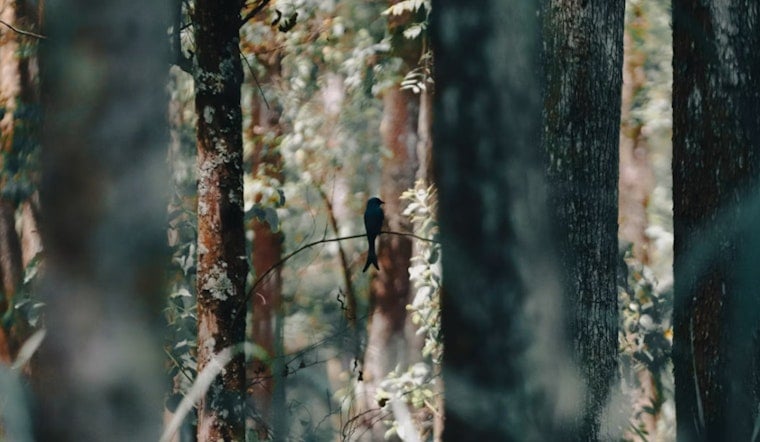
A new NC State experiment is giving scientific backing to something a lot of walkers already suspected: a little birdsong and a few healthy trees can take the edge off a stressful day. When volunteers spent a few quiet minutes in a restored pocket forest with birds singing, they showed bigger drops in stress and bigger boosts in positive mood than people parked in a grey campus plaza listening to traffic. By putting people through short, tightly controlled listening sessions, researchers were able to tease apart whether the setting or the sound was doing the heavy lifting. The result points to a clear, relatively low-cost way cities can make everyday public spaces feel more restorative.
What the researchers tested
The NC State team designed a randomized 2×2 experiment that crossed physical setting (a restored riparian forest versus a nearby grey, hardscaped campus space) with soundtrack (birdsong versus traffic noise). They then measured stress, positive and negative emotional experiences, and how restorative people felt each place to be. The work appears in the paper "Both restored forest and birdsong promote psychological well-being" in Environmental Conservation. According to the abstract, the combination of restored forest plus birdsong produced the lowest reported stress and the highest perceived restorativeness of all four test conditions.
Why birdsong helps, and where it falls short
"For participants who were in a green space listening to the birds, there were significant effects," lead author Nils Peterson told NC State News. The team recruited 106 people from campus and used noise-cancelling headphones so they could control exactly what each person heard, regardless of what was happening around them. That allowed the researchers to separate the influence of the physical place from the influence of the soundscape.
The authors are clear that this first test was brief and focused on college-aged volunteers. It is a promising signal, not the final word. They note that larger, longer and more diverse studies are needed before assuming the same mental health benefits will appear across different neighborhoods, ages and city layouts.
Where this could land in Raleigh
Raleigh already has a head start. The city has restored riparian corridors and pocket forests, including the Rocky Branch stretch that runs through the NC State campus, where managers and volunteers could try targeted, bird-focused restorations. As reported by The News & Observer, the study lines up neatly with the kind of greenway work Raleigh is already doing, since modest changes to habitat and sound can be scaled along existing trails.
Community groups that help maintain those routes say connecting small green patches and dialing down nearby traffic makes it easier for visitors to actually hear birds when they get outside. Friends of the Raleigh Greenway already flags the Rocky Branch area as a favorite spot for quieter walks and birdwatching, which fits neatly with what the NC State findings suggest.
How cities can amplify birdsong without breaking the bank
The playbook for city planners is fairly straightforward. Protect and expand native plantings along streams, add seating that faces restored habitat instead of busy roads and carve out lower noise corridors that favor people on foot and bikes over cut-through drivers. Some researchers have even experimented with hidden speakers that lightly boost the natural bird chorus. The Guardian reported that these "phantom chorus" trials increased visitors’ sense of restoration.
Any push to add trees and birdsong comes with an equity question. Tools such as the Tree Equity Score show that tree canopy, and the benefits that come with it, are not distributed evenly across urban neighborhoods. That makes it easier for cities to spot where new plantings, quieter routes and more pleasant soundscapes could help the most residents.
Takeaway for Raleigh residents
The NC State work adds experimental backing to a simple idea: sound matters. Even a short break in a leafy, bird-filled pocket forest can lower stress more than the same pause beside a busy road. If Raleigh’s planners and neighborhood groups keep chipping away at habitat restoration, traffic noise and uneven tree cover, the city stands to gain noticeable mental health benefits from relatively modest investments in green space and birdsong.




