

























































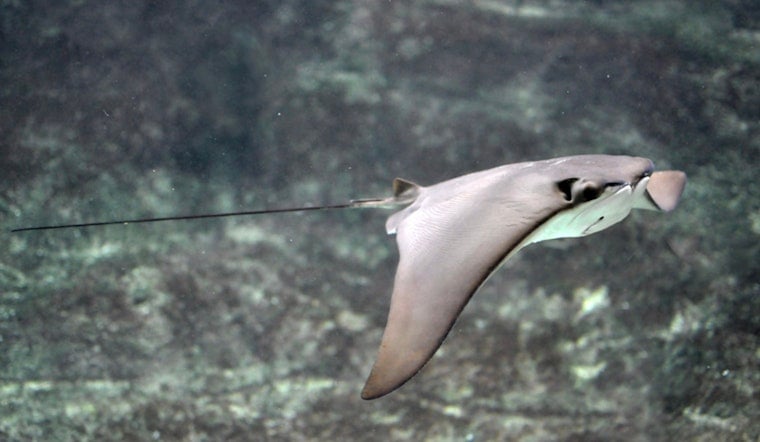
A small fever of rays has turned one of New York City’s most infamous industrial waterways into an unlikely wildlife stage. The animals were spotted swimming through Newtown Creek, the tidal estuary separating Brooklyn and Queens, in a scene that would have been hard to imagine during the creek’s dirtiest decades. The sighting is a hopeful sign—but not a green light for swimming, fishing dinner, or declaring the cleanup finished.
According to Gothamist, the rays appear to be cownose rays, though the identification is tentative. The outlet also reported that local observers described the gathering as a “fever,” an appropriately dramatic name for a group of animals gliding through a waterway better known for oil, sludge and industrial scars.
Newtown Creek’s Wildlife Comeback Is Bigger Than The Rays
The rays are not the only sign that Newtown Creek still supports a surprisingly active ecosystem. The Newtown Creek Alliance maintains a working list that includes oysters, clams, bass, moonfish, swans, egrets, robins and other marine and bird species observed in and around the creek.
That rebound is unfolding atop an ugly industrial history. Gothamist reports that refineries dumped, leaked or spilled an estimated 17 million to 30 million gallons of oil into Newtown Creek—an amount larger than the Exxon Valdez disaster.
The federal government designated Newtown Creek as a Superfund site in 2010, and the U.S. Environmental Protection Agency finalized an early cleanup plan in January 2025. The roughly quarter-billion-dollar project calls for dredging contaminated sediment, stabilizing some areas, installing sealed bulkheads where needed and monitoring the results, but the agency says the full cleanup will take several more years.
A Living Waterway Still Comes With Serious Warnings
Newtown Creek’s wildlife comeback should not be confused with a clean bill of health. The New York State Department of Health warns that eating fish and crabs from the creek could harm people’s health, while women under 50 and children under 15 are advised not to eat any fish or crabs caught there.
Federal scientists have issued a similar note of caution. NOAA says Newtown Creek contains contaminants including PCBs, heavy metals and volatile organic compounds, and that fish, wildlife and aquatic habitats remain at risk while the extent of natural-resource injuries is assessed.
At the same time, restoration and monitoring work is continuing along the creek’s industrial edges. The Newtown Creek Alliance’s 2026 TIDALS fellowship is tracking shoreline habitats, water quality and wildlife, part of a broader effort to understand whether habitat improvements can help the waterway support more life.
The rays, then, are both spectacle and signal. They show that Newtown Creek is not biologically dead, but they also underline the strange contradiction at the heart of its recovery: a waterway can be lively enough to host a drifting parade of rays and still be polluted enough that people should not eat what swims beneath them.





