

























































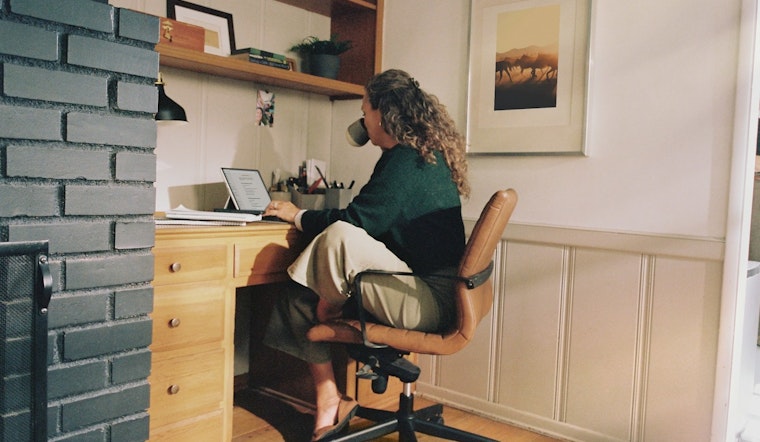
Remote work is not fading into some post-pandemic memory; it has quietly settled into the regular American workweek. A new analysis from the Federal Reserve Bank of Minneapolis says roughly 22 percent of U.S. workers did at least some work from home in 2025, with Minnesota sitting near the top of the pack for hybrid telework. That steady share is a big deal for downtown businesses, landlords and city officials who spent years planning for a major office comeback that still has not fully materialized.
What the Fed found
According to a report by the Federal Reserve Bank of Minneapolis, the share of workers doing any work at home hovered at around 22 percent in 2025, slipping by less than a single percentage point from 2024. The authors report that hybrid schedules ticked up slightly while fully remote roles edged down, and average weekly hours worked from home dipped only a bit. Rather than a big national swing back to the office, the analysis highlights wide differences among states and industries.
How the data were counted
The Fed’s estimates draw on the Census Bureau’s Current Population Survey, accessed through IPUMS CPS. Researchers used those data to classify workers as “fully remote,” meaning all of their hours were at home, or “hybrid,” meaning 10 to 99 percent of their hours were at home. That 10 percent cutoff is meant to screen out one-off or rare telework. The report also notes that questionnaire changes before 2024 make long-term comparisons tricky, and methodological notes walk through the weights and definitions that shape the state and sector breakdowns.
Where Minnesota fits
Minnesota ranks 12th in the country for the share of workers who spend at least part of their job at home, according to MPR News. The Fed’s analysis points to policy changes in 2025, including state and federal directives that steered many public employees back to physical offices, as a likely cause of the drop in remote work within public administration. Those moves, combined with growth in professional services and health care jobs, help explain why the national remote share ended up more or less flat.
Why mandates didn't erase remote work
The report finds that formal return-to-office orders changed which jobs saw remote work decline but did not wipe it out. National reporting on the federal directive and related agency actions indicates those policies pulled down remote rates in public administration, while other sectors were quietly expanding hybrid setups around the same time. The net effect was that the overall share of remote workers barely budged. In other words, mandates shuffled remote work around more than they reversed it.
What that means for downtown Minneapolis
For businesses that rely on weekday commuters, that translates to a slow, uneven rebound in foot traffic and lunchtime spending. Local coverage has followed employers testing out new hybrid rules, including Target's Core Weeks Hybrid Plan and similar “core weeks” strategies at other firms, while downtown groups keep rolling out promotions and events to lure workers back. The combination of modest office returns and persistent hybrid schedules leaves landlords, transit planners and restaurant owners juggling short-term survival tactics with longer-range shifts in how office towers and ground-floor retail will actually be used.
Bottom line
The Minneapolis Fed’s conclusion is straightforward: remote work is now a durable feature of the labor market, not a brief experiment. City leaders, property owners and employers are advised to assume hybrid patterns will stick around and to build flexibility into any downtown recovery plans. Taken together, the Fed’s report and local reporting suggest that relatively modest mandates on their own are unlikely to resurrect the old, five-days-a-week commuter routine.





