

























































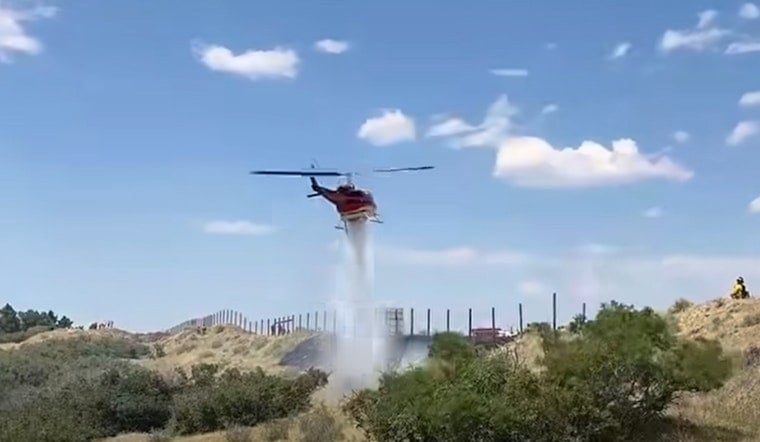
A firefighting helicopter attacking two brush fires along southbound I‑25 near Castle Pines Parkway had to briefly halt water drops on Sunday after a drone appeared over the flames, South Metro Fire Rescue said. Crews paused aerial operations while deputies hunted down the pilot, who was later cited for obstructing firefighting operations. The agency did not sugarcoat its warning on social media, telling would-be operators, “Your drone shot isn’t worth someone’s home, or someone’s life.”
In a video shared online, crews described how they quickly tracked down the drone and its operator, according to South Metro Fire Rescue. As reported by KDVR, the fires led officials to close the two right lanes of southbound I‑25 from RidgeGate Parkway to Castle Pines Parkway while firefighters worked to contain the blaze.
Why Drones Ground Aerial Firefighting
When an unauthorized drone slips into the same airspace as helicopters or air tankers, incident commanders typically pull all manned aircraft out of the area until the unmanned craft is gone, under guidance from the FAA. A small drone can pose a serious collision risk, which means air crews may have to stop water or retardant drops and slow the entire suppression effort.
Similar incidents have played out elsewhere. KSL reported that a drone spotted over the Iron Fire last week led authorities to track down and cite the pilot after aerial operations were disrupted.
Legal Consequences For Interfering With Firefighters
Colorado law makes it a crime to knowingly interfere with firefighters who are working to control a blaze. The state’s obstruction statute, C.R.S. § 18‑8‑104, specifically covers conduct that gets in the way of fire abatement, which can include local criminal citations or charges.
National fire-safety officials also point out that federal enforcement and civil penalties can come into play when drone pilots violate temporary flight restrictions or interfere with aerial firefighting efforts.
In its post, South Metro urged drone operators to check NOTAMs, respect Temporary Flight Restrictions, and steer well clear of smoke plumes or active fire lines. The FAA similarly advises the public not to fly drones in or near any emergency response scene, warning that even a single unmanned aircraft can force firefighting helicopters and tankers to stand down and put both homes and lives at risk.




