

























































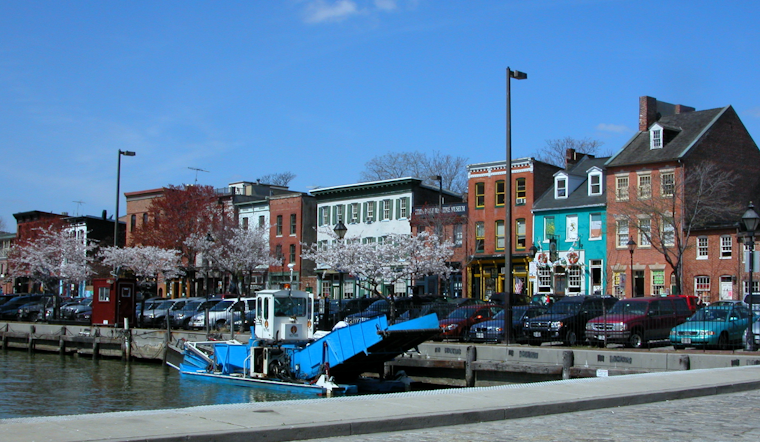
The Fells Point waterfront turned stomach-churning on Wednesday as large numbers of dead fish floated up in the harbor, forming silvery slicks and shoreline mounds that had passersby and restaurant staff yanking up shirts and grabbing napkins to cover their faces. The worst scenes were reported around Bond Street Wharf, where visitors said a strong, rotten odor hung over the promenade. Local officials and environmental groups were alerted, but as of Wednesday evening, there was still no announced timeline for a full cleanup.
Piles Stack Up Near Bond Street Wharf
News crews from WMAR-2 News filmed the die-off and reported that many of the carcasses had collected near Bond Street Wharf. Allison Blood, environmental program manager for the Waterfront Partnership, told the station the deaths are most likely tied to reduced dissolved oxygen at the surface brought on by recent extreme heat and a lack of rain, according to WMAR-2 News. Observers said most of the fish appeared to be juvenile menhaden along with other small forage species.
State Records Show Hypoxia Is Nothing New
The Maryland Department of the Environment's annual fish-kill summary lists repeated hypoxia-driven events in the Inner Harbor and across the Chesapeake, noting that low dissolved oxygen is a frequent natural trigger for mass fish deaths. The agency's 2025 Fish Kill Summary logged roughly 273,353 fish mortalities statewide and described several large Inner Harbor events linked to low oxygen and sulfur-bacteria blooms, according to the Maryland Department of the Environment. That track record is a big reason officials quickly zeroed in on oxygen stress as a likely culprit this week.
Harbor Design Makes Fells Point A Trouble Spot
Environmental advocates say the Inner Harbor's deep, engineered channels are especially prone to trapping oxygen-poor bottom water during brief turnover events. When that low-oxygen water sloshes upward, it can trap schools of young menhaden in place and leave them with nowhere to go. Local monitoring groups, including Blue Water Baltimore and the Waterfront Partnership, have documented bright green "pistachio tide" discoloration and multiple fish kills in recent seasons and have urged steps to improve circulation and create more shallow refuge habitat, according to Baltimore Brew. Volunteers and nonprofits often step in to collect water samples and assist with targeted cleanups after big events like this one.
Heat And Drought Prime The Pump For Die-Offs
In early July, the National Weather Service issued a Heat Advisory along the I-95 corridor, warning of heat index readings climbing into the triple digits and a stretch of hot, dry days that can warm and stratify harbor waters. That kind of weather, followed by relatively cool nights and mixed with algal die-offs or sulfur-bacteria activity, strips dissolved oxygen from the water and makes fish kills more likely, according to meteorologists and environmental investigators. Officials say those conditions line up with what they are seeing this week, per the National Weather Service.
How To Report Dead Fish And What Investigators Do
The Maryland Department of the Environment is asking anyone who spots large numbers of dead or distressed fish to report them so biologists can respond. During normal business hours, callers can reach the agency at 443-482-2731 or 1-800-285-8195; after hours, reports go through MEMA at 1-866-633-4686, according to the Maryland Department of the Environment. Once notified, MDE typically sends investigators to measure oxygen levels, collect tissue samples if needed, and determine whether a pollution incident, algal crash or natural turnover is behind the mortality. Officials say early signs point to environmental stress rather than a single industrial spill, but conclusions will have to wait for laboratory analysis.
In the meantime, people visiting the waterfront are advised not to handle the dead fish and to keep pets away from the water until agencies confirm there is no public health risk. Hoodline will update this story when state or city officials release formal findings and cleanup plans.



