
























































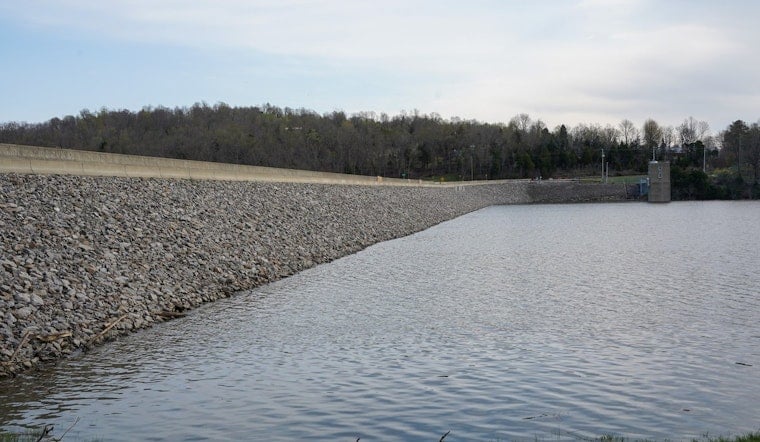
Crews rolled into Falls of Rough this week to start a multi-year overhaul of the Rough River Lake dam, kicking off Phase 2 of a construction program that engineers say will not be a quick job. The work will change how the U.S. Army Corps of Engineers operates the reservoir, keep the summer pool lower while permanent repairs are built, and shuffle traffic patterns and staging areas around the dam. Boaters and lakeside businesses are already dealing with the lower waterline this season, and officials say the disruption is aimed at cutting long-term flood risk for communities downstream.
According to the U.S. Army Corps of Engineers, the Louisville District awarded a base contract in December 2025 for Phase 2 that covers a new outlet works and a full-depth cutoff wall across the dam. The Corps lists a $320 million base award to Thalle-Bauer LLC and expects the contract total to reach roughly $655 million by completion, with construction anticipated to last about six to eight years. Groundbreaking was scheduled for summer 2026, and the final plan calls for moving Kentucky Route 79 back up to the crest of the dam once the new outlet is in service.
Why Engineers Say The Dam Needs A Fix
Data from Arizona State University’s public water-data repository shows that a 2023 U.S. Army Corps of Engineers risk assessment reclassified Rough River Dam as DSAC 2, a “high” urgency rating, after engineers identified seepage pathways in the limestone foundation under the structure. That karst geology can allow internal erosion, which led to earlier grouting and monitoring efforts but also convinced engineers that a deeper, permanent cutoff wall was necessary. They say the new cutoff and updated outlet works are intended to halt foundation seepage and materially reduce the risk to people and property downstream. According to USACE Publications (.mil), engineering guidance notes 'the disturbance of constructing the seepage cutoff wall at Wolf Creek' as an example of the disruption such repairs can cause. USACE Publications (.mil) documents that 'injection grouting was used for the repair of a number ...' of projects, showing that grouting has been a commonly used remedial step before installing deeper cutoff walls. Kentucky Division of Water (DOW) guidance on Existing Earth Dams notes 'The toe drain system will consist of a cutoff wall across the valley at the ...', illustrating that cutoff walls are an established state-recommended method to control seepage in karst or similar foundations.
What Work On The Ground Looks Like
Local reporting says crews are now on site and that early activity is focused on building the new outlet system on the left abutment before turning to construction of the cutoff wall. WDRB quotes Assistant Secretary of the Army (Civil Works) Adam Telle as saying, "We are not going to let that dam fail," and reports that project leaders expect the upgrades to extend the dam’s useful life by decades. The ramp-up of heavy construction will bring new staging areas, shifting traffic patterns and added safety controls around the lake as contractors set up equipment and material yards.
How Officials Plan To Watch It
The Corps says the dam will stay under tight watch throughout construction, with more than 90 piezometers and other instruments feeding near-real-time readings to engineers so they can spot any troubling patterns early. U.S. Army Corps of Engineers officials also note that many boat ramps and some beaches will remain open at the reduced summer pool, though a few public beaches will be closed and private dock owners are urged to coordinate with the project office. The agency plans to hold public meetings and share regular updates as the long-running job progresses.





