

























































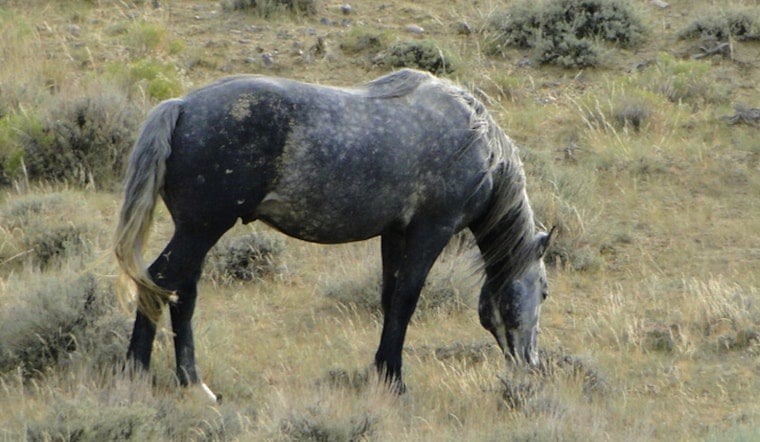
A federal judge in Sacramento has thrown a wrench into the Bureau of Land Management’s plan to pull roughly 850 wild horses off three herd-management areas on the California–Nevada border this September. Senior U.S. District Judge William B. Shubb issued a preliminary injunction halting the agency’s 2025 Gather Plan while a fresh lawsuit plays out, after advocates including Carter Reservoir Mustangs and Wild Horse Education warned the mass removals would irreparably damage those herds.
In a written order, the court said the plaintiffs are likely to prevail on claims under the Wild Free-Roaming Horses and Burros Act and the Administrative Procedure Act, finding the agency acted arbitrarily and capriciously when it leaned on unsupported assumptions about herd growth. The injunction blocks implementation of the 2025 Gather Plan for the Carter Reservoir, Buckhorn and Coppersmith herd-management areas. According to the court docket in the Eastern District of California and reporting by Courthouse News Service, the decision is reflected in recent case filings.
Why The Court Paused The Gathers
Judge Shubb took issue with BLM’s decision to plug in a generic population growth rate instead of relying on current, herd-specific data. The agency’s own assessment, the court noted, shows many years of lower growth, and in some years negative growth, for these Northeastern California herds.
The judge faulted the environmental review for using growth projections that were not adequately tested against the monitoring information the agency already had, a gap he found central to BLM’s conclusion that the herds were overpopulated. According to the agency’s draft and final environmental documents, BLM modeled about a 20 percent net annual growth rate when setting its removal targets. The population assumptions the court scrutinized are laid out in the environmental assessment available from the BLM.
BLM’s Position And Range Concerns
Government lawyers countered that the gathers are needed to head off serious damage to public lands, arguing that too many horses can trample vegetation, degrade riparian areas and put archaeological sites and other wildlife habitat at risk. BLM attorneys also warned that calling off removals this fall could leave more animals on the range than the land can support, increasing the risk of dehydration, declining body condition and injuries from fighting.
As Courthouse News Service reported, the agency framed the contested gathers as part of its basic responsibility to balance wild horse populations with overall public-land health.
What Happens Next
The preliminary injunction is a short-term measure that keeps the status quo in place while the lawsuit continues. It does not resolve the ultimate legal questions and can still be appealed.
The case remains active in the Eastern District of California as case No. 2:25-cv-03252, with procedural deadlines and a status conference laid out while the parties prepare additional briefing and potential trial scheduling. The filings and scheduling entries are listed on Justia.
Why The Ruling Matters
Beyond stopping this fall’s gathers, which would have removed an estimated 470 horses from Carter Reservoir, 273 from Buckhorn and 113 from Coppersmith, the ruling sends a broader message: when federal agencies plan large-scale removals, courts are going to look for current, herd-specific science, not just long-standing assumptions.
That was the heart of the plaintiffs’ challenge and the logic the court leaned on in granting relief. The advocacy groups and their attorneys have cast the order as confirmation that federal land managers must back up big decisions with reasoned, evidence-based analysis. A release from Wild Horse Education cites the ruling and the planning documents in the court record as key support for their position.
For now, the injunction keeps the Carter Reservoir, Buckhorn and Coppersmith horses out on the range and forces a closer look at whether BLM’s population estimates, Appropriate Management Levels and older planning documents really capture what is happening on the ground. However the case ultimately lands, the fight is likely to ripple well beyond Northeastern California and shape how BLM designs future gathers across the West, and how skeptical judges will be when agencies rely on stale data to justify sweeping removals.





