

























































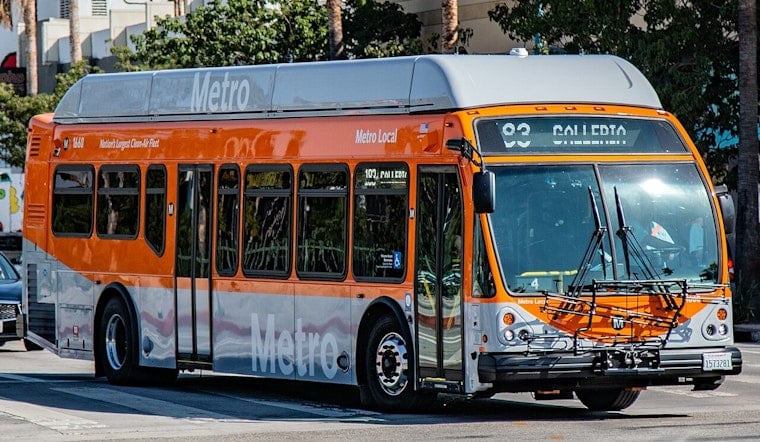
LA Metro says its trains and buses are measurably safer than they were a few years ago, pointing to fewer incident reports and rising rider satisfaction. Agency leaders credit new fare gates, expanded fare validation and a beefed up public safety operation for the shift. Riders and officials describe visible changes on platforms and buses this summer, even as some advocates and columnists argue the numbers do not always line up with what passengers feel on board.
Bill Scott, who was tapped to lead Metro’s new public safety department in 2025, made that case in an opinion piece for New York Post. Scott, who arrived at Metro after long stints with the LAPD and as San Francisco's police chief, has been central to the agency’s messaging about safety and ridership recovery, according to the Los Angeles Times.
What the numbers show
Metro’s public safety materials report steep drops in problem reports where access controls were added. Transit Watch incidents tied to security, vandalism and cleanliness fell roughly 69% at stations with the new, taller fare gates, and stations that adopted TAP to Exit saw about a 40% decline in security related reports. The agency also says “crimes against society,” a catch all for trespass, narcotics and weapons offenses, dropped about 33%, and retrofitting buses with fully enclosed operator barriers helped cut assaults on drivers by roughly half. Ridership has rebounded as well: Metro reported more than 311 million boardings in 2024 and an 87% customer satisfaction score in its 2025 pulse survey, according to LA Metro and its ridership release.
How Metro says it did it
Metro casts the gains as the result of layered measures that work together rather than a single silver bullet. The agency points to taller, latched fare gates, TAP to Exit validation at end of line stations, more Transit Ambassadors and a growing in house public safety team. Local coverage of the TAP to Exit rollout notes that enforcement moved from warnings to citations and that Metro recovered fare revenue while reporting fewer incidents, per FOX 11. The Metro board also shifted money toward operations, cleaning and safety in a $9.7 billion FY 27 plan.
Critics and community concerns
Plenty of people are not sold on the rosy read of the data. Commentary in City Journal (republished by RealClearPolitics) and other critics argue that enforcement first fixes can displace rather than solve deeper problems. Local reporting and public commenters have also raised equity concerns about expanded checks and weapon screening pilots, as covered by LAist.
What’s next for riders and Metro
Metro says it will keep rolling out access control upgrades and staffing as Los Angeles hosts FIFA World Cup matches this month and looks ahead to the 2028 Olympics; FIFA lists SoFi Stadium in Los Angeles as one of the 16 host venues for 2026. Local outlets report that Metro intends to add TAP to Exit checks at additional end of line stations in the coming months as enforcement and care teams scale up, per FOX 11. The agency says the real test will be whether the system keeps riders coming back while providing safer, cleaner service.
The numbers back up Metro’s claim that the trend is moving in the right direction, but officials and advocates agree the work is far from finished. For now, Metro's approach is a mix of hardware, enforcement and social services, and the question hanging over it all is whether those measurable gains will hold once the major events and summer crowds are gone.





.jpg)