

























































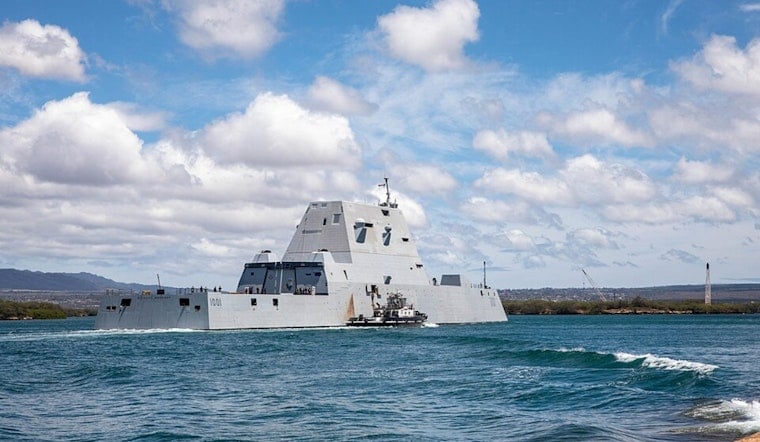
The U.S. Navy’s high profile push to turn San Diego based destroyer USS Michael Monsoor into one of its first hypersonic missile carriers is slipping into a longer, messier slog than advertised. What was supposed to be a relatively quick modernization has stretched into months of delay, pushing live fire testing into 2027 and trimming the Pacific Fleet’s near term hypersonic firepower. The slowdown is stirring fresh doubts about production, sustainment and whether the three ship Zumwalt class can really deliver the cutting edge punch policymakers have been promising.
Watchdog Says Hypersonic Plan Is Roughly Two Years Late
Last Friday's report from the Government Accountability Office found the Navy’s effort to modernize the three Zumwalt-class destroyers to field the Conventional Prompt Strike hypersonic weapon is about 24 months behind schedule. The GAO cited unexpected shipyard work, complex ship system issues, and production problems with the missile itself as the main reasons for the slip, according to the Government Accountability Office.
Shipyard Bottlenecks And Power Plant Work
Defense reporting says the program hit turbulence when the lead ship needed its first full shutdown and restart of an unusually complex integrated power system. That process uncovered extra electrical work and repairs, stretching the modernization timeline instead of keeping it tight and tidy. Those complications have squeezed available windows at Huntington Ingalls’ Pascagoula yard and, according to Defense News, pushed back when USS Michael Monsoor can even start its own overhaul.
Missiles, Manpower And Money
The GAO also reports that production of the Conventional Prompt Strike missile is running below planned rates, at roughly six to seven missiles per year instead of the roughly 12 per year needed to stabilize the program. Rising unit costs and more labor-intensive work have added schedule risk for getting the weapon installed on ships. The watchdog put modernization costs for the three Zumwalt ships at more than $2 billion and warned that sustainment challenges for the class’ unique systems could pile on even more long-term expense.
What This Means For San Diego
The Michael Monsoor is homeported in San Diego and was commissioned Jan. 26, 2019, according to the Naval Sea Systems Command. Delays to its refit slow how quickly the Navy can field a ship launched hypersonic strike capability from local piers and complicate deployment plans for commanders who had been counting on the Zumwalt class as a future long range strike node.
Local Coverage And Next Steps
The Michael Monsoor had been slated to sail to a Mississippi shipyard in 2026 to receive the new launch tubes, but the ship’s exact start date for overhaul is now unclear, according to The San Diego Union-Tribune. While program offices and contractors try to untangle production snags and shipyard bottlenecks, the GAO urged a broader, cross-service hypersonics strategy aimed at reducing the kind of schedule and cost risks that are now playing out on San Diego’s waterfront.
Bottom Line
The delays put real pressure on fixing missile production shortfalls and smoothing shipyard scheduling if the Navy wants the Zumwalt hulls to deliver the Conventional Prompt Strike capability on anything close to the timeline Congress and planners had in mind. For now, San Diego’s hypersonic ambitions are idling as the Navy and industry chase a steadier, more predictable rhythm for building and installing the new weapons.





_arrives_at_Pearl_Harbor_for_RIMPAC_2022_3.jpg)