

























































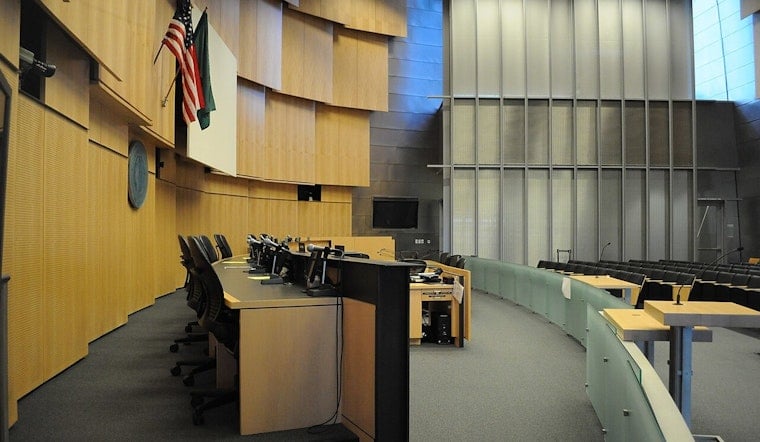
Seattle’s Public Safety Committee spent Tuesday wrestling with how exactly officers should respond when they encounter people using or possessing drugs in public, as new city data shows arrests climbing while diversion referrals slide. On the table is a bill that would make field-based, pre-booking diversion the preferred response, with tighter tracking of referrals, participation and outcomes. Committee Chair Councilmember Bob Kettle is sponsoring the measure and says the goal is to make enforcement more consistent no matter what neighborhood an officer is patrolling.
What the council is proposing
Council Bill CB 121248 would amend the Seattle Municipal Code to cement field-based, pre-booking diversion, meaning a direct, in-person "warm handoff" to recovery providers, as the city’s preferred enforcement approach and to ramp up data collection on referrals and outcomes, according to the council’s Central Staff memorandum. That memo also highlights a recent shift: Seattle Police Department arrests for public drug use and possession rose 47% from 2024 to 2025, while use of law enforcement assisted diversion dropped by about 30%. Staff warn that a rise in Charge-By-Officer referrals can cut out those in-field warm handoffs and limit immediate access to treatment.
Why proponents say it matters
Councilmember Kettle told the committee the bill is intended to "provide that clarity" so officers know when diversion is appropriate and when criminal steps have to follow, as reported by KIRO 7. He and other supporters argue that clearer code language and better data will make it easier for officers to deliver people straight to services in the field instead of defaulting to paperwork that lands on the City Attorney’s desk.
How LEAD and "warm handoffs" factor in
Evaluations of Seattle’s Law Enforcement Assisted Diversion (LEAD) model by University of Washington researchers have found that participants are substantially less likely to be rearrested than comparable groups, and that LEAD works best when officers make immediate, in-field referrals or "warm handoffs" to program staff. That research has been a key reason the city has prioritized officer-led diversion since LEAD launched, and staff say preserving the warm-handoff approach is central to getting better outcomes for people with substance use disorders. A study listed in PubMed is among the analyses cited for those results.
Council pushback and caution
Not everyone on the council is sold. Councilmember Debora Juarez warned that increasing on-the-spot discretion for officers could cut the wrong way, saying during the hearing that "maybe they don’t make the right decision." Residents who testified described visible drug markets in neighborhoods such as Greenwood and said they want both humane options for people in crisis and clearer, enforceable rules that restore a sense of safety in public spaces.
Neighborhood pressure on City Hall
Neighborhood pressure has been mounting. Recent public meetings, including one in Mount Baker, drew neighbors who pressed City Hall for faster action on encampments and open-air drug activity, as detailed in coverage of fed-up neighbors grilling City Hall. Business owners and residents in hotspots from Pioneer Square to Ballard say they want both sustained outreach and stronger tools for public safety and recovery services.
What happens next
The Central Staff memorandum notes the bill was introduced in early July and heard in committee on July 14. The Public Safety Committee may schedule a vote on July 28, and if the measure advances there, it would head to the full City Council on Aug. 4. If adopted, the ordinance would require SPD to adopt policies and reporting practices that put field-based diversion and the new data requirements into daily operations, according to the Central Staff memorandum.
Legal implications
The proposal builds on state law changes from 2023. Second Engrossed Second Substitute Senate Bill 5536 reclassified knowing possession and public use of controlled substances and directed jurisdictions to emphasize diversion and treatment where appropriate, a shift that has been reflected in city code updates and in legislative reporting from the Washington State Legislature. That statutory backdrop is a key reason the council is now zeroing in on clarity and data rather than attempting a wholesale overhaul of its overall drug policy.





