

























































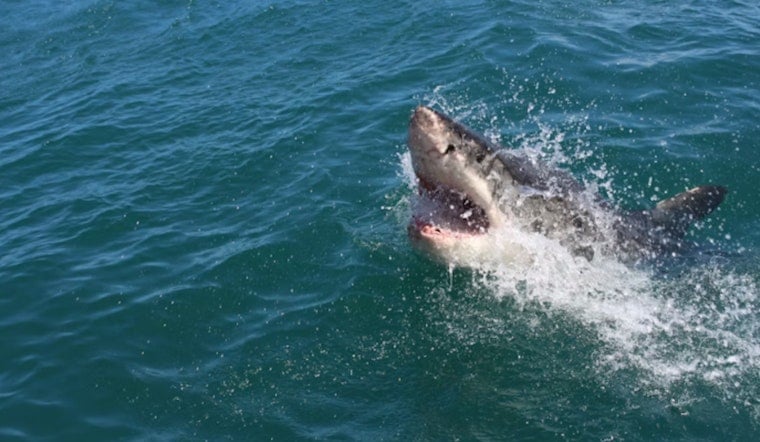
An Alabama teenager who survived a brutal shark attack on the Florida Panhandle has now helped change federal law. A new statute named for survivor Lulu Gribbin will let authorities send emergency cellphone alerts when a shark bite is reported nearby, so people on the sand and in the surf are not left in the dark.
Gribbin was 15 when a shark tore off her left hand and part of her right leg during a 2024 beach trip. In the two years since, she has pushed lawmakers to create a warning system so other families would have information she never got. President Donald Trump signed the measure, known as "Lulu's Law," last week, clearing the way for targeted Wireless Emergency Alerts to be used after shark incidents.
Lulu’s Law is now federal law! https://x.com/SenKatieBritt/status/2070665495477453023
— Senator Katie Boyd Britt (@SenKatieBritt) June 27, 2026
How Lulu's Law Will Work
The law directs the Federal Communications Commission to issue an order within 180 days that classifies a shark attack as an event eligible for Wireless Emergency Alerts. The bill text, listed on Congress.gov, spells out the 180 day deadline and explains that authorized local, state, tribal and federal officials will be able to send geotargeted alerts.
In everyday terms, that means emergency managers could push a loud, location based warning to phones in a tight radius around an attack rather than lighting up devices across an entire county or region.
Why Gribbin Pushed The Measure
After the June 7, 2024 attack, Gribbin said she learned that another woman had been bitten about 90 minutes earlier and roughly three miles down the beach. She has said knowing about that first bite would have kept her out of the water.
Through a long recovery, she has talked about choosing positivity and turning trauma into advocacy. Her interviews and public appeals helped build momentum for the federal bill, according to ABC News.
Shark Bites: How Rare Are They?
Scientists consistently stress that shark bites are uncommon, even if they make big headlines. Statistical data from the Florida Museum’s International Shark Attack File shows that in a typical year there are roughly 60 to 80 confirmed unprovoked bites worldwide.
Researchers say it is extremely rare for multiple people to be bitten in close proximity. Experts also note that conditions such as murky water or schools of baitfish can raise the odds that a shark mistakes a person for prey.
State Steps And Local Reaction
The federal move followed earlier action in Alabama, where lawmakers passed a state level version of Lulu’s Law in 2025 that authorizes localized shark alerts for coastal counties, according to WTVM.
Representative Gary Palmer introduced the House companion to the federal bill in March 2025, as outlined by his office in a press release. When President Trump signed the measure, lawmakers and the Gribbin family praised the new law, as reported by AP News.
What Happens Next
With the statute now on the books, the FCC has 180 days to issue the required order, a timeline set out in the bill text on Congress.gov. After that, states and local agencies must decide who is authorized to trigger an alert and how to confirm an attack quickly enough to warn swimmers without flooding beaches with false alarms.
Key details, such as which officials can push the button, how large the alert geofence should be and what verification standards to use, will determine how useful the system is on crowded summer coastlines.
Gribbin has told reporters she hopes Lulu’s Law will give beachgoers solid information when they are deciding whether to go in the water and ultimately "save lives," according to AP News. The next several months will revolve around rulemaking and the practical work of building local procedures that balance speed with accuracy.





