

























































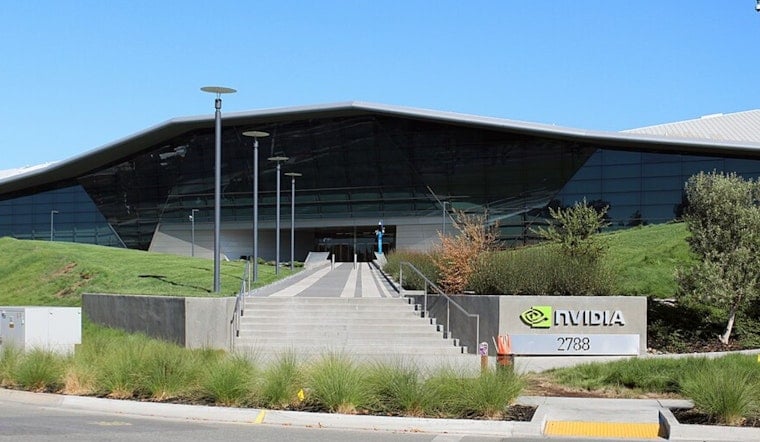
Silicon Valley is watching with a mix of awe and heartburn as Nvidia reportedly toys with an unprecedented role in financing the very AI boom it is powering. The chip giant is said to be weighing a financial backstop tied to OpenAI’s plan to lease computing capacity from a colossal data center project in Ohio, a structure that could involve roughly $250 billion in guarantees for lease and construction obligations. That would sit atop a broader wave of AI infrastructure partnerships that analysts say could add up to more than $750 billion, blurring the line between vendor and banker and concentrating even more demand on a single hardware supplier.
According to Bloomberg, Nvidia is working on a new slate of AI infrastructure deals that could exceed $750 billion, tied to major memory and data center partnerships. Separately, the company has detailed a strategic tie-up with the parent of SK hynix that it values at more than $500 billion. In a company release, NVIDIA said the SK initiative spans long-term memory supply and plans for large AI factories.
The Ohio megacampus and the $250B guarantee
The Wall Street Journal reported that Nvidia is in talks to provide a roughly $250 billion guarantee that would help OpenAI lease a proposed 10 gigawatt campus being developed by SoftBank’s SB Energy in southern Ohio, a project that could cost more than $500 billion once chips and build-out are included. The paper says the guarantee would cover lease and construction financing, not the Nvidia chips themselves, and that the site sits on federal land where the Department of Energy has already flagged needed power and transmission upgrades. AP News has previously reported on the DOE-backed energy plan for the area.
Analysts flag circular financing risks
Credit analysts and market watchers say the structures under discussion echo earlier forms of circular financing arrangements in which a supplier’s capital or guarantees effectively underwrite demand for its own products. Those setups can turn into large contingent liabilities if the AI market cools or customers pull back.
One prominent example is Nvidia’s earlier investment in cloud provider CoreWeave, a roughly $2 billion injection that critics argued blurred commercial lines and helped fuel rapid capacity expansion. Bloomberg Law covered that deal and the debate it sparked among analysts, who questioned how far a hardware maker should go in financing the ecosystems that rely on its chips.
What this means for Silicon Valley
For the Bay Area, all of this adds up to a familiar but escalating storyline: chipmakers are evolving into infrastructure financiers as demand for AI compute explodes, and that shift affects how local suppliers, services, and startups plan everything from data center capacity to pricing models. NVIDIA CEO Jensen Huang laid out aggressive chip and data ambitions at the company’s GTC conference in San Jose this spring, and investors and partners here are watching closely to see whether complex financing deals end up locking customers into long-term hardware pipelines. Materials published by NVIDIA document the company’s recent roadmap and appetite for ever-larger AI factories.
Legal and policy questions
Legal and policy experts say a guarantee anywhere near $250 billion would almost certainly draw interest from regulators, bank underwriters and lawmakers, who could push for clearer disclosure of contingent liabilities and stricter firewalls between procurement decisions and financing arrangements. The federal role in siting and power allocation for the Ohio project, and the extent to which public agencies coordinate with private financiers, adds another layer of complexity that could invite oversight from both Capitol Hill and financial regulators. AP News has reported on the federal government’s involvement in the site’s planning.
For now, talks remain ongoing and the terms are not final. Companies approached for comment have largely issued careful statements, while journalists and market analysts dissect filings and briefings. Whether the proposed guarantees harden into contracts or quietly fade, the episode highlights how capital, compute and public policy are now intertwined at a scale that will shape who wins, and who ultimately carries the risk, in the next phase of the AI build out.





