

























































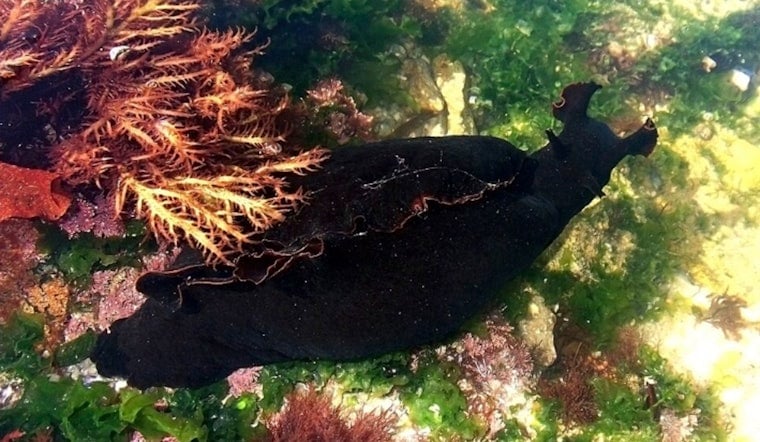
If your dog loves charging straight at every weird blob on the sand, Hutchinson Island might not be the best place for an off-leash romp this week.
Dark, slimy sea hares have been washing up along island beaches, and marine biologists are warning pet owners to keep dogs away. The slug-like animals can ooze purple ink and sticky secretions that, if sniffed or eaten, may sicken or even kill curious pets.
Local researchers and staff at the Florida Oceanographic Coastal Center raised the alarm after beachgoers started reporting strandings, as reported by WPBF. Zack Jud, the center’s director of education and exhibits, told the station that sea hares are marine gastropods that often appear in large numbers in July and typically clear out within days.
What Sea Hares Are And How Their Defense Works
Sea hares are large, herbivorous sea slugs that graze on algae and seagrass and can blend into floating seaweed mats. When disturbed, they release a purple ink and an opaline slime that confuse predators, and those secretions can contain chemicals derived from their algal diet, according to the Smithsonian Ocean.
Why Dogs Can Be Hurt
Veterinary research and case reports from other regions show that exposure to sea hares can cause neurological illness in dogs, including tremors, seizures and collapse. A peer-reviewed study of Aplysia gigantea toxicosis documented neurotoxic signs in dozens of dogs, and Australian vets and news outlets have reported serious or fatal cases during mass strandings, according to research on PubMed and coverage by ABC News.
How To Protect Your Pet
For now, the basic rules are simple: keep dogs on short leashes on affected beaches, do not let them mouth or eat unknown marine life, and avoid picking up purple-stained blobs. If your dog drools, vomits, trembles, becomes disoriented or has a seizure after a beach visit, seek veterinary care immediately, as local experts with the Florida Oceanographic Society say prompt treatment is critical.
Sea hares are a short-lived part of coastal ecology, the National Park Service notes. They typically live about a year and can mass-strand after breeding, so strandings are usually seasonal and temporary. Even so, pet owners are being urged to treat any unfamiliar beach blob with suspicion and to contact their veterinarian or an emergency clinic at the first sign of trouble.





