

























































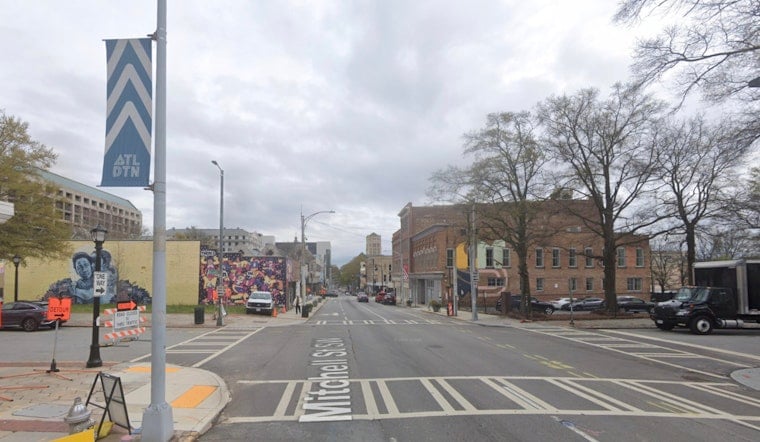
Four years after Newport RE rolled out splashy twin-tower plans for South Downtown that were supposed to remake Broad Street, the high-rises never left the ground and the company’s U.S. presence largely faded out. The parcels once tagged for an 18-story and a 21-story tower instead cleared the way for small-scale activations, including a half-acre park and new restaurants that opened in time for the World Cup. For downtown boosters and developers, it is a pointed reminder that locking up land and glossy renderings is only step one, and that actually securing capital is a completely different ballgame.
What Newport Once Promised
Back in September 2022, Newport unveiled plans for two new residential towers from the ground up, one 18 stories and the other 21, together projected to deliver about 650 apartments and more than 70,000 square feet of retail. The company said up to 20% of the rentals in the east tower would be set aside as workforce housing in partnership with Invest Atlanta, and both blocks were initially scheduled to arrive in 2025, as reported by Urbanize Atlanta.
How Financing Unraveled
By late 2023, Newport’s planned sale of its South Downtown portfolio had fallen through and its largest lender was advertising a foreclosure auction for 18 parcels, a turn of events that made the towers look increasingly unlikely. Newport later confirmed that its sale to Braden Fellman Group was terminated and said it was winding down its U.S. operations, according to The Atlanta Journal-Constitution.
Loan Filings And Lender Action
Public records tied the assembled properties to a roughly $75 million construction loan from Miami-based BridgeInvest and listed holdings such as 222 Mitchell and several Hotel Row parcels among those headed for auction. Reporting from Bisnow shows the lender alleged Newport had defaulted by missing payments and failing to hit construction milestones, a technical breach that can quickly unravel even the most ambitious downtown play.
What Sits On The Corner Today
The east-side corner at Mitchell and Broad that once starred in Newport’s tower renderings is now home to Founders Green, a new half-acre plaza, plus a downtown outpost of El Tesoro. Those placemaking moves helped bring life to the street during the World Cup, even if they fall short of the kind of density the towers were supposed to deliver. A recent look back from Urbanize Atlanta traces that pivot and the broader push along Broad Street toward smaller, phased wins, including a wave of new restaurants and public-space activations.
Why Smaller Projects Are Working
Not every housing bet in the core has stalled out. Projects like Trinity Central Flats and upcoming phases at Centennial Yards show that developers can still add residents with targeted, staged construction instead of a single massive tower. Recent coverage of Centennial Yards that details how the site plots 12-story tower development in smaller pieces highlights a strategy that some say better fits today’s capital markets.
What Comes Next For South Downtown
With Newport mostly off the board, the consolidated parcel map it assembled still carries value, since it reduces transaction friction and could draw new buyers. Any successor, though, will have to rethink the financing stack and likely phase construction to win over lenders and lock in pre-leasing. Invest Atlanta has previously served as a financing partner on South Downtown components and still has tools that can support workforce housing, a role that could be central in future arrangements, according to Invest Atlanta board records in public meeting documents. Local leaders expect the near-term landscape to be a mix of incremental activations, targeted housing and carefully staged new construction aimed at making the neighborhood both lively and financially viable.
The twin towers that were once billed as the catalyst to flip a sleepy stretch of Broad Street into a dense residential hub never showed up, but the area is hardly lifeless. Public space, restaurants and smaller housing projects are knitting the district back together and offering a more cautious, and arguably more financeable, path forward. Whoever steps in to write South Downtown’s next chapter will have to prove they can translate glossy renderings into bankable phases. Until then, the neighborhood’s comeback story looks set to play out one block at a time.





