

























































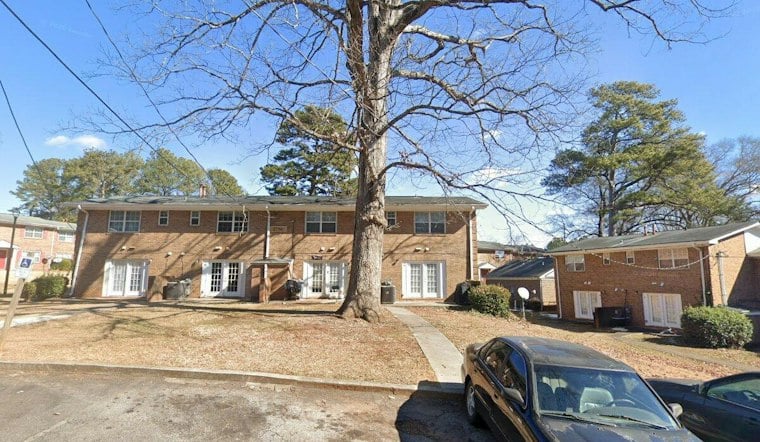
Tenants at Bolden Pines Apartments on Kelly Lake Road in DeKalb County say they're facing eviction even though they have proof they paid their rent. Several residents were expected in court Wednesday, clutching Cash App receipts and money orders as new management claimed they owed thousands of dollars despite ongoing payment histories.
According to WSB-TV, one tenant paid his August rent on August 6, only to receive an eviction notice two days later. He said the notice claimed he owed $4,000 despite his payment history, and he now says he cannot pay September rent because of the ongoing eviction proceedings. He told the outlet he works hard to keep up with his rent, goes to work every day, and is doing what he's supposed to do.
The tenant said he paid the rent amount outlined in his lease to the former property owner, but new management, which took over a few months before publication, refused some tenants' payments because eviction proceedings were already pending. The former property manager told the station that its system was down when tenants tried to pay rent, prompting some residents to use alternate payment forms — a claim tenants believe reflects the former manager's failure to properly handle rent payments.
Ownership Turnover Fuels Recordkeeping Confusion
Bolden Pines Apartments has changed ownership several times over the past year, and tenants believe past management's recordkeeping problems are now putting their housing at risk. Latresa Chaney said rent payments made through apps like Cash App and Zelle are becoming more common but can create recordkeeping complications, and she said the situation is affecting families and contributing to homelessness.
Nicole Jhin said accurate records are essential for renters when property ownership or management changes. The Housing Justice League, which reported that rent tracking can be complicated when management companies accept Cash App and Zelle, is helping the affected tenants navigate the dispute.
The station reported that it contacted the new management company by phone and email over the week before publication. The company said it would pass along reporter Eryn Rogers' information to relevant staff, but as of publication it had not responded to her directly.
A Pattern of Complaints at the Same Complex
This isn't the first time Bolden Pines has drawn scrutiny. Residents reported falling ceilings, broken cabinets, and leaking water heaters inside their apartments, with one tenant describing the living conditions as unsafe. Those complaints echo an earlier WSB-TV report from August 2025, which said Jenee Johnson filed a code-enforcement complaint. The report also described fungus growing from wet carpets, furnace leaks, lack of air conditioning, and roach infestations, alongside an absence of responsive property management.
A separate WSB-TV report from June 2025 covered a family at Bolden Pines. Together, the reports have focused attention on issues at the complex.
Georgia's Legal Landscape for Nonpayment Evictions
Georgia law does offer renters facing nonpayment claims a defense. Under Georgia Code § 44-7-52, a tenant can defeat a dispossessory action solely over unpaid rent by tendering all past-due rent plus court costs within seven days of receiving an eviction summons, according to Justia Law — though landlords are only legally required to accept that tender once every 12 months. Separately, a landlord's pre-filing demand for possession in Georgia may be oral, and no statutory waiting period is required before filing an eviction case over unpaid rent, per DocDraft.
Landlords are also barred from taking matters into their own hands. Georgia statute prohibits self-help evictions such as shutting off utilities, changing locks, or removing tenant belongings without going to court, according to a dispossessory facts document from Cherokee County, which says landlords must go to court to evict tenants.
Part of a Regional Eviction Surge
The Bolden Pines dispute unfolds against a backdrop of extraordinarily high eviction activity across Metro Atlanta. Landlords across the five-county region filed roughly 144,000 eviction cases in 2025, producing a filing rate of 24% to 25%, more than three times the national average, according to Princeton University's Eviction Lab data cited by SaportaReport.
The same Eviction Lab research found that the typical tenant was only one month behind when filed against, and that about 65% of cases were ultimately dismissed once payment issues were resolved. Dispossessory filing fees in the region range between $55 and $80, below the national average of $110.
That same outlet found that 36% of Metro Atlanta households receiving an eviction filing in 2025 had faced at least one prior filing at the same address within the preceding two years, creating persistent public court records that can impair future housing options even when cases are ultimately dismissed. Separately, fraud-detection industry data compiled in 2024 found that 12.2% of rental applications in Metro Atlanta were flagged for altered or fraudulent documentation, ranking the region third nationally and prompting property managers to heighten ledger auditing, according to the Nemat Law Firm.
For now, Bolden Pines tenants are left navigating a court system built for speed while trying to prove, receipt by receipt, that they held up their end of the lease. With the help of the Housing Justice League, some are hoping their paper trail — Cash App confirmations, money orders, and lease terms — will be enough to keep a roof over their heads.





