

























































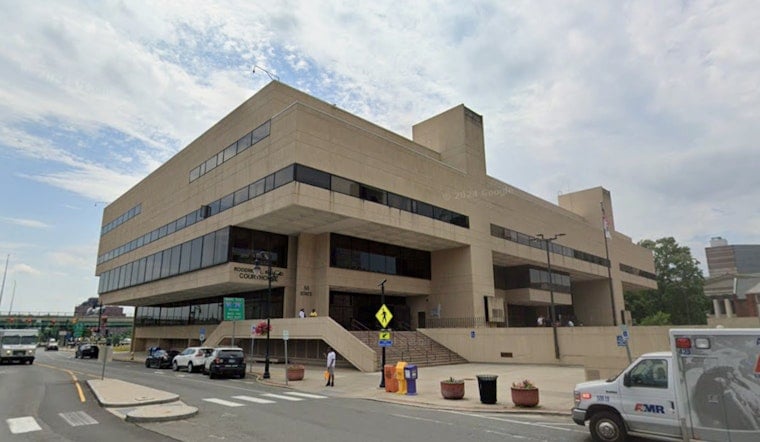
A nearly $2 billion plan to build a new Springfield courthouse has collided head-on with conflict-of-interest accusations, a fresh lawsuit, and calls from a fiscal watchdog to slam the brakes on the whole thing.
A state fiscal watchdog group and rival developers are urging Gov. Maura Healey to pause the Commonwealth's almost $2 billion, 40-year lease for a new Springfield courthouse after it emerged that the winning development team includes a firm tied to U.S. Rep. Ayanna Pressley’s husband. Two losing bidders have sued in Hampden Superior Court, claiming the award was tainted by undisclosed conflicts, questions about site control, and uneven application of procurement rules.
On July 2, the Division of Capital Asset Management and Maintenance, known as DCAMM, conditionally tapped the Liberty Junction team, a joint venture of FD Stonewater, CoJo Partners, and Suffolk Construction, to turn 125 Liberty St. into the Roderick L. Ireland Regional Justice Center. DCAMM and the Trial Court approved a 40-year lease with two optional 10-year extensions, touting a lease-back structure they say will speed construction and generate new property tax revenue, according to BusinessWest.
Within days, two Springfield-based developers, USPB JV LLC and Springfield Tower Square LLC, filed a verified complaint and motion for a temporary restraining order in Hampden Superior Court to keep the state from locking in the lease. Their lawsuit alleges that DCAMM's selection of Liberty Junction involved undisclosed conflicts of interest, raises doubts that the winning team truly had site control at 125 Liberty St., and accuses the agency of applying procurement rules inconsistently, according to Western Mass News.
The complaint zeroes in on CoJo Partners, described in court filings as a venture owned by John Barros and Conan Harris, the husband of Rep. Pressley. It notes that Barros was appointed interim executive director of the Massachusetts Convention Center Authority while DCAMM was still reviewing courthouse proposals. Barros filed an ethics disclosure stating that he is a passive investor in the courthouse project, according to The Boston Globe, but the plaintiffs argue that does not erase what they call the appearance of impropriety.
On Wednesday, the Massachusetts Fiscal Alliance piled on, publicly urging Gov. Healey to halt the deal and release detailed procurement records. Executive director Paul Diego Craney framed it as a transparency test around a contract that could bind taxpayers for decades, as reported by the Boston Herald. The group describes its mission as a watchdog for fiscal responsibility on its website, Mass Fiscal Alliance.
Local backlash
City Hall did not exactly break out the champagne. Springfield Mayor Domenic Sarno blasted the decision as "extremely disappointing" and said the state had ignored local riverfront proposals in favor of an out-of-town team, according to a release from the City of Springfield. Sarno and the city's chief development officer argued that the chosen Liberty Street site lacks the private development opportunities and parking that a riverfront alternative would have offered, a critique they said was shared by business and labor leaders.
What happens next
The plaintiffs are asking a judge to keep the state from finalizing the lease while the court scrutinizes DCAMM's process, and their attorneys have indicated they will push for expedited hearings. If a judge grants an injunction, DCAMM's plan to sign the lease and hit a 2030 occupancy date could be pushed back. The agency has said the lease approach was selected to deliver the courthouse more quickly and at a lower upfront cost, according to BusinessWest.
Legal implications
The heart of the lawsuit is a set of procurement and ethics claims. The plaintiffs argue that Barros' public position and his financial interest in the winning team created at least an appearance of conflict of interest that could prove pivotal when a judge reviews the record. Potential remedies run from a temporary injunction that pauses the project to vacating the award entirely or ordering a re-bid if the court finds that DCAMM did not follow state law, a possibility outlined in coverage by The Boston Globe and other local outlets.
As the legal battle ramps up, regional outlets report that several key players have yet to offer detailed answers. Western Mass News and others say DCAMM and the Liberty Junction team did not respond to requests for comment. The Boston Herald reported that it sought comment from Gov. Healey's office, Rep. Pressley's office, the Convention Center Authority, and the plaintiffs. Any on-the-record responses, when they come, will be closely watched as the case moves into court.





