

























































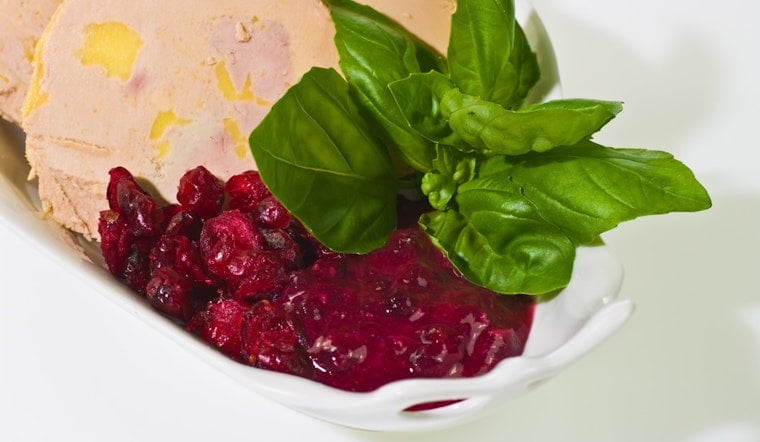
District of Columbia voters will decide this November whether to outlaw the sale of foie gras produced through force-feeding, after the D.C. Board of Elections confirmed that Initiative Measure No. 86 gathered enough signatures to qualify for the ballot. Formally titled the Prohibiting the Force-Feeding of Birds Act of 2026, the measure targets duck and goose liver products made by inserting a tube down a bird's throat to deliver excessive feed — the standard method behind traditional foie gras. Ducks and geese are typically force-fed to produce the enlarged livers prized in the dish.
The ballot qualification, first detailed by WJLA, caps a fast-moving signature drive. Campaign circulators for Pro-Animal D.C. collected and submitted more than 45,000 voter signatures in 14 weeks, turning them in on July 6 — well beyond the 28,728 valid signatures the district requires, according to National Law Review. D.C. ballot rules require that number to equal 5% of registered voters citywide, with at least 5% support in five of the district's eight wards, the outlet reports.
What The Ban Would And Wouldn't Cover
The initiative's language is narrow by design. It bans only products resulting from forced feeding, meaning duck or goose livers harvested without that method would remain legal to sell and serve in District restaurants, according to WTOP News. That distinction could give some vendors a path to keep liver dishes on the menu even if voters approve the measure.
If approved, Initiative 86 would take effect July 1, 2027, per the same WTOP report. Under the measure, restaurants and businesses that violate the ban could face fines ranging from $1,000 to $5,000, and repeat or serious violations could lead to the suspension or revocation of a business's operating license, per WJLA's reporting.
A Funding Gap Before Enforcement Even Begins
Money could complicate enforcement. A fiscal impact statement issued January 21, 2026, by D.C. Chief Financial Officer Glen Lee found that implementing Initiative 86 would cost $314,000 from fiscal years 2026 through 2029, covering inspections and outreach by the Department of Energy and Environment, according to the D.C. Office of the Chief Financial Officer. That amount is not currently included in the District's four-year budget plan, the office noted.
The unresolved funding question is one of several tensions surrounding the measure. Even though organizers gathered far more signatures than required, the price tag for enforcement remains outside the city's current spending plan — a gap D.C. officials would need to address if voters say yes in November.
Why D.C. Became A Target Despite Having No Duck Farms
The choice of D.C. as a ballot target is notable given the district has no commercial duck or goose farming operations, National Law Review reports. Yet D.C. ranks as the third-highest consuming city for foie gras in the United States, trailing only New York City and Las Vegas, according to 2026 campaign market data cited by the same outlet.
Part Of A Coordinated National Campaign
D.C.'s initiative fits into a broader, coordinated 2026 push by the national Pro-Animal campaign network, which placed a similar force-fed foie gras ban on Denver's November ballot and successfully lobbied the Portland City Council to enact a citywide ban in June, according to Oregon Public Broadcasting. Hoodline previously reported on Portland's foie gras fight as that city's council weighed the same measure.
A May 2026 study by the Colorado State University Animal-Human Policy Center found that only 23% of surveyed urban voters knew force-feeding is the primary method used to produce foie gras, but 79% supported a ban once informed of the practice. The same researchers identified 156 high-end restaurants serving foie gras across 21 major U.S. metro areas, underscoring how narrow the dish's footprint really is.
California's Ban Survived Court Challenges, Others Followed
D.C. would not be the first jurisdiction to try this. State and city prohibitions on the production or sale of force-fed foie gras have already been adopted in California, where a 2004 law took effect in 2012, along with Pittsburgh, Pennsylvania, in 2023, and Brookline, Massachusetts, in 2025, according to Animal Defenders International. A federal appeals court found California's ban was not pre-empted by federal authority over poultry products and reinstated it in September 2017, that same WJLA report notes.
New York And Chicago Show The Risks Of A Ban
New York City passed its own ban on force-fed foie gras sales back in 2019, but implementation stalled for years amid litigation until a New York appellate court upheld the ordinance in March 2026 — prompting Sullivan County poultry farms to appeal to the state's highest court in July, according to Earthjustice. The upstate farms argue the city's ban violates state agricultural district protections.
Chicago offers a cautionary tale for advocates. The city became the first major U.S. city to ban foie gras sales in 2006, only for its City Council to repeal the ordinance in 2008 after intense pushback from local restaurateurs and opposition from then-Mayor Richard Daley, according to the Los Angeles Times.
What's On The Line For D.C. Restaurants
Initiative 86 marks the first animal-rights measure to reach a D.C. ballot since 1991, when voters rejected a proposed ban on horse-drawn carriages, according to The 51st. Its passage would touch prominent local dining rooms, including Le Diplomate, which serves a $19 foie gras parfait, the outlet reports.
The vote also lands amid a wave of new French dining spots in the D.C. area still putting foie gras on their menus, including Gavroche, which opened in Old Town this spring. Whether dishes like that remain on menus will depend on how District voters weigh animal-welfare concerns against a dining scene that has, for decades, kept foie gras in demand.



