

























































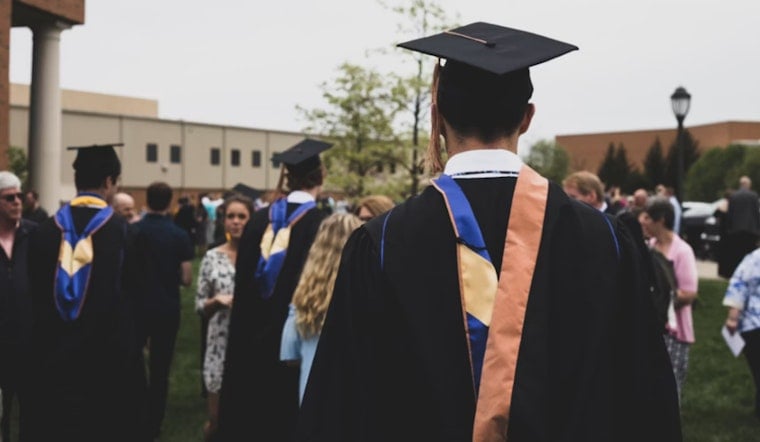
For a lot of brand-new college grads in St. Louis, the cap and gown high is fading fast. Degrees are in hand, but the steady jobs they were promised feel out of reach, as entry-level postings either vanish or suddenly demand several years of experience. The squeeze shows up in state data: employment among new-entrant college graduates in Missouri averaged about 86.5 percent in the first half of 2026, a weaker showing than recent years. Students and campus career staff describe long streaks of applications, very few callbacks, and a steady hum of anxiety.
Economists at the Federal Reserve Bank of St. Louis call this a “low-hire, low-fire” labor market, where employers cling to current staff and quietly pull back on bringing in newcomers. That pattern falls hardest on first-time jobseekers, according to the Fed’s breakdown of CPS and JOLTS data, which finds that a broad drop in job openings explains most of the worsening outcomes for young workers, while rising demand for AI-related skills is pushing up the bar for entry-level candidates.
How Missouri Graduates Are Feeling
Local coverage has put faces to those numbers. Riley Reed, a 22-year-old Webster University graduate, told reporters she fired off about 15 applications before finally landing work after weeks of searching. She signed on with a recruitment-marketing agency in Brentwood in mid-June, according to St. Louis Magazine. The same piece quotes William M. Rodgers III of the St. Louis Fed saying, "Entry-level positions that once were offered are not being offered," and notes that employment for new college graduates in Missouri dropped about 8.5 percentage points from April 2023 to December 2025.
What Is Slowing The Hiring Pipeline
According to the St. Louis Fed, the core of the problem is not that graduates are giving up on the hunt. Instead, there are simply fewer openings waiting for them, which means résumés are piling up against a smaller pool of vacancies. Fed analysts also highlight the way AI-related skills have become standard line items in job ads, effectively lifting minimum requirements for early-career roles and making things especially rough for applicants who do not yet have on-the-job experience.
National Picture And Responses
The national backdrop is not much sunnier. The unemployment rate for recent college graduates climbed to about 5.6 percent at the end of 2025, and many degree holders are landing in roles that typically do not require a college education, according to The New York Times. In response, university career centers and campus programs are nudging students to cast a wider net geographically, pick up internships wherever they can, and build up technical skills that employers increasingly spell out in their listings.
Some stories do end on a hopeful note. Reed said, "It really showed me that what I worked for paid off," describing her eventual offer as a hard-won payoff in a season of shaky hiring, per St. Louis Magazine. Economists, though, say the real relief for the class of 2026 will only come with a sustained pickup in overall hiring; until that happens, new graduates in Missouri and beyond will be fighting it out in a far tighter market than earlier cohorts faced.





