

























































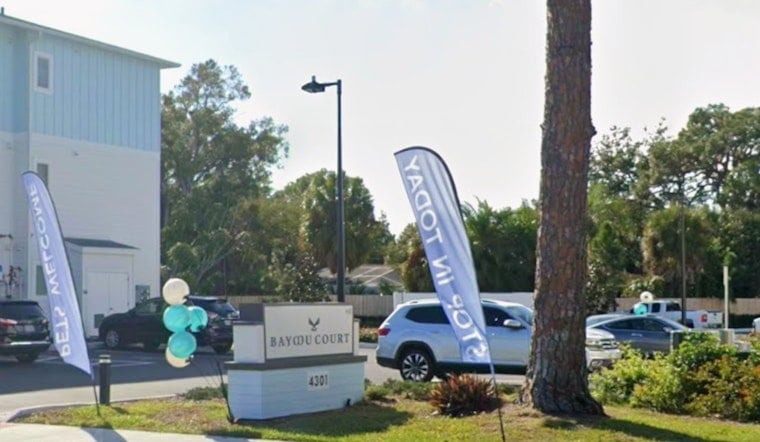
A St. Petersburg apartment complex is moving ahead with plans to cut down a pine tree that holds a bald eagle nest, a decision that is already catching the neighborhood’s attention. The nest sits high in a slash pine on the grounds of Bayou Court Apartments, and the tree is scheduled to be removed Saturday. The timing has stirred questions about how federal and state protections for eagle nests work and whether the crews have the permits they need before firing up the chainsaws.
As reported by the Tampa Bay Times, the nest is perched in a slash pine at Bayou Court Apartments, where crews had slated the cut for Saturday. The complex lists its address as 4301 6th Street South on its website, putting the tree squarely inside the development’s grounds. Photos published by the Times show the nest sitting high in the canopy above the apartment buildings.
Federal protections and permit process
The U.S. Fish and Wildlife Service says eagle nests are protected at all times and cannot be removed without authorization, and the agency revised nest-take rules in 2024 to create general and specific permits for tightly defined situations, according to the U.S. Fish and Wildlife Service. General permits cover safety and health emergencies and nests on human-engineered structures, while specific permits apply to other types of removals and often require monitoring or compensatory mitigation. The Service’s guidance also lays out application fees and conditions attached to both kinds of permits.
Florida guidance and local buffers
The Florida Fish and Wildlife Conservation Commission recommends a 660-foot buffer around eagle nests and directs property owners to consult the U.S. Fish and Wildlife Service for permits, according to FWC. Since 2017, the FWC has not issued separate bald eagle take permits, and federal authorization is generally required when activities could disturb nesting eagles. FWC also maintains a historical nesting map and resources aimed at landowners who discover nests on or near their property.
What the penalties could be
Federal law treats destroying or disturbing eagle nests as a serious offense. The Bald and Golden Eagle Protection Act carries criminal penalties that can include fines and jail time, with first-offense penalties detailed in federal rulemaking. The Federal Register notes that violations can bring fines of up to $100,000 and up to one year in prison for individuals, with higher fines possible for organizations. That legal backdrop is why property managers and contractors typically coordinate with the U.S. Fish and Wildlife Service before doing any work near a nest.
Next steps
It was not clear from reporting whether Bayou Court’s owners had an eagle-take permit in hand. The U.S. Fish and Wildlife Service requires applicants to show there is no practicable alternative before approving a nest take, and permits may come with monitoring obligations, according to USFWS guidance. Residents who want to ask questions or report concerns can turn to the Service’s nest-take guidance or the Florida Fish and Wildlife Conservation Commission’s resources for reporting nests. This story will be updated if the complex or regulators announce a permit application or a change in plans.



