

























































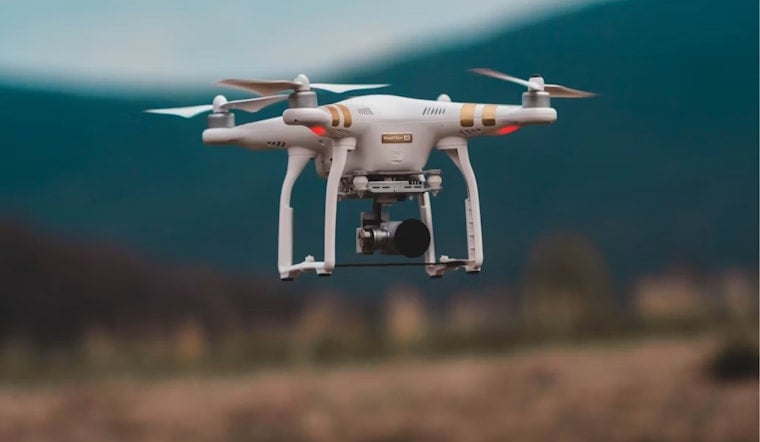
John Adams Academy, a new public charter school slated to open in Sterling Ranch this August, is planning a security feature rarely seen on a K-12 campus: a drone-based active shooter suppression system. School leaders say the drones will be stationed in secure boxes on site and can launch within seconds to stream live video to first responders and try to disrupt an attacker in real time. The plan has already stirred a local fight over safety, oversight, and public spending as construction wraps up ahead of opening day.
County discussion, funding and local pushback
Douglas County commissioners had been expected to approve $200,000 in remaining school safety grant funds for John Adams Academy, but the request was pulled from the consent agenda and never received a vote. With the details redacted, that move left some residents frustrated and looking for clarity. Parents and nearby homeowners told county officials they are uneasy about drones that can deploy nonlethal countermeasures operating around children, and commissioners pressed the school to consider a traditional school resource officer alongside any new tech. As reported by CBS News Colorado, school officials describe the drone setup as one layer in a multi-tiered security plan that also includes armed staff and plans for an SRO.
What the system is and how it would work
The vendor, Campus Guardian Angel, pitches the system as a managed service that places boxes of human-flown drones on campus, ready to launch within seconds once an alert is verified. The drones stream live audio and video back to responders and carry nonlethal tools such as loud sirens, strobe-style flashing lights, and pepper gel. By design, the craft can also physically strike or ram an assailant in an effort to slow or stop an attack. The company says trained pilots and tactical staff operate the drones and that the goal is faster situational awareness in the first critical minutes of an incident. Campus Guardian Angel materials and vendor demonstrations spell out those capabilities.
Pilot programs and where this has been tested
Campus Guardian Angel and state education officials have launched pilot programs in other states. Florida announced a three-district pilot that ties the drone response into Alyssa’s Alert panic systems, and several schools in Florida and Texas have hosted demonstrations or early deployments this year. State press releases and regional coverage describe a series of pilots and demos in the South that company leaders say helped shape their operating procedures. For background, see the Florida Department of Education’s announcement and regional reporting. Florida DOE, ClickOrlando and The Texas Tribune have all covered those pilots and demonstrations.
Why this lands differently in Douglas County
Debate in Douglas County is shaped by a painful local history. The county created a school safety grant program after the 2019 STEM School Highlands Ranch shooting, and that legacy fuels both strong support for added protections and sharp skepticism about novel tactics. The community’s memory of the 2019 attack has made elected officials and parents especially sensitive to new security proposals and to calls for solid data, clear chains of command, and tight local oversight. Reporting and community documents place the current drone proposal squarely in that context. The Colorado Sun provides background on the STEM School shooting and its aftermath.
Regulatory and safety questions officials will have to sort out
Outfitting drones with countermeasures raises legal and operational questions that go well beyond a vendor demo. Federal Aviation Administration rules govern flying over people and the carriage or release of hazardous materials, and some advanced unmanned aircraft operations require specific waivers or written approvals. Districts and operators must show compliance with Part 107 limits or obtain waivers and will likely need detailed conditions for use, training requirements and policies on data collection, retention and access before any system goes live on campus. FAA guidance on operations over people and its waiver process lays out the safety, training and risk-analysis work regulators expect to see. FAA Section 927 waivers and related FAA pages describe those pathways.
What comes next
John Adams Academy says it can move forward with the drone system even without county grant money and expects installation to begin in August as the school prepares to open. The headmaster has framed the move as part of a multilayered safety plan for the new campus. County commissioners postponed the funding vote to keep talking about school resource officers and oversight, and could later revisit the grant request or attach conditions to any technology purchased with public dollars. For now, the school and vendor are preparing to deploy the system while community members continue to press for clearer data, tighter guardrails and more transparency from both the company and local officials. The school has outlined those next steps and security details for families in a public letter from the headmaster posted by John Adams Academy, and CBS News Colorado has also reported on the planned rollout and installation timeline.




