

























































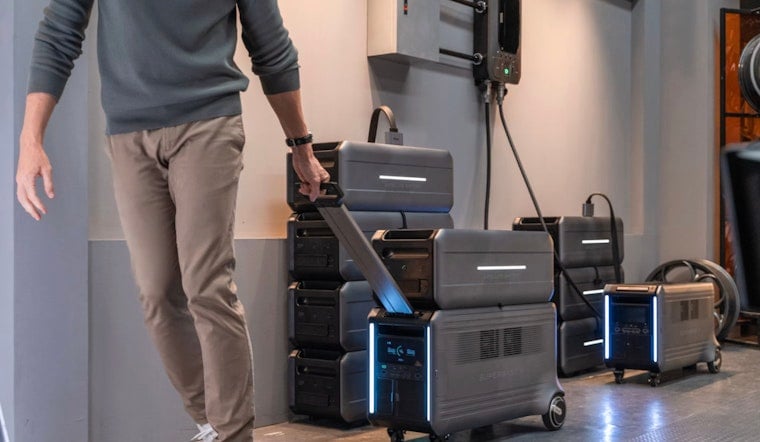
In kitchens and back rooms across Brooklyn and beyond, small restaurants and neighborhood shops are quietly rolling in suitcase-sized batteries to take the edge off brutal electric bills. The boxes live next to ovens and humming walk-in fridges, then kick on during short price spikes or moments of grid stress. By shouldering those bursts, they trim the peak loads that drive some of the biggest commercial charges. At Café Mars in Gowanus, chef Paul D'Avino sums it up bluntly: "our electricity bill is insane. and that’s a tough thing."
David Energy's free-battery pitch
As reported by Bloomberg, the batteries are being supplied at no upfront cost by David Energy, a Brooklyn-based retail energy supplier that installs the hardware and remotely decides when each unit charges and discharges. In its own marketing, David Energy pitches these plug-in batteries as a way to lower bills for businesses that also buy their electricity supply through the company.
How the batteries actually save money
The whole play centers on "demand" charges, which are based on the highest 15-minute spike that sets a commercial customer's monthly fee. That one brief surge can represent a hefty slice of a small shop's bill. Con Edison describes demand charges as part of delivery costs on commercial accounts, and reporting from Canary Media shows how plug-in units, often around 2.8 kWh, are programmed to run energy-hungry gear during those expensive windows instead of pulling from the grid.
Who’s participating and how big is the rollout
Fast Company reported that the program, which launched in late 2025, had already lined up more than 1,000 batteries, adding up to roughly 2,000-plus kWh of storage, and signed more than 80 customers across restaurants, retail chains and local storefronts. The roster mixes national brands with one-off neighborhood spots, from Beard Papa’s and Emack & Bolio’s to Black Seed Bagels and smaller single-site operators, and some merchants say that even modest monthly savings stack up quickly once you repeat the setup across multiple locations.
Safety, code and the trade-offs
New York treats wired, stationary energy storage systems as regulated installations that have to clear strict fire and building-code hurdles. Amendments adopting NFPA-855 took effect last year, according to the city's code updates, and city rules now spell out thresholds and conditions for indoor energy storage systems. The FDNY, which has been openly worried about lithium-ion battery risks, runs a public safety campaign on charging and disposal of these batteries, and its FDNY Smart pages walk through practical precautions that matter a lot when you are tucking devices into tight retail spaces.
What merchants should keep in mind
For small businesses, the plug-in battery setup offers an easy way to shave demand peaks without signing away a chunk of capital, but it does hand some day-to-day control over to the energy supplier. The company can aggregate all those devices behind the scenes to participate in wholesale power programs and recover its costs. According to David Energy and coverage in Fast Company, customers generally see modest percentage savings, with the company citing around 5 percent on average, although the real number depends heavily on a store's equipment, rate class and contract terms. Bloomberg notes that for merchants staring down very large monthly bills, even that kind of trim can make the free-battery offer an appealing line item.





