

























































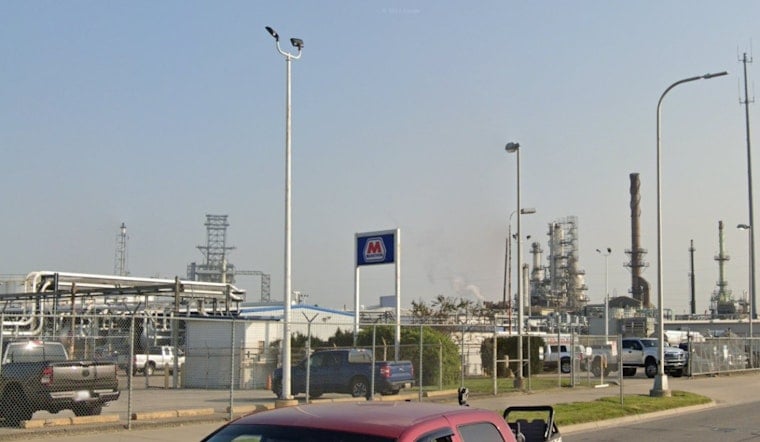
This morning in southwest Detroit, a power outage at Marathon Petroleum’s refinery lit up the sky and nostrils alike as the plant burned off excess gas in a safety flare. The move sent visible smoke and a strong sulfur-like odor drifting into nearby neighborhoods, while city and company crews shut down a stretch of Schaefer Road near the complex and told drivers to find another way around. Officials said air monitors were not picking up dangerous gas levels, but residents still reported smoke and pungent smells downwind of the site.
Power Goes Out, Flares Fire Up
Marathon’s refinery status page reported that the flaring was triggered by a power outage and said refinery personnel were conducting air monitoring off site. The company also stated that “a section of Schaefer Road from I-75 to Dix Road is closed” and that local law enforcement was handling the closure, according to Marathon Petroleum.
Neighbors Say Smoke, Smell Hit The Block
Residents told reporters they saw smoke and caught a sharp odor across parts of southwest Detroit, and officials urged people to steer clear of the Schaefer Road corridor while crews worked, as reported by Metro Detroit News. The outlet noted that the Michigan Department of Environment, Great Lakes and Energy (EGLE) and refinery teams were tracking air quality and that officials had not detected gas readings of concern on site or in surrounding neighborhoods.
Refinery Defends Flares, Neighbors Push Back
A Marathon spokesman told local TV that flares are safety devices and that the company was working to deactivate the flare “as safely and quickly as possible,” the station reported. Neighbors told WXYZ the odors felt “horrific” and called on Detroit and state officials to step in and keep similar incidents from happening again.
What Flares Do, And Why They Smell
According to the EPA, flares serve as emergency combustion systems that burn off excess hydrocarbons when process units are over-pressured or equipment loses power. They are designed to cut the risk of an uncontrolled release, but the process can still produce smoke and noticeable odors. During these events, agencies and refineries typically run air monitoring to watch for hazardous concentrations.
Outage Hits During Heat And Storm Stress
The refinery trouble landed while the region was already dealing with storms and a heat wave that had recently strained the power grid, leaving thousands without service in some neighborhoods, according to ClickOnDetroit. Residents downwind of the refinery are urged to follow official updates and to seek medical care if they experience breathing problems, persistent headaches, or other concerning symptoms.
What Officials Say Comes Next
Marathon said it will keep posting operational updates on its refinery status page and stressed that protecting employees, first responders, and the surrounding community remains its top priority. Officials stated that air monitoring will continue and that they will share results if conditions change, per Marathon Petroleum.





