

























































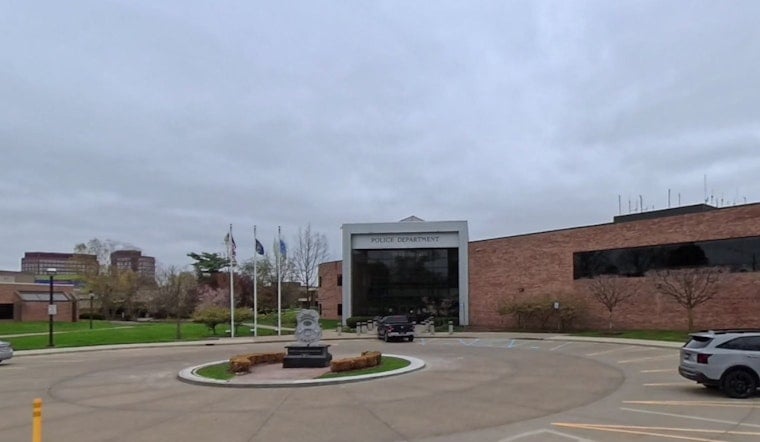
A 32-year-old Ferndale man parked on Urbancrest Drive near Rochester Road drew police attention shortly before 11:30 p.m. by honking his horn repeatedly, and what officers found when they approached his 2020 Ford Escape allegedly ended with one of the highest blood-alcohol readings reported in a recent Troy arrest — a preliminary breath test result of .375%, more than four times Michigan's legal driving limit.
According to the Oakland Press, the man asked to speak with officers and stepped out of the vehicle after they arrived. The Troy Police Department says he showed signs of intoxication and performed poorly on sobriety evaluations before submitting to the preliminary breath test that produced the .375% reading, well above the state's standard .08% legal limit for drivers.
Michigan's legal threshold isn't the only bar officers had in mind that night. Under the state's Motor Vehicle Code, any driver with a blood-alcohol concentration of 0.17% or higher qualifies for so-called “Super Drunk” enhanced penalties — a category that can carry up to 180 days in jail, fines as high as $700, mandatory alcohol treatment, and a one-year license suspension, per the Michigan Legislature. At .375%, the Troy driver's alleged reading came in well over double that enhanced threshold.
Why Officers Sent Him to the Hospital Instead of Jail
Rather than booking the man directly, police transported him to Corewell Health Beaumont Troy Hospital due to his level of intoxication, according to the Troy Police Department. That decision lines up with medical guidance on acute alcohol poisoning: the Cleveland Clinic notes that a blood-alcohol concentration between 0.30% and 0.40% puts a person at high risk for loss of consciousness, respiratory depression, and life-threatening toxicity — a range that squarely includes the .375% figure attributed to the driver.
Corewell Health Beaumont Troy Hospital, located on Dequindre Road, is a Level II trauma center that logs more than 100,000 emergency department visits annually and straddles Oakland and Macomb counties. The hospital also runs a dedicated emergency department substance use intervention program that evaluated nearly 2,000 non-opioid substance cases across 2022 and 2023, according to Beaumont Health Scholarly Works, giving the facility established experience handling acute intoxication cases like this one.
Driver Admitted to Drinking and Smoking Marijuana Before Driving
Police say the man admitted to drinking alcohol and smoking marijuana before he got behind the wheel. Under Michigan OWI law, driving while impaired by a combination of alcohol and controlled substances such as marijuana is prosecuted under the same primary statute as alcohol-only driving, with no separate penalty threshold for combined substance use, per the Michigan Legislature.
Officers arrested the driver, and the Troy Police Department says a charge of operating while intoxicated is pending results of his blood tests. If convicted as a first-time high-BAC offender, Michigan law allows for a restricted driver's license only after a mandatory 45-day suspension and only with an approved ignition interlock device installed, which requires a clean breath sample before the engine will start, according to the Barone Defense Firm.
A Broader Pattern of Impaired Driving in Michigan
The case adds to a wider pattern tracked by state officials. The Michigan Department of State Police reports that alcohol- and drug-involved crashes account for roughly 35% to 40% of all traffic crash fatalities statewide, and Michigan recorded 8,542 alcohol-involved traffic crashes in 2024, a decrease of nearly 9% from two years earlier, though those crashes still caused more than 300 deaths, according to the Daily Press. State police have also noted a parallel rise in drug-involved traffic fatalities over the same period.
Drivers aged 25 to 34 — the age bracket that includes the 32-year-old Ferndale man — account for the highest total number of alcohol-involved crashes, fatal crashes, and injury crashes of any age group in Michigan, per state traffic crash reporting cited by the Daily Press. Nationally, preliminary U.S. Department of Transportation data showed a 6.7% decrease in motor vehicle crash fatalities during 2025, with transportation officials crediting targeted impaired-driving enforcement as one factor, according to the Capital News Service.





