

























































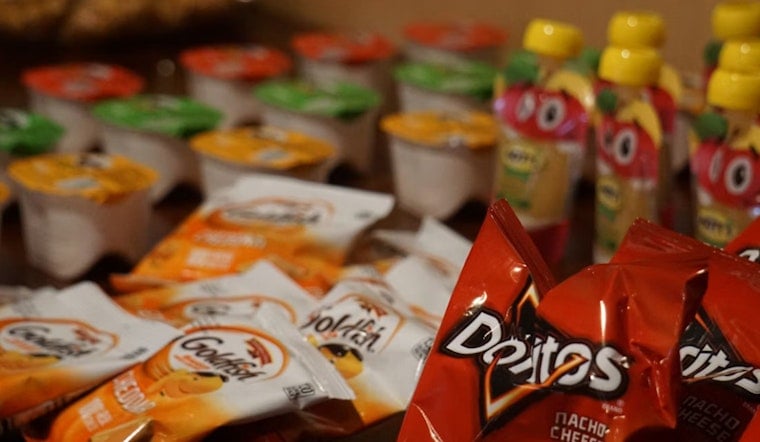
When school lets out across North Carolina, the cafeteria safety net that quietly feeds hundreds of thousands of children disappears almost overnight. Roughly 850,000 students who rely on free or reduced-price breakfasts and lunches lose that daily meal for about 10 weeks each summer, leaving families and community groups scrambling to cover the gap.
In towns like Tarboro, neighbors are stepping in so kids are not going to bed hungry. Kelly Spivey, who runs a doorstep locker called Kelly’s Community Pantry, keeps a five-shelf stash of food and toiletries stocked and, as she told North Carolina Health News, she “calls herself a community connector.” The title fits; for many families, her front steps have become one more place to keep dinner on the table.
Pantries And Food Banks Try To Catch The Fall
The Edenton-Chowan Food Pantry is one of the hubs trying to keep up. According to its website, the pantry distributes groceries on Mondays and Fridays, runs a mobile distribution on the second and third weekends of the month, and offers a Wednesday evening children’s meal along with roughly 20 food items for the weekend. Regional data show why that hustle matters: the Food Bank of Central & Eastern North Carolina reports 438,200 children under 18 who are food insecure across the state, and the Food Bank of the Albemarle estimates that about one in four children in its service area face food insecurity. Edenton-Chowan Food Pantry and Food Bank of Central & Eastern NC lay out the local numbers in stark detail.
Hospitals And Summer Meal Sites Expand Their Turf
Public and private partners are trying to stretch the summer safety net even farther. ECU Health this year expanded its Summer Youth Meal Program, adding sites in Edenton, Roanoke Rapids and Windsor after partnering with Food Lion Feeds, Sodexo and the ECU Health Foundation. The program is serving meals Monday through Thursday across six eastern North Carolina locations from early June through mid-August, a weekday lifeline when school cafeterias are closed. The ECU Health Foundation says the long-term goal is to have meal sites in every county the system serves.
SUN Bucks: One-Time $120 Lifeline
Families also have a new, if modest, federal backstop. The Summer EBT benefit, known in North Carolina as SUN Bucks, provides a one-time $120 grocery payment per eligible child and is administered by the state Department of Health and Human Services. State education and health officials say most children who qualified for free or reduced-price lunch during the school year are automatically enrolled. Families that are not automatically included are being urged to check the SUN Bucks application or contact their county Department of Social Services for help. For details, see the NCDHHS SUN Bucks page and the North Carolina Department of Public Instruction’s SUN Meals guidance.
Federal Rule Changes Tighten The Squeeze
All of that local work is playing out against a shifting federal backdrop. The 2025 budget reconciliation law known as the One Big Beautiful Bill Act restructured SNAP and, by congressional analysis, its nutrition provisions are expected to reduce federal SNAP spending by roughly $186 billion over the next decade, a change that shifts more financial responsibility and administrative cost onto states and counties. The law’s cost-sharing rules and work-requirement changes have added urgency to local planning, as agencies try to prepare for doing more with less. Congress.gov and related analyses detail those provisions and estimates.
State Leaders Press Congress For A Delay
North Carolina officials and hunger-relief leaders say the timing of those federal changes could not be worse for communities already stretched thin. In a June 18 letter to U.S. Senate leaders, Sens. Jay Chaudhuri and Jim Burgin, joined by food-bank and nonprofit executives, asked Congress to postpone both benefit changes and administrative cost-sharing until fiscal year 2030. They warned that flawed quality-control data could force the state to cover an additional $420 million annually if the rules roll out too soon. The request and list of signatories are summarized by EdNC.
On The Ground, The Line Keeps Getting Longer
Pantry staff say they can see the policy shifts and rising costs play out in the faces at the door. Jo Brown, programs manager at the Edenton-Chowan pantry, told reporters the summer program typically serves 65 to 90 families a week. Last summer, she said, the pantry distributed food to hundreds of families and more than 1,700 children. In Greenville, the Feed Your Neighbor pantry reports that it has added gas-card assistance to help families get to meal sites and food banks as transportation costs climb. North Carolina Health News and pantry websites document how quickly the need has grown.
Where Families Can Turn For Help
Families looking for summer meals can use the USDA Summer Site Finder and state SUN Meals listings to locate onsite feeding programs close to home. They can check SUN Bucks eligibility on the NCDHHS SUN Bucks page or by contacting their county Department of Social Services. Local food banks and school nutrition offices can often help with applications and site details, and pantries say they welcome donations and volunteers as demand keeps climbing.



