

























































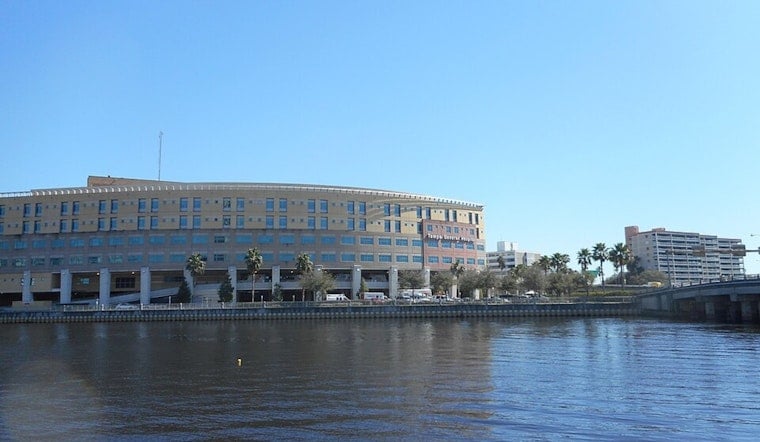
Tampa General Hospital is adding more layers to its flood defenses, expanding the AquaFence system that helped keep the Davis Islands campus operating during Hurricane Helene. The work is aimed at protecting a hospital that cannot simply close its doors when Tampa Bay’s next major storm arrives.
New Barriers And Drainage Upgrades At Davis Islands
The 2026 preparations include extending AquaFence protection to six additional buildings, adding 20 storm drains and installing 18 large check valves in major storm-drain lines, according to FOX 13 Tampa Bay. The valves are designed to close automatically when storm surge pushes water toward the hospital, preventing it from traveling backward through underground pipes.
Tampa General’s own storm-readiness information says the water-impermeable barrier is designed to protect vulnerable parts of campus from surge and flooding up to 15 feet above sea level. Deploying it takes about 60 people and three days, making early preparation almost as important as the barrier itself, according to Tampa General Hospital.
What Helene Proved About The AquaFence
The hospital first deployed its AquaFence system in 2019 and has since added resin anchors, concrete attachment points, UV protection, grip treatment and a lever-locking system that cut installation time by roughly 30%. During Hurricane Helene in 2024, the barrier withstood an estimated nine feet of water around the campus, FOX 13 Tampa Bay reported.
The flood wall is only one part of the hospital’s strategy. Tampa General also has an elevated central energy plant, emergency wells, fuel capacity of up to 25,000 gallons per day, more than five days of supplies on campus and an off-site sterile-processing facility outside the flood plain, according to the hospital’s storm-readiness plan.
Tampa Bay Is Turning To Permanent Storm Protection
The upgrades come as other waterfront institutions across the region adopt similar defenses. In April, The Florida Aquarium announced that AquaFence would donate a barrier system for its downtown campus, with financial support from Tampa General and Strategic Property Partners; the aquarium said the system is intended to protect animals, staff and critical infrastructure after past storms forced animals and habitats to be moved to higher ground.
St. Petersburg also installed an AquaFence at a downtown wastewater lift station in 2025 after Hurricane Milton forced two sewer treatment plants to shut down, Axios Tampa Bay reported. That broader push reflects a Tampa Bay reality: flood protection is increasingly being treated as an operating requirement for hospitals, utilities and cultural institutions, not merely an emergency response tool.
The Barrier Still Has Limits
Tampa General’s upgraded system has not yet been tested by a direct hit from a major hurricane or a worst-case storm-surge event. How well it performs in a future storm will depend on the track, surge, rainfall and other conditions, but the hospital is betting that layered defenses can buy its patients and staff the most valuable resource in a crisis: time.





