
























































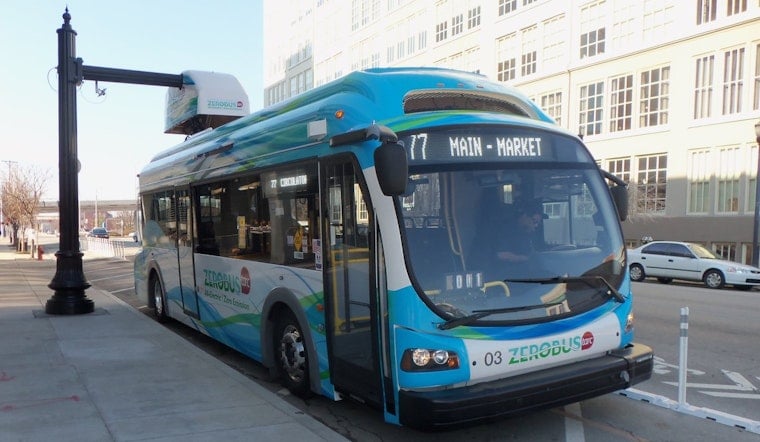
Louisville’s buses are about to run on a very different playbook. The Transit Authority of River City (TARC) rolls out its New TARC Network on Sunday, August 2, 2026, a system wide overhaul that cuts thousands of stops and consolidates routes while pumping faster, more frequent service into a handful of key corridors. Riders will find new color coded signs, a temporary downtown transfer hub and a fresh route numbering system, even as community groups warn that some neighborhoods will be walking farther to catch a bus.
What riders will see
Under the redesign, several major corridors, including Broadway and Bardstown Road, Preston Highway, Fourth Street, Dixie Highway and Market Street, are slated for roughly 15 minute weekday service, which is meant to boost reliability and shrink wait times, according to WAVE. TARC also plans to lean on clearer, larger and color coded double sided bus stop signs so riders can more easily see branch letters and how often a bus is supposed to show up.
Routes, stops and who loses nearby service
City materials show TARC intends a sharp consolidation of stops. Public materials indicate a substantial reduction in daily stops. Local coverage also notes that the system will shrink its fixed route footprint, and local reporting says the agency is consolidating routes citywide — a trade-off TARC says should speed up trips but that advocates warn will leave some riders without nearby service.
Open houses and the downtown transfer hub
TARC has scheduled open houses so riders can study the new maps and ask questions face to face; the agency's public meetings page lists meeting locations and times. The agency is also planning a temporary Downtown Transfer Center near Muhammad Ali Boulevard and 8th Street, which will act as a timed “pulse” hub so buses can connect more easily in the city’s core, a detail also covered by local outlets including WAVE.
Why TARC says it matters
Agency leaders frame the redesign as a key piece of the TARC 2025 effort to stabilize finances after projecting a multi million dollar shortfall. Public reporting has cited a roughly $30 million operating gap that helped spur the overhaul. Local reporting and community advocates say the plan buys time and should improve on time performance, but they also argue that long term funding, not just route tweaks, will be needed if Louisville hopes to restore wider coverage across the city, according to Louisville Public Media.
How riders can prepare
TARC has posted system and downtown maps, route by route schedules and a comparative trip planner on its website, and it will make fixed route and paratransit rides free from August 2 through 16 so riders can test drive the new setup, per TARC. Riders who rely on specific stops are being urged to check the new stop list, sketch out alternate connections now and bring questions to the open houses; TARC's materials and online tools can help people translate old route numbers into the new network.
The New TARC Network is essentially a bet on trading coverage for speed, with more frequent, easier to follow service on major corridors in exchange for fewer, farther spaced stops. Whether that gamble pays off will hinge on how quickly riders adapt and whether Louisville’s leaders follow through with stable funding. For now, the focus is on getting ready to ride, not grading the results.





