

























































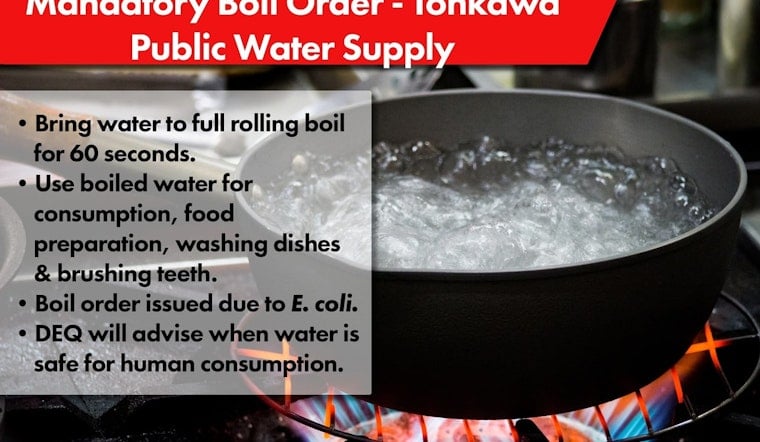
Tonkawa residents are back to boiling pots on the stove after city leaders on Wednesday warned everyone not to drink tap water without boiling it first, following tests that found E. coli bacteria in the municipal supply. The precautionary advisory covers all customers on the city's public water system and will stay in place until officials confirm the water is safe again. City leaders say they are working with state environmental regulators to track down the source of the contamination and restore safe service.
The city verified that samples from the public water supply contained E. coli and formally issued a boil-water warning, according to KFOR.
The Oklahoma Department of Environmental Quality lists a boil order for the Tonkawa public water system on its website and is coordinating with city staff on additional sampling and public notifications, per the Oklahoma Department of Environmental Quality.
The City of Tonkawa has instructed residents not to drink tap water without boiling it first and to rely on boiled or bottled water for cooking and brushing teeth. Officials also shared contact lines for questions at (580) 628-2508 and (580) 628-2516 and urged residents to watch the city's alerts for updates, according to the City of Tonkawa.
Tonkawa's water system is no stranger to stress. Extreme cold in February 2025 left the town without reliable tap water for more than a week as wells and lines failed. That episode, which forced precautionary boil orders while crews repaired wells and mains, highlighted the challenges of aging infrastructure, as reported by KOSU.
How To Safely Boil Water And Who Should Be Extra Careful
To make tap water safe, bring it to a rolling boil for at least one minute, then let it cool before using, according to the CDC. Bottled water is recommended for infants, people with weakened immune systems, and anyone preparing infant formula until health officials say the system has passed follow-up tests.





