

























































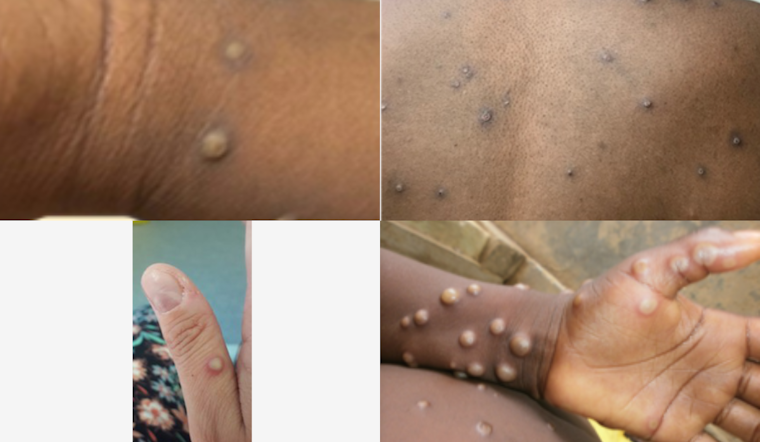
Arizona health officials say a traveler has brought a more worrisome form of mpox into the state, confirming Wednesday that a resident tested positive for clade I, a genetic strain public health experts have linked to more severe illness. The case appears tied to international travel, and the Arizona Department of Health Services reports there is currently no sign the virus is spreading locally. State teams are tracing contacts and working with clinicians to identify anyone who may have been exposed and to offer testing or vaccination when appropriate.
In a statement to FOX 10 Phoenix, the department said the diagnosis was confirmed on July 22 and that the patient "acquired the infection while traveling outside the country." Officials told the outlet that investigators have not found evidence of local transmission linked to this case and that they are following standard contact tracing protocols in coordination with local health jurisdictions.
Clade I, formerly known as the Congo Basin clade, has historically been associated with more severe disease than clade II, with reported case fatality ratios in some series roughly between 1% and 10%, according to the Johns Hopkins Bloomberg School of Public Health. That analysis also notes that vaccines and treatments used in the United States, including the two dose JYNNEOS vaccine, are expected to provide protection against multiple clades, although clinicians are encouraged to test for and document clade information whenever possible.
What health officials recommend
Health officials advise that anyone who might have been exposed to mpox contact a healthcare provider or local health department so they can be evaluated for testing and post exposure vaccination. The CDC recommends that JYNNEOS be given as soon as possible after exposure, ideally within four days for the best chance to prevent illness, and notes that vaccination up to 14 days after exposure may still help reduce how severe the disease becomes.
Local context and next steps
The Arizona Department of Health Services told FOX 10 Phoenix that the state has logged 34 mpox cases so far this year as of July 21. Officials said the newly confirmed clade I infection will trigger heightened surveillance, even as they stress that the overall risk to the general public remains low. Public health leaders continue to urge vaccination for people at higher risk and prompt testing for anyone who develops symptoms.
People who recently traveled to a country with ongoing clade I transmission, or who develop possible mpox symptoms such as fever, swollen lymph nodes, rectal pain or a blistering rash, are urged to contact a healthcare provider and avoid close physical contact until they have been evaluated. State and federal guidance on testing, isolation and vaccine eligibility is available from the CDC.





