

























































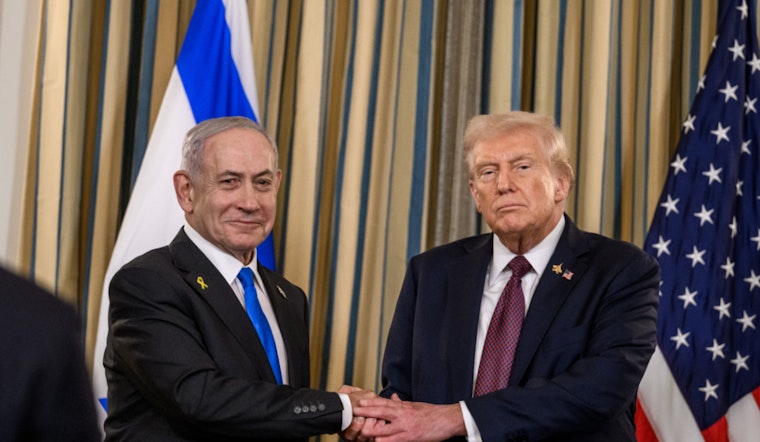
President Donald Trump and Israeli Prime Minister Benjamin Netanyahu sat down in the Oval Office on Tuesday for their first in-person meeting since the United States and Israel began coordinated strikes on Iran in late February, a conversation that was more war room than courtesy call. The private session zeroed in on the Iran campaign, intelligence sharing and broader regional security, all while both men face growing political pressure back home. When it was over, each side cast the meeting as an effort to sync up strategy despite their recent public friction.
White House press secretary Karoline Leavitt called the talks "positive and productive," and the White House said the Netanyahu meeting wrapped after about an hour, according to CBS News. Photos from inside the Oval Office showed top players at the table, including Secretary of State Marco Rubio and Vice President J.D. Vance. The Netanyahu session came on the heels of an earlier Trump meeting the same day with Ukrainian President Volodymyr Zelenskyy, turning the West Wing into a tight rotation of wartime allies.
High Stakes And Strains
For all the smiles in the photo spray, the meeting doubled as a chance to ease tensions that have been building over how to run the Iran operation, with some inside the administration airing their frustrations in public. Axios reported that given Mr. Trump's recent remarks about Mr. Netanyahu, the sit-down could easily have gone off the rails. Instead, attendees dug into military and diplomatic steps, including coordination in and around Lebanon and how to handle maritime security in the Gulf.
Netanyahu's Intelligence Pitch
Netanyahu did not arrive empty-handed. Israeli officials came prepared with intelligence on Tehran's nuclear program and other targets, hoping to convince Washington to keep backing targeted operations, according to AP News. The outlet also noted that this was the first face-to-face meeting between the two leaders since the joint strikes began on Feb. 28, one reason the conversation carried extra political weight. Israeli sources said the material was framed as crucial context for whatever next moves the allies decide to take.
Washington Optics And Protest
Netanyahu's swing through Washington overlapped with memorial events for the late Senator Lindsey Graham, layering solemn ceremony on top of high-stakes diplomacy. Outside, demonstrators gathered near the White House to rail against the Iran campaign and Israeli policies, a reminder that the foreign policy summit was playing to a restless crowd. Analysts noted that back-to-back meetings with Ukraine's Zelenskyy and Israel's Netanyahu made for a compact, slightly awkward diplomatic double feature for the administration. As Al Jazeera pointed out, bringing Netanyahu to Washington carries clear political risk at a moment of rising domestic scrutiny.
What Comes Next
No splashy deal emerged from the Oval Office huddle. Both governments instead described the meeting as one chapter in an ongoing effort to coordinate operations, intelligence and diplomacy. The Times of Israel reported that officials walked out without firm new commitments, leaving regional watchers to guess whether the current diplomatic pause will hold or whether strikes will ramp back up. For now, the session looks like an attempt to keep the lines open between two close, occasionally strained partners and a U.S. administration trying to steer through a widening regional conflict without losing control of the wheel.





).jpg)