

























































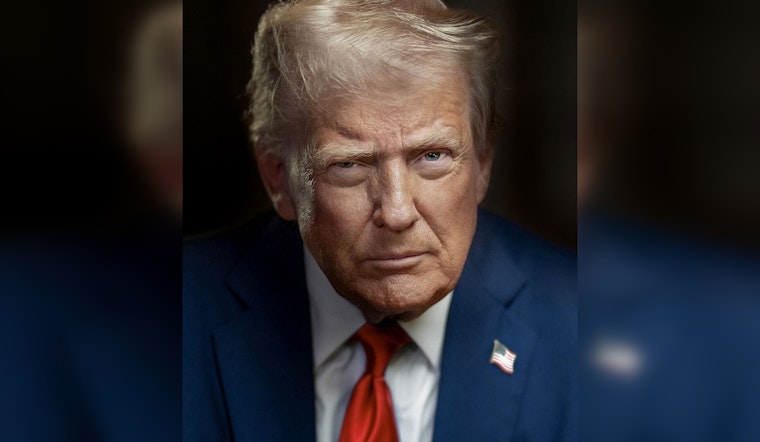
President Donald Trump on Thursday took his administration’s Ratepayer Protection Pledge and cranked it up a notch, rolling out an expanded version at the Environmental Protection Agency. The move presses governors, utilities and data center developers to promise that ordinary households will not get hit with higher electricity costs as AI server farms keep multiplying. The White House is pitching the program as a way to pull in private money for new power plants and power lines so communities that host these facilities are not stuck holding the bag. It also has a clear political edge, aiming to blunt local backlash to new projects heading into a heated fall election season.
According to The Associated Press, the White House says 23 governors and at least 187 organizations have signed on to the expanded pledge, including 55 utilities and 27 data center developers. The AP also reports Trump’s promise that “Electricity bills for American families will actually come down,” as companies add extra generating capacity and feed surplus power back into the grid.
Administration officials say the broader pledge pulls state and industry leaders into a single voluntary framework meant to cool political fights over where to put energy infrastructure and how to upgrade the grid. As WTOP notes, the expansion follows growing complaints from communities and governors who are nervous about how fast data centers are moving in and how much juice they will need.
What The Pledge Requires
Under the administration’s outline, signatories agree to “build, bring, or buy” the power needed to serve new data centers, set up separate rate structures with utilities, and cover the related delivery infrastructure instead of pushing those costs onto regular customers. The White House casts the pledge as a market-based strategy that protects ratepayers while speeding up AI buildout. But the commitments are voluntary and ultimately rest on contracts negotiated among companies, utilities and state regulators.
Lawmakers Move To Codify It
On Capitol Hill, lawmakers are trying to lock similar protections into federal law. The House Energy and Commerce Committee has recently narrowed and advanced a bipartisan data center energy bill that would require large-load users to pay for grid upgrades tied to their projects, as reported by E&E News. If it reaches the House floor and becomes law, it would layer enforceable standards on top of the White House’s voluntary approach.
Experts Say The Pledge Needs Teeth
Policy analysts are not exactly popping champagne over voluntary promises. They warn that without binding tariffs and solid financial backstops, costs can still quietly slide onto residential bills. The Brookings Institution argues the pledge “needs enforcement,” pointing to an ICF analysis that projects residential electricity rates could climb 15% to 40% by 2030 if new tariff structures are not put in place. Supporters of the pledge say the opposite outcome is possible, insisting that private capital and separate rate agreements can shield consumers, provided state regulators actually lock those terms in.
How Big A Problem Is This?
The concern is not just theoretical. The Electric Power Research Institute’s "Powering Intelligence" analysis finds that data centers could account for roughly 9% to 17% of U.S. electricity demand by 2030, with much of that demand clustering in only a few states. EPRI warns that meeting this surge will take a mix of new generation, expanded transmission lines and more energy storage, and utilities along with regulators are now wrestling with who pays for what.
What To Watch Next
The next big questions are whether Congress actually brings the data center bill to the floor, whether state public utility commissions adopt tariff rules that harden the pledge into something with real bite, and whether developers follow through on the financing they are now promising. For a closer look at how these federal moves collide with state politics, check out AI Hubs Off Your Dime, and keep an eye on local coverage, including the White House event video posted by FOX 32 Chicago, for how this plays on the ground.



_(cropped)(2).jpg)