

























































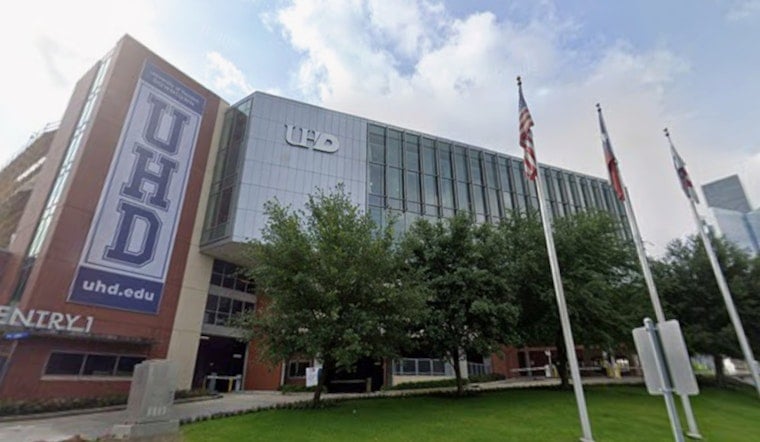
The University of Houston-Downtown has named Dr. Sally-Ann Ashton as the first director of its new crime research center, putting her in charge of a roughly $2.6 million state-backed effort aimed at making Houston-area crime data more useful, connected and actionable.
Ashton will lead the Center for Crime, Urban Research and Education, or C-CURE, which plans to combine information from multiple law-enforcement and criminal-justice agencies into what UHD describes as the Houston region’s first integrated crime database. The center is also expected to involve UHD students through internships and field-based research.
According to the Houston Business Journal, C-CURE received $2.6 million through a special state funding request. The investment gives UHD a sizable launchpad for a center designed to connect academic research with the day-to-day work of police departments, public agencies and community partners.
C-CURE Will Focus On Data, Research And Policy
This is not a new police agency so much as a research and coordination hub. UHD’s job description for the director says the center will develop unified crime-statistics reporting for the greater Houston area, publish studies and recommendations, and support projects involving law enforcement, government agencies and outside organizations.
The role also includes building data-sharing partnerships, managing grant-funded initiatives and helping faculty and students participate in crime analysis. In practical terms, that could give Houston-area decision-makers a common set of information instead of forcing agencies and researchers to work from disconnected systems.
New Director Brings Juvenile Crime And International Experience
Ashton most recently served as a senior research scientist and research division lead at Prairie View A&M University’s Texas Juvenile Crime Prevention Center, where she worked on juvenile-crime research and multi-agency projects. She previously taught and consulted in England’s prison system, bringing nearly two decades of experience in criminal-justice research and training, according to UHD.
Her academic background is unusually broad, with doctoral degrees in criminal psychology and archaeology plus an MPhil in criminological research. UHD says that mix is intended to support C-CURE’s interdisciplinary approach, which will look beyond incident totals to the social, economic and structural conditions tied to crime and public safety.
State Funding Starts The Center’s First Two Years
UHD’s budget documents show the center was structured as a two-year exceptional-item investment, with about $1.3 million allocated annually beginning in fiscal year 2026. The university’s legislative agenda framed C-CURE as a way to strengthen criminal-justice education while helping Houston and the region develop more practical responses to urban crime.
With Ashton now in place, the next challenge will be turning the funding and ambitious database plan into working agreements among agencies that do not always collect or share information in the same way. For Houston, the payoff could be a clearer view of where problems are emerging—and which interventions actually help.




