

























































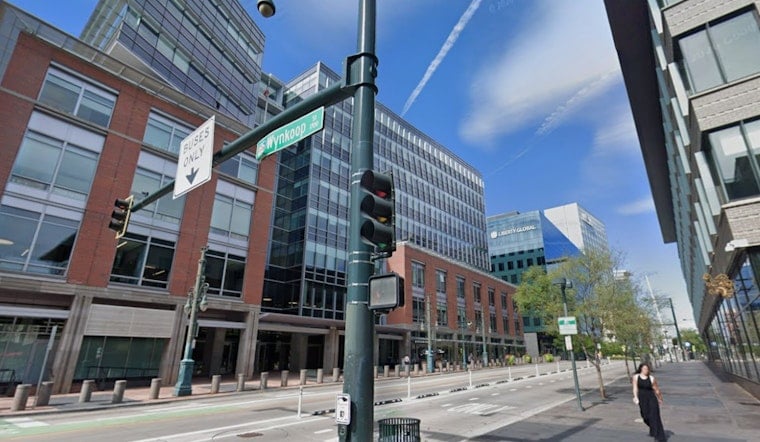
Colorado’s congressional delegation and Environmental Protection Agency employees say a cascade of security and communication failures at the EPA’s Region 8 headquarters near Union Station left staff exposed during a March threat and an April bomb scare. They point to a vague email about a caller who “generally threatened” the office, a suspicious package that drew Denver’s bomb squad, and the quiet removal of hard-wired desk phones in favor of computer “soft phones.”
Employees told lawmakers that parts of the building have little to no cell service and that the public address system does not reliably reach every floor. The combination left some workers unsure how to call 911 in an emergency. Now, federal lawmakers want answers and a clear timeline for fixes.
Lawmakers demand answers
In a June 26 letter, Rep. Brittany Pettersen joined Sens. Michael Bennet and John Hickenlooper and Rep. Diana DeGette in pressing EPA Administrator Lee Zeldin for a detailed explanation of what went wrong and why standard emergency protocols were not followed. The lawmakers asked for specifics on how and when employees are notified of threats, what training has been provided for the new soft-phone system, and why hard-wired emergency phones were taken out.
They also set a firm deadline, requesting a prompt written response by July 17, and made it clear they expect a plan, not platitudes. The concerns and requests are laid out by Pettersen's office.
Bomb scare near Union Station
On April 2, Denver police officers reported finding a “black square package wrapped in duct-tape” with an orange cable sticking out of one side near the Region 8 building and called in the bomb squad. Technicians eventually determined the device was a jerry-rigged battery and closed the case.
Inside, employees said they saw flashing lights and bomb technicians outside but got no clear direction on whether to evacuate or shelter in place, and management’s explanation to staff came only after a delay. Denver Police denied detonating the package, and the police report states that no crime occurred, according to CPR News.
Phones and PA system left staff uncertain
Employees and the lawmakers’ letter say the agency replaced traditional desk phones with software-based “soft phones” to make remote work easier, but did so without ensuring that staff were trained or that the system could reliably connect to 911 in an emergency. Management reportedly told employees to use their personal cell phones to call 911, advice that runs headfirst into reports of weak or nonexistent cell service in parts of the building.
On top of that, workers say the public address system simply does not function on the fifth floor, raising more questions about how they would get instructions during a crisis. The letter asks the administrator to explain why the hard-wired phones were removed and how the EPA plans to restore dependable emergency communications, according to Pettersen's office.
Union leaders and employees speak out
Justin Chen, president of AFGE Council 238, which represents more than 8,000 EPA employees, said the communication missteps have badly eroded trust between workers and leadership. “This is just a continual assault, basically, upon civil servants within the agency,” Chen told reporters.
Staff have also pointed to a series of unsettling incidents and oddities around the building as evidence that the site is more porous than it should be: a mannequin that sat in the atrium for years, a bullet that pierced a lobby window in August 2024, and a 2025 livestream by a police-accountability group in the space. Those details were reported by CPR News, and project materials for the building list Colliers International as the property manager, according to Boots Construction.
What happens next
The lawmakers gave EPA leadership a short window to respond and said staff deserve more than vague assurances. They want a concrete plan for testing, upgrading, and training on emergency systems so that the next bomb scare or threat does not leave workers wondering how to call for help.
Union representatives say they are watching for specific steps, such as restoring hard-wired emergency lines or definitively proving that the soft-phone system can connect to 911 every time. Until those changes are in place, employees say they remain wary that the next incident could once again expose the cracks in the building’s security and communications.





