

























































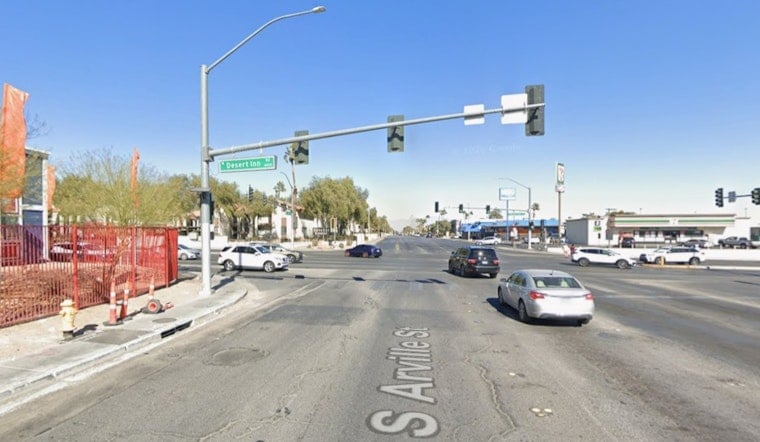
A Las Vegas police drone swooped into action near Desert Inn Road and Arville Street after a homeowner, out of town and watching from afar, got a security camera alert that someone was lurking outside their house. Within seconds, the unmanned aircraft had eyes on a person near the property, and its live video feed helped officers move in and make an arrest.
According to FOX5 Las Vegas, the homeowner received the alert on May 12 and called police. An LVMPD drone launched from a nearby SkyPort and quickly arrived overhead, with video streamed live to police. The department shared footage of the response and said the drone pilot and a dispatcher directed officers straight to the suspect. FOX5 reported that Metro says its drones have already flown more than 12,000 missions in 2026 and now beat officers to the scene in more than 70 percent of calls.
How the drone response worked
Per the Las Vegas Metropolitan Police Department, Project Blue Sky uses docked SkyPorts at police and fire stations that keep drones charged and ready so they can launch to 9-1-1 calls within seconds. The aircraft stream high-resolution video to pilots and dispatchers and are monitored by a central Drone Operations Center that oversees missions. Program materials detail the drones' capabilities and safety features, and LVMPD says the system is designed to boost officer safety and speed up investigations that could otherwise take hours on the ground.
Local record and scrutiny
Local outlets have tracked other incidents where drones helped officers spot suspects or locate missing people, from downtown stolen-car chases to backyard shooting calls guided from above. Hoodline has catalogued several of those responses, including a piece titled Backyard Gunfire Busted. Those examples bolster Metro's argument for growing the network, even as civil-liberties advocates continue to push for tighter rules on transparency and data retention.
What residents should know
Metro's public policies say drone operators are barred from intentionally recording places where people would reasonably expect privacy and that drone video is handled under the same rules as body-worn camera footage, with evidence saved when it becomes part of an investigation. The department also says every flight is logged for audits and that special FAA authorizations allow certain beyond visual line of sight operations when they are tied to a legitimate public-safety call. For many residents, records requests and independent oversight will likely be the yardsticks for judging whether the program keeps that balance.
For neighbors near Desert Inn and Arville, the May 12 response is a textbook example of how the technology can help catch a suspect quickly while limiting risk for officers and the public. As Metro continues to release drone footage and flight data, supporters and critics alike will be watching to see whether transparency and accountability keep pace with the program's rapid expansion.





