

























































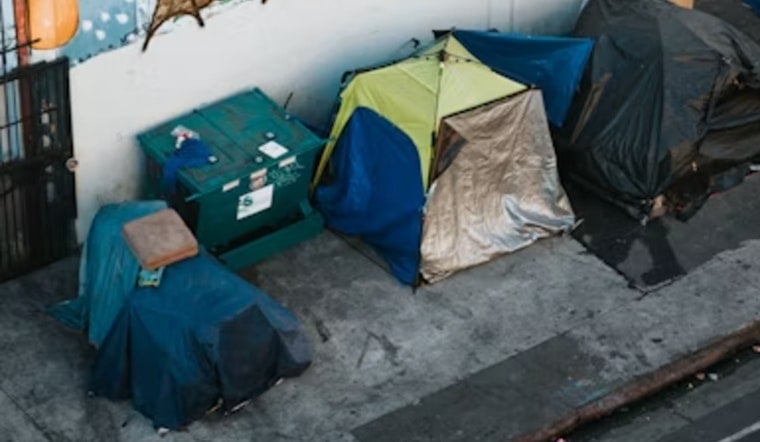
A private company is selling Venice residents a different kind of neighborhood protection: a crew that confronts encampments, negotiates relocations and, according to a new report, includes former gang members. The approach has won praise from property owners while raising an uncomfortable question about why residents feel they need to hire their own fix for a public crisis.
The business, known in earlier local coverage as Ghost Town Security, has drawn fresh attention from CBS Los Angeles, which reported on the private team’s focus on homelessness and its neighborhood-protection work. The report portrays a company operating in the space between residents, businesses, people living outside and city agencies.
In a 2023 interview with Yo! Venice, founders Bobby Luna and Ricky Myers described their work as mediation on behalf of property owners. They said the company had cleared 25 encampments at the time and framed the service as a way to find solutions for both clients and people experiencing homelessness, while acknowledging that the cost varies by situation.
The City’s Role Is More Limited Than Residents May Think
The distinction matters because homelessness itself is not a crime. The Los Angeles Police Department says officers respond to public-safety calls, assist outreach teams and help maintain order during city-coordinated cleanups, but do not independently remove encampments or provide housing placements.
LAPD guidance also says services are generally voluntary, with enforcement focused on specific conduct such as blocking sidewalks, illegal dumping or criminal activity. That leaves private operators to handle the conversations and repeated follow-up that residents say government teams often cannot sustain, even though private workers have no authority to act as police.
Fresh Homelessness Numbers Add Pressure In Los Angeles
The debate arrives as the latest regional count shows the city’s unsheltered population moving in the wrong direction. LAHSA estimated 45,194 people were experiencing homelessness in Los Angeles in 2026, including 29,115 people who were unsheltered, a 7.9% increase from the prior count; those figures are citywide, not a Venice-specific tally.
That is the tension behind Ghost Town’s appeal. A private crew may move a tent, vehicle or gathering away from a storefront or home, but relocation is not the same as housing, treatment or long-term stability. As LAHSA put it, “access to permanent housing ends homelessness,” a conclusion that makes the company’s popularity understandable while underscoring how far the city remains from a lasting solution.




