

























































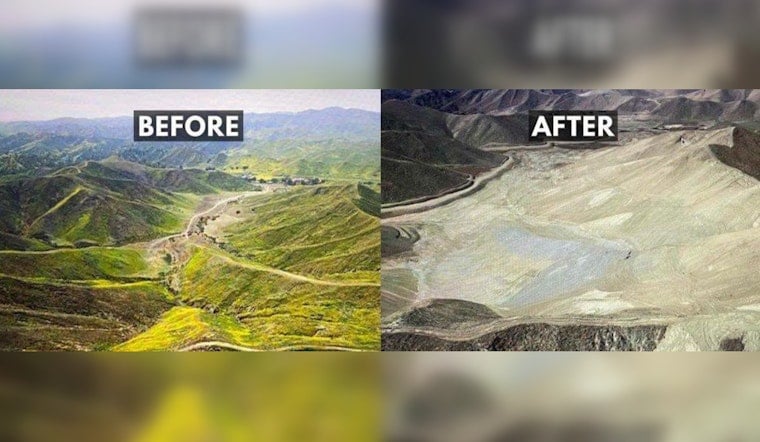
Ventura County has sued a Santa Paula-area ranching operation, its owners and related entities over allegations that years of unpermitted construction and grading damaged streams and surrounding habitat. The civil case centers on six ranch properties near Wheeler Canyon Road east of Santa Paula, where officials say ponds, dams, fill, vegetation removal and water diversions altered natural waterways.
The Ventura County District Attorney’s Office announced Thursday that the complaint was filed May 14 in Ventura County Superior Court against Guadalupe A. Guzman, the Lupe and Carmen Guzman Revocable Family Trust, Santa Paula Hay and Grain and Ranches, LLC, and related defendants, according to the District Attorney’s Office release. The public announcement came more than two months after the filing, bringing fresh attention to allegations involving the Hampton Ranch and Valestrino properties.
What Prosecutors Say Happened Near Wheeler Canyon
The complaint alleges that defendants carried out pond and dam construction, graded stream channels, removed vegetation, placed fill and other foreign materials near waterways, and diverted or obstructed natural stream flows without required authorization. Prosecutors also allege the work affected seasonal waterways and habitats across properties connected to commercial ranching and farming operations.
That seasonal designation does not make a waterway legally or ecologically irrelevant. The California Department of Fish and Wildlife says its streambed-alteration rules can apply to ephemeral streams, desert washes and other watercourses that may be dry for part of the year.
Why Ephemeral Streams Still Matter
California water officials describe ephemeral streams as channels that carry runoff during rain and remain dry during other periods. State research says these waterways can provide habitat, process nutrients, transport sediment and support the health of downstream rivers and estuaries, according to the State Water Resources Control Board.
The District Attorney’s Office says unauthorized grading, fill placement and diversions can increase erosion and sedimentation, degrade water quality, raise downstream flooding risks and damage wildlife corridors. Those concerns are especially consequential in a canyon landscape where storm runoff can move altered soil and debris beyond the original work area.
The Environmental Laws At Issue
The civil action alleges violations of California Fish and Game Code Section 1602, which generally requires notification and authorization before substantially diverting or obstructing a river or stream, altering its bed, channel or bank, or placing certain materials where they could enter a waterway. Prosecutors also cite Section 5650, which prohibits placing substances deleterious to fish, plant life, mammals or birds into the state’s waters; the statutes are posted by the California Legislature and Fish and Game Code.
This is a civil enforcement case, not a criminal prosecution announced as an arrest or criminal charge. The complaint seeks an injunction stopping further violations, civil penalties, environmental restoration and repayment of investigative and remediation costs, according to the District Attorney’s Office.
A Familiar Kind Of Case For Ventura Prosecutors
Ventura County’s Environmental Protection Unit says it handles both criminal and civil cases involving pollution, hazardous waste, waterway damage and other environmental violations, often working with state and federal agencies. The unit’s work is outlined on the Ventura County District Attorney’s environmental crimes page.
The county has pursued similar waterway cases before. In 2025, a Fillmore creek investigation involving an alleged petroleum discharge ended with a $29,736 settlement and permanent restrictions on unlawful disposal, as Hoodline previously reported.
What Happens Next
The allegations in the Santa Paula case still must be tested in court, and the filing does not establish liability. The defendants will have an opportunity to respond as the civil case moves forward.
For now, the county is asking the court to determine whether the ranch properties’ alleged alterations violated California environmental laws and, if so, what restoration and financial penalties should follow. The District Attorney said the case was investigated with the California Department of Fish and Wildlife, the Los Angeles Regional Water Quality Control Board, the State Water Resources Control Board and Ventura County agencies.





