

























































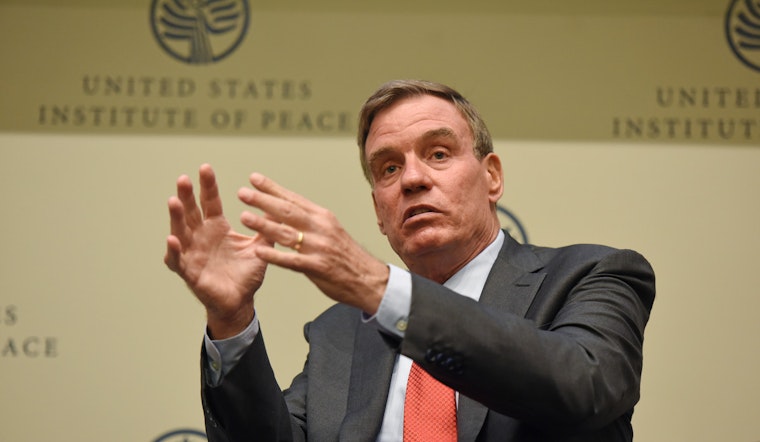
Sen. Mark Warner rolled out a sweeping stack of artificial intelligence bills on Tuesday, pitching a federal playbook for how the government should police consumer-facing AI tools, pry open the black box around giant data hubs and help workers adapt to the technology. Branded as “A Framework for America’s AI Future,” the package blends competition, national security and environmental goals in a single legislative push. Warner cast the agenda as a bid to keep the U.S. leading the AI race while giving communities and regulators clearer tools to manage its fallout.
Warner’s Senate office sketched out a lineup that includes the Artificial Intelligence Access, Gatekeeper Exchange, and Nondiscriminatory Transfer Act (AI AGENT Act), the Secure AI Development Act, the Data Center Tax Accountability and Disclosure Act, a National Workforce Transition Fund and the SAFE AI Act aimed at combating AI-generated child sexual abuse material. The data center proposal would require large AI facilities to disclose energy, water and emissions numbers and would tie some federal tax benefits to meeting efficiency and sustainability benchmarks. The rollout also highlights mandatory secure testing for advanced models and a voluntary incident-reporting system for safety problems, according to Sen. Warner's office.
Key bills: agents, centers, security and workers
At the center of the plan are rules for so-called agentic AI tools, new disclosure requirements for large AI data centers and a proposal to channel revenue from changes to certain tax benefits into worker retraining. The AI AGENT Act would spell out duties for consumer-facing AI agents and create a Federal Trade Commission registry for trusted agents, while the Secure AI Development Act would require secure testing for frontier models before they go live. Coverage of the rollout and Warner’s political framing of the package is available from Axios.
Agentic AI and consumer protections
Warner’s discussion draft treats independent “custodial user agents” as consumer tools that must safeguard privacy, keep real-time logs of what they do and act in the interests of users rather than the platforms hosting them. Large platforms would be pushed to provide interoperable interfaces so outside agents can operate on top of their services, a structure that TechPolicy Press notes resembles portability and gatekeeper rules overseas but raises tough questions about how to audit and enforce it. Analysts cited in that analysis warn that the technical methods to prove an agent stayed “faithful” to a user’s wishes are still immature and will demand new standards and certification systems.
Why Virginia matters
Northern Virginia sits right in the crosshairs of this debate. The region hosts a dense cluster of data centers, and state and local officials have been wrestling with whether generous tax incentives and rapid growth are overloading power grids, water supplies and local services. Warner’s package ties infrastructure transparency to local planning and aims to use federal carrots to nudge greener operations in communities with especially large data center footprints. For background on state-level efforts to revisit data center tax breaks and their local impacts, see reporting by Stateline.
Politics and prospects
Warner has made AI policy a centerpiece of his re-election pitch, and the timing of this rollout underscores his push to get rules in place before larger, more autonomous AI systems become commonplace. Even allies acknowledge that the bills are technically dense and will run into industry pushback and partisan haggling in a divided Congress. That broader political backdrop and Warner’s campaign focus on AI were highlighted in coverage by Axios.
Support and pushback
Warner’s release highlights endorsements for the data center transparency provisions from environmental groups including the Chesapeake Bay Foundation, the Sierra Club and the Virginia League of Conservation Voters. At the same time, industry groups and some local officials have warned that abrupt shifts in tax treatment and incentives could chill investment. Local budget fights and proposals for impact fees or temporary moratoria on new facilities have already surfaced as communities react to incoming projects and related utility concerns. Those endorsements and the ongoing local skirmishes are covered in reporting by Bisnow and other outlets.
What happens next
Warner says he plans to formally introduce the bills on the Senate floor in the coming weeks. If any of them start to move, they will have to run the usual gauntlet of committee work, hearings and line-by-line negotiations over technical standards and tax language. Expect especially sharp fights over how to audit AI agents, what “test and verify” should mean for frontier models and how far to go in tying tax benefits to environmental performance. It remains unclear whether Congress can push substantial AI legislation across the finish line before the 2026 elections, but the package has already sharpened the policy debate in Virginia and on Capitol Hill.





.jpg)