

























































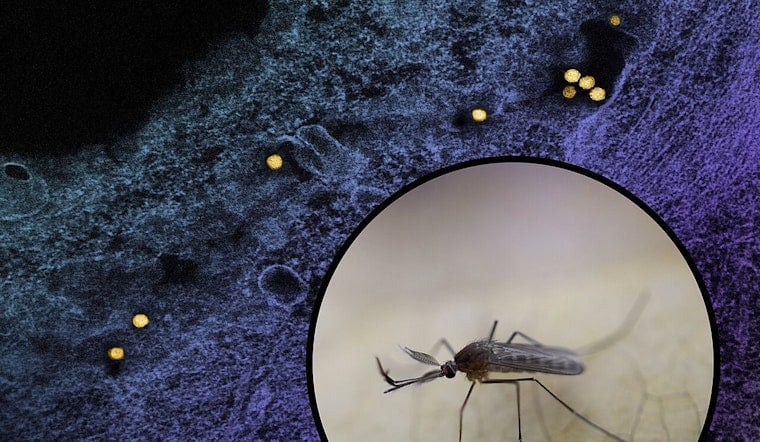
Los Angeles County public health officials have confirmed the county’s first human case of West Nile virus of 2026, saying an Antelope Valley resident was hospitalized after developing a severe neurological illness. The person began having symptoms in late June and was later diagnosed with West Nile encephalitis. Officials are warning that rising temperatures and heavy mosquito activity are creating ripe conditions for more infections.
What officials are saying
Speaking to The Independent, Los Angeles County Health Officer Dr. Muntu Davis urged residents to get serious about preventing mosquito bites and cutting down on mosquito breeding sites around their homes. His recommendations include using insect repellent, dumping or draining standing water and fixing torn or ill-fitting window and door screens.
Public health officials are also asking residents to report neglected swimming pools and to contact authorities when they spot dead birds, since those reports often come before human cases and can tip off mosquito control teams to local transmission. The county notes there is no vaccine or specific treatment for West Nile virus, so prevention remains the main line of defense.
State surveillance data confirm that the virus is active across California. The California Arbovirus Surveillance Bulletin for the week ending July 3 listed one human case in Los Angeles County and recorded 261 mosquito pools that tested positive for West Nile virus statewide, including dozens in Los Angeles County. The same report shows more than 130 dead birds testing positive so far this season, a common early warning sign that helps vector control crews target their interventions.
Local mosquito detections
The Antelope Valley Mosquito and Vector Control District reported in May that mosquitoes collected in the Lancaster area had tested positive for West Nile virus, underscoring the ongoing local risk, according to the Antelope Valley Mosquito and Vector Control District. The agency notes that West Nile virus has been present in the Antelope Valley for more than 20 years and continues to urge residents to eliminate standing water and to report green pools and other potential breeding sites so crews can move in quickly to treat them.
Separately, the City of Long Beach confirmed a human West Nile case on June 26. City officials described that infection as the first symptomatic human case reported in California this year and said the patient was hospitalized with neuroinvasive illness and is now recovering at home. Long Beach’s announcement was one of the earliest public alerts of human illness in the region this season.
How to protect yourself
Los Angeles County public health guidance and local vector control agencies continue to stress three basic steps: remove standing water where mosquitoes breed, use an EPA-registered insect repellent when spending time outdoors and keep mosquitoes out of living spaces with well-maintained window and door screens. Medical providers are being advised to test for West Nile virus in patients who present with aseptic meningitis, encephalitis or acute flaccid paralysis during mosquito season so that infections are picked up by public health surveillance. For testing and clinical guidance, clinicians are directed to the Los Angeles County Department of Public Health’s resources on West Nile virus.
Symptoms can range from a mild, flu-like illness to severe neuroinvasive disease. Common signs include fever, headache, nausea, body aches and sometimes a rash. In the most serious cases, infection can lead to meningitis, encephalitis, paralysis or death. Older adults and people with chronic medical conditions are at higher risk of severe illness, public health bulletins note, so those groups are urged to be especially careful about using personal protection and to seek medical care quickly if worrisome symptoms develop.





