

























































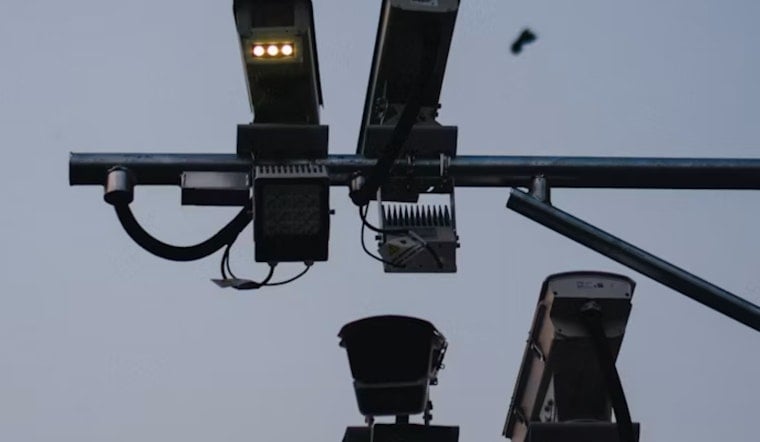
Westland is getting ready to yank its Flock Safety license-plate cameras after the police chief chose not to seek a new contract, according to a city councilmember. The move comes on the heels of months of heated public debate, with residents raising alarms about privacy and data sharing tied to the automated readers. Now the city and its residents have to hash out how quickly the devices come down and whether any replacement surveillance tech will follow.
Police chief declines to renew, councilmember says
Councilmember Melissa Sampey wrote that Police Chief Kyle Dawley “has decided not to bring the Flock camera contract before City Council for a vote” and said the cameras will be removed once the current agreement runs out. That post, and the coverage that followed, were detailed by FOX 2 Detroit.
City records show a two-year Flock deal was approved in 2024
Minutes from last Wednesday's meeting show the Westland City Council approved a professional services agreement with Flock Safety to deliver, install, and service ten automated license-plate readers for a two-year term. The deal appears on the consent calendar, a sign that the police department formally backed the initial rollout, according to the Westland City Council.
How the cameras work and why neighbors pushed back
Police officials told reporters the roadside automated license-plate readers are meant as an investigative tool and said they are not used for traffic enforcement, do not capture images of people inside vehicles, and do not use facial-recognition software. Even so, residents and privacy advocates argued the systems create searchable records of people’s movements with too little oversight, and they raised concerns about how long the data is kept and how it can be shared across jurisdictions. Those worries, along with the department’s reassurances, were outlined in coverage by FOX 2 Detroit.
Camera footprint and community pressure
Open-source surveillance trackers list roughly 32 Flock devices in Westland as of September 2025, a count that exceeds the ten readers mentioned in the 2024 agreement and highlights how deployments can grow beyond an initial contract. That number comes from the Atlas of Surveillance, which compiles public records and open-source data on monitoring tools.
Part of a regional re-think on ALPRs
As the contract neared its end, Westland residents mounted petition drives and packed public comment periods. One petition circulating locally notes that the agreement was set to expire in July 2026 and ties Westland’s debate to neighboring communities that have scaled back or ended Flock programs. The local organizing and petition efforts are documented on a Metro Detroit Action Network page urging the city to cancel the vendor’s contract, with Action Network serving as one organizing hub.
What comes next
With the Flock agreement on its way out, procurement records show Westland has issued separate requests for new camera systems, including a request for proposals for a Cayley Park camera setup. That suggests officials are weighing alternative configurations for monitoring public spaces rather than abandoning cameras altogether. City Hall has not released a detailed takedown schedule beyond Sampey’s post, and the police department did not put out an immediate public statement to accompany her announcement, according to the City of Westland.





