

























































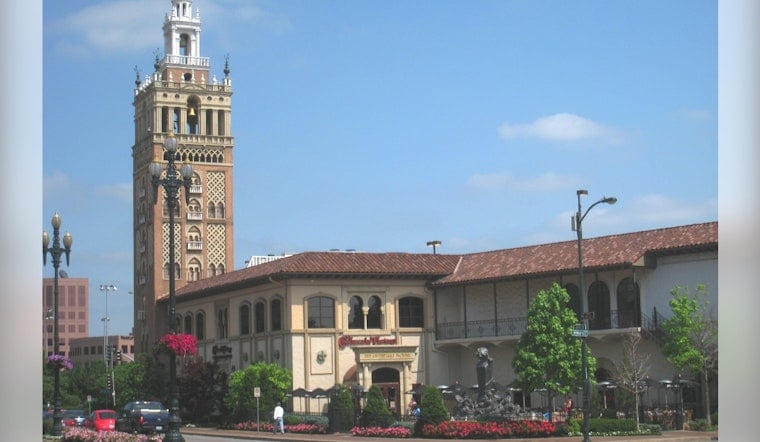
Kansas City’s Country Club Plaza got the World Cup rush in a very big way, with foot traffic reaching nearly four times the district’s previous busiest season. One retailer also reported an 80% jump in sales, suggesting the soccer tournament delivered a real commercial jolt to one of the city’s best-known shopping and dining destinations.
The numbers come from a new report by the Kansas City Business Journal, which said EB Systems used Bluetooth signals to estimate crowd sizes around the Plaza. The Business Journal's preview mentioned a retailer reporting an 80% jump, but the available preview does not indicate whether that retailer was named; the sales figure adds a cash-register dimension to the much larger foot-traffic surge.
That measurement is closer to a crowd-flow estimate than a traditional headcount. EB Systems says its beacon technology uses proximity readers and mobile-device signals to track movement through a location, giving property managers a way to compare activity across events and destinations. According to the Bureau of Transportation Statistics, Bluetooth probe data "has potential in small-medium scale analysis in pedestrian studies; it can perform counting and tracking," underscoring both usefulness and limits of beacon-based crowd-flow estimates.
The Plaza Built A Fan-Friendly Detour
The district also spent the tournament giving visitors more reasons to linger. The Kansas City Chamber detailed a lineup that included the Plaza Pitch, a visitor passport with retail deals, an updated walking tour, a soccer-themed mural and team-colored lights around the property.
According to the Country Club Plaza's official site, the district spans "15 blocks" and is "home to over 120 Shops & Eateries," giving scale to how a near-quadrupling in foot traffic might affect the area. The Country Club Plaza's official site notes it "offers several garages filled with free parking year-round" and that "free street parking is available throughout the Plaza," which may affect how many visitors arrive by car versus transit.
Those activations ran from June 13 through July 12 and were designed to turn the Plaza into more than a convenient stop between matches. The report and EB Systems describe aggregated crowd-flow measures, and the available sources do not explicitly attribute visits to individual attractions, but the timing makes the combination of programming and international crowds a reasonable part of the explanation for the district’s standout performance.
Big World Cup Crowds Did Not Spread Evenly
The Plaza’s success was not necessarily a citywide retail story. Earlier in the tournament, KCTV5 reported that some Plaza businesses saw an uptick, especially on the first Kansas City match day, while owners in other parts of the metro described slow sales and asked locals to keep supporting them.
That uneven pattern also showed up in broader business reporting. Axios Kansas City found that the tournament’s impact depended heavily on location, product and whether customers were visitors or regulars, with Made in KC reporting its strongest gains at downtown, Plaza and airport locations.
So the World Cup did create spending, but it concentrated much of that activity around the places fans already wanted to visit. For the Plaza, that concentration translated into one of Kansas City’s clearest tournament-era retail wins.
The Harder Test Comes After The Crowds
A near-quadrupling in pedestrian activity is a headline-sized result, but it does not automatically mean the Plaza has solved its longer-term retail challenges. The more revealing question will be whether some of the visitors who came for soccer return for shopping, dining or a stroll after the banners and match-day programming fade.
For now, the takeaway is pretty simple: Kansas City’s World Cup foot traffic did not lift every business equally, but it turned the Country Club Plaza into a temporary magnet—and gave at least one retailer a sales bump to match.





