

























































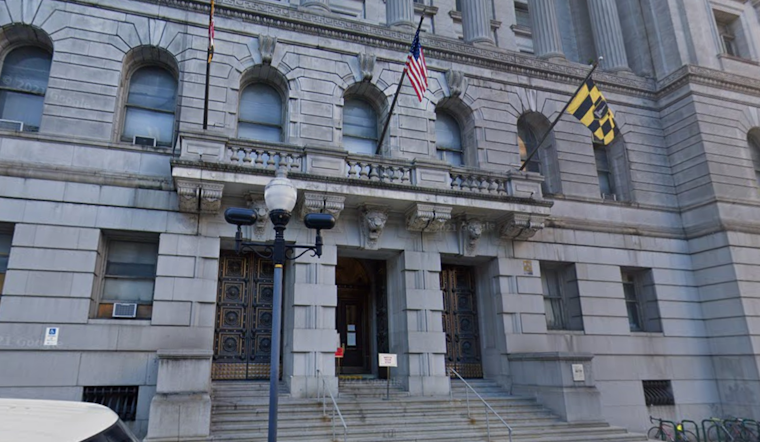
A Baltimore City Circuit Court jury is hearing the attempted murder trial of Absolon Castillo-Martinez, a 27-year-old accused of opening fire on two people outside an Eagle Mart on Pulaski Street on July 31, 2025. Castillo-Martinez faces two counts of attempted first-degree murder, two counts of first-degree assault, reckless endangerment, and firearm use in a felony or violent crime. The case has taken an unusual turn, though: the two people he is accused of trying to kill are not being called to testify.
Defense attorney Lawrence Rosenberg told the jury that the shooting victims identified two other people, not Castillo-Martinez, as the shooter when they spoke with police, according to Baltimore Witness. Rosenberg has repeatedly pressed prosecutors on why those same victims are not being put on the witness stand, arguing their absence should raise doubts in jurors' minds.
What Investigators Say the Video Shows
Prosecutors told jurors during opening statements that surveillance footage and police testimony are enough to identify Castillo-Martinez as the gunman, even without victim testimony. CCTV footage described in the case shows a male suspect walking up and down Pulaski Street before the two victims parked their car outside the nearby Eagle Mart. The suspect allegedly followed one of the victims back to the vehicle, pulled a gun from a chest backpack, fired several rounds at the car, and fled across the highway.
Police issued a flyer seeking to identify the suspect on August 1, 2025, and an investigator identified him as Castillo-Martinez that same day. If jurors convict him of attempted first-degree murder, he faces a maximum sentence of life imprisonment under Maryland Criminal Law Code Section 2-205, according to a Maryland General Assembly analysis of the statute.
Defense Presses Confrontation Rights
Rosenberg's line of questioning leans on the Sixth Amendment's Confrontation Clause, a defense strategy Maryland courts have long recognized. Prosecutors may pursue convictions using video evidence and police testimony without calling victims to the stand, though defense attorneys routinely highlight a missing witness to argue reasonable doubt, according to Maryland Courts.
Non-fatal shootings like this one are typically handled by the Gun Violence Enforcement Division of the Baltimore City State's Attorney's Office, which embeds Baltimore Police Department detectives alongside prosecutors to build cases and conduct witness interviews, according to the Baltimore City State's Attorney's Office. That structure is designed to keep cases moving even when witness cooperation is uncertain, a dynamic playing out directly in the Castillo-Martinez trial.
A Judge With Nearly Two Decades on the Bench
The trial is being heard before Judge Lawrence P. Fletcher-Hill, who has served on the Baltimore City Circuit Court since March 6, 2009, after previously serving as Chief of Litigation in the Maryland Attorney General's Office, according to the Maryland State Archives. Jury selection was delayed two hours Tuesday because of a defendant transportation delay, according to a separate account from Baltimore Witness. The trial is scheduled to resume Thursday.
Pulaski Street Case Fits a Slowly Improving Citywide Trend
The Pulaski Street shooting is one data point in a citywide trend city officials say is moving in the right direction. Through Monday, Baltimore had recorded 187 non-fatal shootings for the year, a slight decrease from the 190 tallied over the same stretch of 2025, according to the Baltimore City Mayor's Office. That follows a steeper drop the year before: Baltimore logged 311 non-fatal shootings in 2025, more than 24% fewer than the 413 recorded in 2024, per WBAL-TV.
Police clearance rates for non-fatal shootings have also climbed. The Baltimore Police Department reported a 44% clearance rate for non-fatal shootings in mid-2025, more than 20 percentage points above the department's 10-year historical average, according to the Baltimore Police Department.
Same Corridor, Different Cases
The stretch of Pulaski Street where the shooting happened runs through West Baltimore neighborhoods long affected by infrastructure cuts tied to U.S. Route 40, known as the Highway to Nowhere, and flagged for high roadway injury rates in city safety planning, according to Streets of Baltimore. The corridor has seen other gun violence cases in recent years — Hoodline previously reported a 40-year sentence for Pulaski Street murder, and covered police seeking suspects in an earlier shooting on the same street.
The dueling accounts leave jurors to weigh whether surveillance footage and detective testimony can outweigh what the victims reportedly told police in the moments after the shooting, a question that sits at the heart of the case as testimony continues. For now, neither victim is expected to appear in court, leaving the video and the detectives' account as the state's primary evidence.





