

























































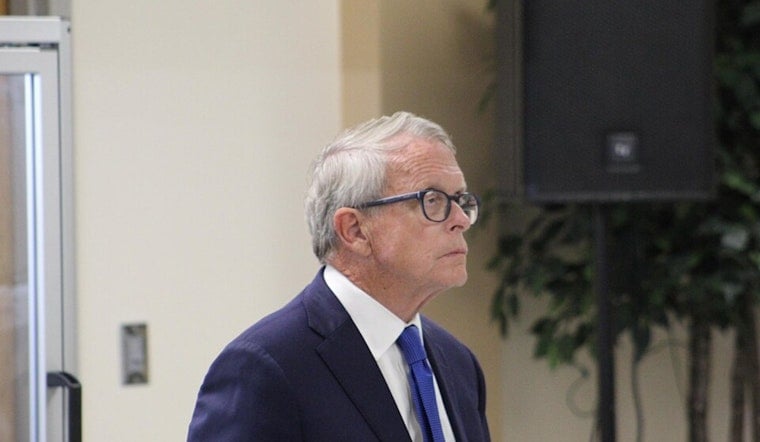
More than 500 Ohio state employees out-earned Governor Mike DeWine in 2025, according to a new payroll analysis, with the governor's fixed salary of $176,255 dwarfed by six-figure overtime checks flowing to correctional officers and psychiatric workers across the state. Some individual overtime payouts alone topped $200,000, on top of base wages, in a system where more than 29,500 of the state's roughly 59,300 employees logged extra hours last year.
The findings come from the Dayton Daily News Payroll Project, which analyzed Ohio state payroll data covering nearly $4.5 billion in combined wages, overtime, PTO payouts and some court-ordered payments, according to the Springfield News-Sun. The state government ranks as Ohio's second-largest employer behind the private sector, per the Ohio Department of Development, with a payroll that included more than 59,300 employees last year — larger even than Cleveland Clinic's estimated 63,641 Ohio workers or Walmart's roughly 58,300.
DeWine's pay is locked in by statute. Under Ohio Revised Code Section 141.011, the governor's base salary receives fixed 1.75% annual increases through 2028 under a 2018 law, according to the Ohio Legislative Service Commission — a rigid ceiling that overtime-heavy civil service jobs can blow past with ease.
Prison Overtime Alone Topped $125 Million
The Ohio Department of Rehabilitation and Correction accounted for more than half of the state's overall overtime spending in 2025, taking in $125.5 million in overtime payments even as statewide overtime spending hit $227.3 million. Correction officers made up 7,409 of the department's 13,451 employees, and 96.7% of them worked some overtime last year, according to the payroll analysis.
Those officers collected $99,142,552 in total overtime — 79% of the department's overtime payments — with an average payout of $13,800 per correction officer, compared with a statewide average overtime payment of about $7,700. Eleven Rehabilitation and Correction workers individually received more than $100,000 each in overtime, with hourly rates for six-figure overtime earners ranging from $32.75 to $59.16, and one officer's overtime payout peaked at $142,827.
Robert Campbell, who earned a base wage of $156 per hour, took home more than $178,000 in overtime on top of his regular pay, finishing 2025 with $605,229 in total earnings and ranking as the state's second-highest-paid employee.
Why the Overtime Keeps Piling Up
The overtime is largely mandatory. Under the collective bargaining agreement between Ohio and OCSEA Local 11, unfilled prison shifts trigger hold-over overtime assigned to the least senior officer on duty at 1.5 times their regular pay, according to the Ohio Department of Administrative Services — a contractual mechanism designed to keep security posts staffed once a shift ends short-handed.
That mechanism has been strained by a statewide vacancy crisis. The department ended 2025 with more than 500 unfilled correctional officer positions — a 7.4% overall vacancy rate — with nine of Ohio's 24 state prisons posting vacancy rates above 10%, according to Corrections1. Dayton Correctional Institution ended the year with the state's highest correctional officer vacancy rate, at 18.8%.
The staffing gap was severe enough that in February, the state transferred roughly 150 female prisoners from Dayton Correctional Institution to other facilities, allowing officials to close a housing unit and ease forced overtime there, per the same Corrections1 account. Union nurses had also protested outside the Dayton facility over understaffing, mandatory overtime, unsafe conditions and inmate care. Dayton Correctional's warden, Shannon Olds, was reassigned in July to an assistant chief inspector role at the department following a two-year tenure marked by the vacancies, the medical staff picketing, and two inmate deaths, according to the Dayton Daily News.
Lawmakers have taken notice. The Ohio House voted 82-3 in November 2025 to pass House Bill 338, a prison safety and staffing reform measure introduced after the line-of-duty death of a state correctional officer, with legislators tying excessive mandatory overtime to officer fatigue and safety hazards. Governor DeWine has also signed capital budget legislation directing $255.1 million to the Department of Rehabilitation and Correction for facility repairs and upgrades tied to aging inmates and mental health needs, separate from the payroll costs driving the overtime totals.
Psychiatric Hospitals Dominate the Top of the Pay List
While prisons drove the bulk of overtime dollars, it was Ohio's behavioral health system that produced the state's very highest earners. The Department of Behavioral Health accounted for 62 of Ohio's top 100 earners in 2025, and an even more lopsided 27 of the top 30 and 19 of the top 20. Nine of Ohio's top 10 earners came from that single department.
Florence Kimbo earned $567,182 in 2025, and Abas Jama earned $512,709. Aneja Jyoti, the third-highest-paid state employee overall, earned $580,006 in total pay, including $234,851 in overtime alone. Department-wide, the roughly 3,300 behavioral health employees were paid just over $22 million in overtime, averaging $9,777 per employee — well above the statewide average.
That concentration is not new. A 2019 Toledo Blade analysis found that physicians and psychiatrists represented 96 of the top 97 highest-paid wage earners in Ohio state government that year, with one state psychiatrist topping the state payroll for nine consecutive years running. The underlying pressure has only intensified since: demand for behavioral healthcare services in Ohio surged 353% between 2013 and 2019, while the state's licensed behavioral health workforce grew just 174% over the same span, according to Policy Matters Ohio.
A Court Judgment, Not a Paycheck, Topped the List
Ohio's single highest-paid state employee in 2025 was not a psychiatrist or a correctional officer, but a former state trooper collecting on a legal victory. Stacey Arnold Yerkes was recorded with $1,013,578 in state pay for the year, including a court award stemming from a 2023 federal jury verdict that awarded her $2.6 million total in back pay, front pay and compensatory damages after she won a Title VII sex and sexual orientation discrimination lawsuit against the Ohio State Highway Patrol, following her 2018 constructive discharge, as reported by Metro Weekly.
Beyond the outliers at the very top, the broader numbers show just how widespread big overtime checks have become. Statewide, 442 workers received more than $50,000 in overtime in 2025, 28 workers topped $100,000, and three individual employees collected more than $200,000 each in overtime on top of their base pay. Among the roughly 10,904 prison staff who logged overtime, the average payout came to $11,500.
The pattern fits a broader trend Hoodline has tracked across Ohio's public payrolls this year, from a Columbus transit mechanic's $228K year to overtime pushing Gahanna's police and fire personnel to the top of suburban pay rankings. In each case, chronic staffing shortages in essential, round-the-clock roles — not raises or bonuses — are what's pushing rank-and-file pay past the officials who oversee the agencies.





