

























































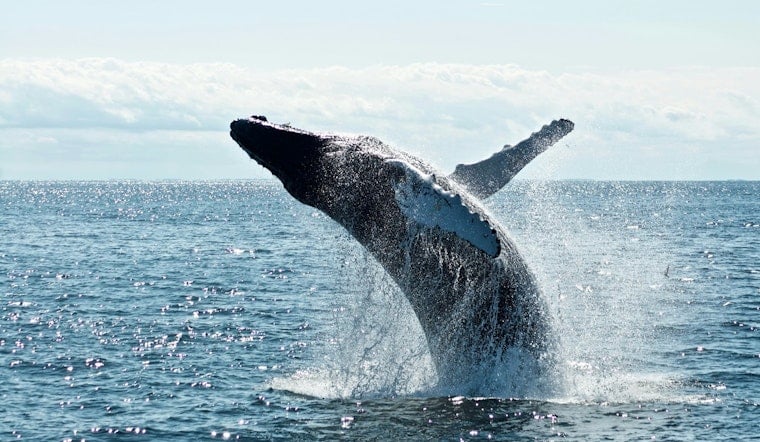
New York’s waters now come with a 500-whale guest list: whale watchers have identified the 500th individual humpback documented in the New York City region, a milestone that would have sounded absurd when local cataloging began. The tally is both a conservation victory and a warning sign, because the same waters drawing whales to feed are threaded with cargo routes, ferries and recreational boats.
Gothamist reported Monday that Gotham Whale has cataloged 500 individual humpbacks since launching its regional effort in 2012. The group’s network went from spotting roughly 10 to 30 previously uncataloged whales per year to finding 80 to 100 annually, a sharp sign that the local guest list is expanding—or that researchers are getting much better at seeing it.
Gotham Whale’s method is community science: whale-watch crews, boaters and other observers submit photographs and sighting details, while researchers compare the unique patterns on the underside of each tail fluke. The Staten Island-based nonprofit says the resulting New York Humpback Whale Catalog is shared with scientists and can help track where individual whales go, when they return and how they use the region, according to Gotham Whale.
Why Humpbacks Keep Returning To The New York Bight
The whales appear to be following the food. Cleaner regional waters have helped support more fish, while warming ocean temperatures in New England and Canada are shifting prey distributions; Chris St. Lawrence of Gotham Whale told Gothamist that humpbacks are seeking new food sources and that New York has become one.
Many of the whales remain for weeks or months, fattening up during the summer before migrating south. That helps explain why humpbacks have become the area’s regulars, while other whale species are seen less consistently and generally farther offshore.
The Comeback Comes With A Collision Risk
The New York Bight is also an industrial highway. The Port of New York and New Jersey is the nation’s second-busiest port for loaded imports, according to the Port Authority of New York and New Jersey; every ship and smaller boat sharing these waters increases the stakes for animals feeding near the surface.
A 2024 study by researchers affiliated with Stony Brook University and NOAA found vessel strikes were the major driver of recent large-whale strandings on the East Coast, with risk rising as humpbacks expanded into new feeding areas with heavy vessel traffic. The study found no evidence that offshore wind development caused the strandings, keeping the focus on the more prosaic hazard: boats moving through feeding whales, as detailed in the NOAA research repository.
NOAA Fisheries says the Atlantic Coast humpback unusual mortality event, declared after strandings increased in 2016, remains ongoing. The agency has documented vessel-strike evidence in some cases, treats all vessel sizes as potential risks in heavily trafficked waters and advises recreational boaters to keep at least 100 feet from whales, according to NOAA Fisheries.
The milestone also puts a different spin on the city’s occasional whale cameos. A Brooklyn Bridge visitor made headlines in 2024, but with 500 individual humpbacks now in the catalog, the bigger story is not that whales can show up around New York—it’s that they are increasingly making a living here.
What The 500th Whale Tells Researchers
Every new fluke match adds another piece to a moving map: which whales stay for weeks, which return year after year and which travel between the New York Bight and other feeding grounds. That long-running record gives researchers a stronger basis for understanding the animals and developing ways to reduce risks, part of the conservation mission outlined by Gotham Whale.
For New Yorkers, the message is pleasantly simple and inconveniently serious: the ocean off the city is alive, productive and crowded. The 500th humpback is worth celebrating—but it is also a reminder that a whale watching the fish does not necessarily see the ship.





