

























































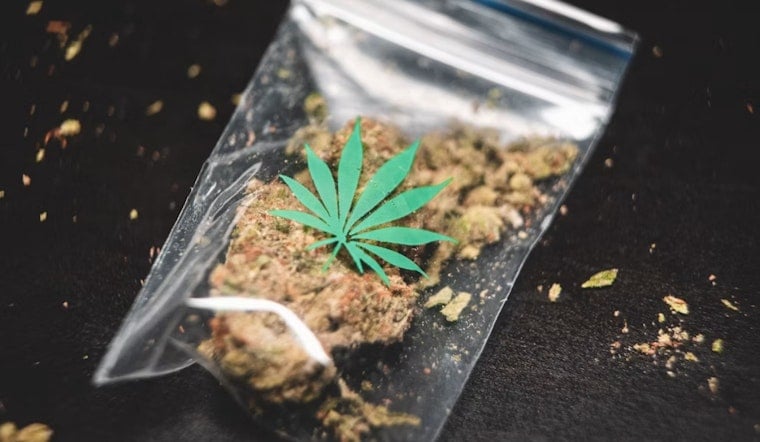
A discovery of roughly 500 to 600 pounds of black-market marijuana in Ypsilanti Township has become an unexpected liability for Washtenaw County Prosecutor Eli Savit as he campaigns to become Michigan's next attorney general. The contraband was found in spring 2026, and internal records show the prosecutor's office ultimately declined to bring charges against anyone connected to the find.
The discovery came to light after a 2025 structure fire at an Ypsilanti Township property, and emergency workers who responded found the massive stash of marijuana at the scene, according to The Detroit News. Prosecutors formally declined on April 7 to charge the property's tenant, stating they could not prove guilt beyond a reasonable doubt, as reported by MLive.
Township Attorney Calls Decision Absurd
Ypsilanti Township Attorney Doug Winters did not hold back after learning no one would face charges. He estimated the street value of the destroyed marijuana at between $1.5 million and $2 million and called the decision not to prosecute absurd, per the same MLive report. Winters' criticism reflects a broader friction between township leadership and Savit's office over how aggressively drug cases should be pursued.
Washtenaw County Sheriff Alyshia Dyer has separately said the county prosecutor's policy directives created confusion among local law enforcement over whether marijuana-related offenses would be pursued at all following state legalization, according to the Michigan Enjoyer. That confusion sits atop a legal landscape that already draws sharp lines around how much cannabis is legal to have.
State Law Sets Limits Far Below What Was Found
Under the Michigan Regulation and Taxation of Marihuana Act, the ballot measure voters approved in 2018, adults 21 and older may legally possess up to 2.5 ounces of marijuana in public and up to 10 ounces at home, while unauthorized large-scale distribution remains illegal under state law. The 500-to-600-pound haul recovered in Ypsilanti Township dwarfs those limits by a massive margin, which is precisely why the no-charge outcome has drawn scrutiny from township officials and skeptics of Savit's approach.
That approach was not new. Shortly after taking office in January 2021, Savit issued a policy directive ordering his office to decline criminal charges for cannabis use, possession, or small-scale distribution regardless of quantity, arguing that having too much marijuana is no more appropriate to criminalize than having too many bottles of wine, according to WDIV ClickOnDetroit. The policy fits within a broader suite of progressive criminal justice moves Savit made in Washtenaw County, including eliminating cash bail, declining to prosecute consensual sex work, and dropping charges for entheogenic plants such as psilocybin mushrooms, as detailed by Bridge Michigan.
A Long History of Local Cannabis Reform
Washtenaw County has embraced lenient marijuana enforcement for decades. Ann Arbor voters approved a 1974 charter amendment making possession of small amounts of marijuana a civil infraction punishable by a $5 fine, per Wikipedia, positioning the county as an early leader in decriminalization efforts long before statewide legalization arrived.
Savit is now carrying that record into a statewide race. He secured the Michigan Democratic Party's endorsement for attorney general in April 2026 at a competitive spring convention, defeating Oakland County Prosecutor Karen McDonald with strong backing from progressive delegates, according to Legal News. The primary was not without bitterness: McDonald filed a defamation lawsuit in Ingham County Circuit Court in February 2026, alleging Savit's campaign engineered a political smear involving a past murder conviction review, a dispute Hoodline covered in its report on the primary lawsuit.
General Election Stakes
Current Attorney General Dana Nessel is term-limited after eight years in office, leaving an open seat that pits Savit against Eaton County Prosecutor Doug Lloyd, the Republican nominee with 13 years of prosecutorial experience, WDIV ClickOnDetroit reported. The Ypsilanti Township case has become a talking point for critics who argue Savit's reform-minded policies, effective in one county, may not translate to leading law enforcement across the entire state. Supporters counter that the policy is a consistent extension of the platform that won him the Democratic nomination in the first place, while Winters and other township officials maintain that a haul of this size warranted prosecution regardless of broader cannabis reform goals.





