

























































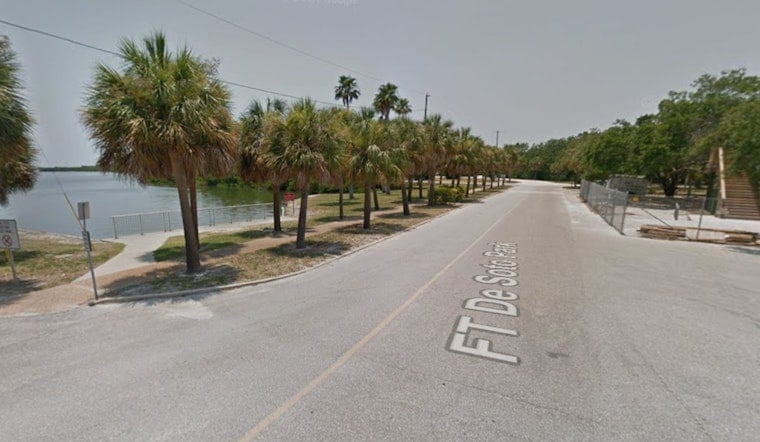
A 61-year-old man died Wednesday morning after a large wave knocked him over in the water at Fort De Soto Park, according to the Pinellas County Sheriff's Office. Deputies responded to the park after receiving calls about a swimmer in distress, and two park workers had already pulled the man from the water and begun CPR on the shore by the time help arrived.
The Pinellas County Sheriff's Office reported that the man drowned this morning at the park, as first reported by FOX 13 Tampa Bay. Emergency responders arrived and took over rescue efforts from the park workers, with Sunstar, the St. Pete Beach Fire Department, and the Lealman Fire Department all continuing resuscitation efforts on scene. Paramedics eventually took the man to a nearby hospital, where medical staff pronounced him dead.
Authorities have not released the man's name, and officials have not indicated whether rough surf conditions played a larger role in the incident or whether water advisories were active at the park at the time. The sheriff's office and emergency records remain the only sourcing on the circumstances of the drowning as of Wednesday.
A Park With a History of Sudden Water Surges
Fort De Soto Park sits across five interconnected barrier islands — Mullet, Madelaine, St. Jean, St. Christopher, and Bonne Fortune keys — at the mouth of Tampa Bay, linked by bridges and causeways, according to Pinellas County. The 1,136-acre park is the largest in the county system and draws more than 2.7 million visitors annually, making it one of the most heavily visited public coastal parks in the Tampa Bay region. Its North Beach section was once named America's top beach by Dr. Beach in 2005 and by TripAdvisor in 2009.
While the Gulf Coast is often perceived as having gentler surf than Florida's Atlantic side, Fort De Soto's position at the mouth of Tampa Bay creates dynamic tidal currents and wave conditions that have previously produced sudden surges, as documented by the Tampa Bay Times. In late April, an unexpected rogue wave surged ashore near sunset close to North Beach, sweeping away beachgoers' belongings and destroying nesting sites of threatened shorebirds, catching shell-seekers and park volunteers off guard. North Beach had only fully reopened in February 2025 following extensive shoreline restoration made necessary by damage from Hurricanes Helene and Milton in late 2024, according to Local Life Homes.
Emergency medical providers in the county have warned that even calm-looking Gulf waters carry risk. Sunstar Paramedics notes that surf breakers near the shore edge can knock over non-swimmers or waders and quickly drag them into deeper water — a dynamic consistent with how Wednesday's fatal incident was described. Local marine rescue units have responded to other water emergencies near the park in recent months, including an April operation in which deputies rescued a kayaker pulled offshore by strong tides near adjacent Egmont Key, according to the Hillsborough County Sheriff's Office.
Lifeguard Staffing Debate Looms Over the Park
The death comes amid an ongoing debate over lifeguard staffing at Pinellas County's public beaches. Earlier this month, county officials proposed eliminating all county-funded lifeguard positions at Fort De Soto Park and Sand Key Park as part of departmental cuts meant to address a $42 million county budget shortfall, per the St Pete Catalyst. Lifeguards at Fort De Soto have historically operated on a seasonal basis from April through September.
Even before those proposed cuts, the county entered the 2026 season already short-staffed. Local safety officials estimated that 5% to 10% of required lifeguard roles nationwide remained unfilled despite starting pay of $20.50 per hour, according to FOX 13 Tampa Bay, prompting county officials to actively recruit seasonal Beach Patrol staff through the summer months. It remains unclear whether lifeguards were actively patrolling the specific area where the man was knocked down Wednesday.
Wednesday's drowning adds to a broader public health pattern in the region. Unintentional injury ranks as the third leading cause of death in Pinellas County, and Florida ranks fifth highest nationwide in unintentional drowning mortality, as Hoodline reported in coverage of a Clearwater pool death earlier this month. State health data shows Florida recorded more than 500 unintentional drowning deaths in 2023 alone. Under Florida Statute 1003.225, public school districts are required to give parents of newly enrolled students information on water safety education and local swimming lesson options, per Pinellas County Schools.





